Beijing Yongdingmen's 'Yundun' and the Legendary Old Beijing 'Five Towns': Discovering Their Stories
Travel New Discoveries Always On the Road
A song of the Beijing dialect, everyone is familiar with: 'I have roamed north and south, west and east, and also visited many famous cities, quietly thinking, I still love Beijing the most'… Beijing is only about 100 kilometers away from Baoding, so there are more opportunities to travel to Beijing and appreciate its scenery. This time let's talk about Beijing's Yongdingmen's 'Yundun' and the legendary old Beijing's 'Five Towns'.
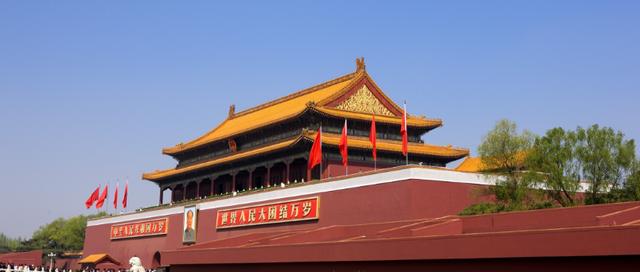
South Town – Yundun
After the opening of the Yongdingmen 'Yundun Park' in 2019, I first learned about 'Yundun', a cultural relic. Yundun was previously unknown, and this is due to objective reasons: since the 1960s, the four sides of Yundun were not only covered with years of garbage, but also filled with various buildings. As a result, people only knew Yongdingmen, and did not know that there was another Yundun just half a mile away from Yongdingmen. Later, people realized it was a fortunate thing—this unintentional burying was not a bad thing, and because no one paid attention, no one thought of dismantling it, unlike Yongdingmen, which was exposed and demolished in 1957.
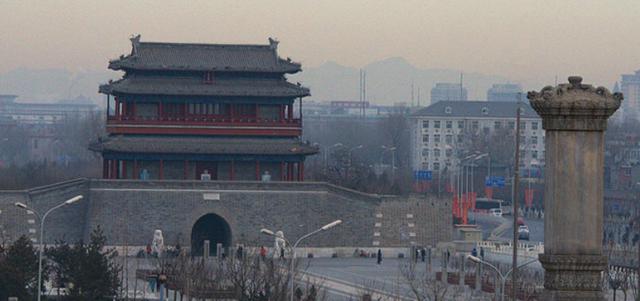
After the big demolition, there was construction in 2004, and Yongdingmen was rebuilt, during the expansion of the Zhongxu Road, Yundun's life force was revived—garbage was cleared, 'non-building' was demolished, and Yundun was slightly repaired, and Yundun appeared suddenly, while it was still harmonious with the young Yongdingmen, becoming neighbors. Yundun originally had a pair, but one of the two was moved to the east side of the Capital Museum.
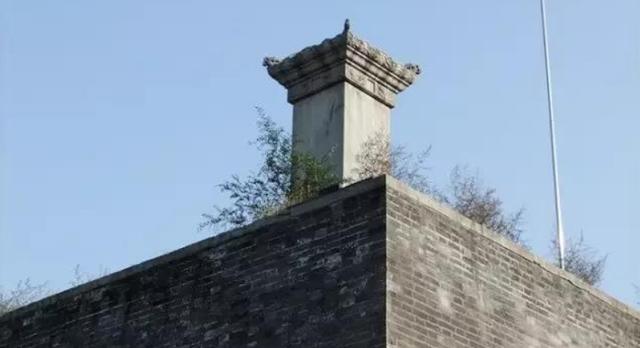
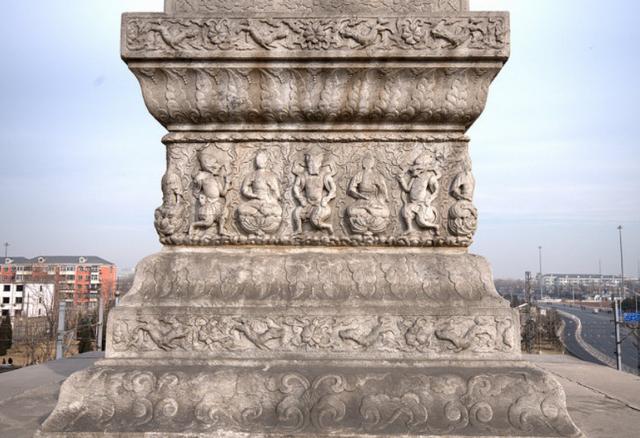
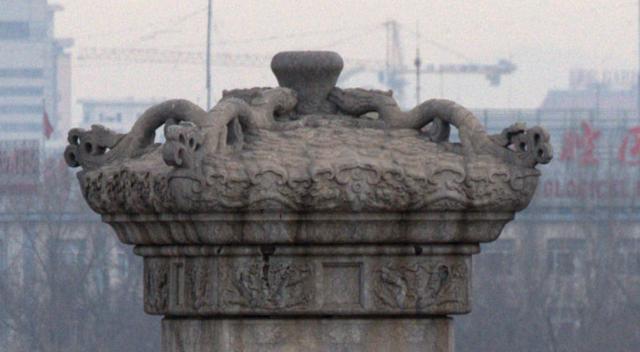
It is said that Yundun was originally used as a beacon tower, and it also had its own name—'Smoke Tower', built in the Yuan Dynasty, it is a trapezoidal pile with narrow top and wide bottom. When Yundun was first built in the Yuan Dynasty, it was only a soil pile, and when Beijing built its outer city in the Ming Jiajing 32nd year (1553), its appearance was shabby, so it was built outside the original soil pile with bricks, and by the Qing Dynasty, the Qianlong Emperor who loved to engrave and erect monuments built a stone monument, which became one of the 'Eight Scenery of Beijing' called 'Stone Tower Yundun'. In 1984, it was listed as a level-III cultural relic protection unit. According to the records, in the Yuan and Ming dynasties, Beijing had 'Five Towns', the southern town was Yundun—because fire is 'fire' in 'Five Elements', so the beacon tower was used to respond to it.
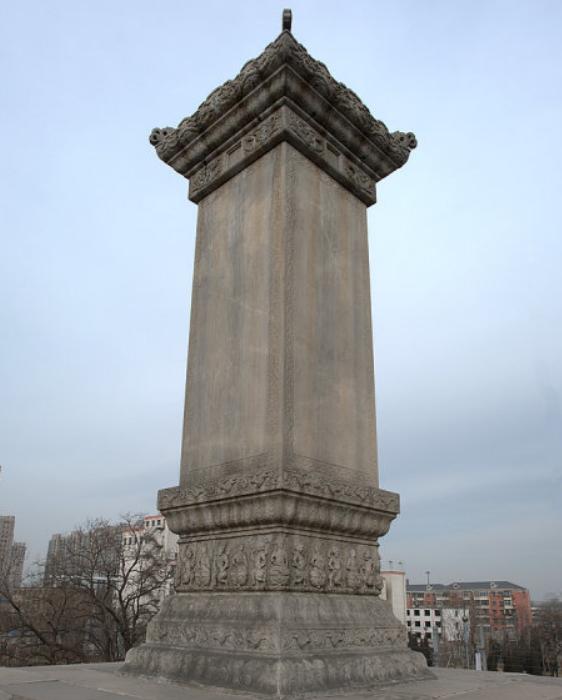
Getting closer to Yundun, you can see the bottom edge of the base about 15 meters long, the top of the pile about 14 meters long, and the height is about 9 meters. The top of the pile has a square stone stele in the center, and the stele is about 8 meters high. The base edge is about 15 meters long, and the top is about 14 meters long, and the height is about 9 meters.
The so-called 'Five Towns' mentioned above actually refers to the beacon towers set up in the Yuan, Ming and Qing dynasties, according to the theory of 'Five Elements' (gold, wood, water, fire, earth) 'generating and overcoming each other', in order to 'dispel evil spirits and protect Beijing peacefully' in the east, west, south, north and center five directions, respectively. Although the 'Five Towns' have a superstitious color, these 'Five Towns' are still considered an important part of Beijing's history and culture.
What about the other 'Four Towns'? Where are they located?
East Town – Shenmu
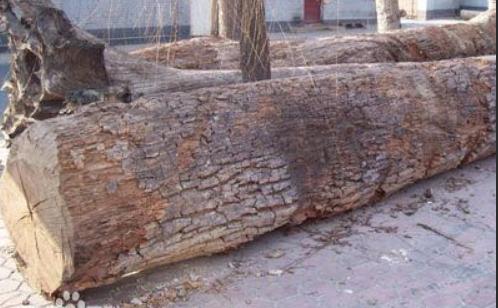
This represents 'wood' in the 'Five Elements' category. Shenmu is the only object in the 'Five Towns' that is easy to move and fragile. During the Ming Dynasty's construction of the Beijing Imperial Palace, a large amount of wood was transported from the south. After the palace was built, a largest golden sandalwood was left for the royal reserve, and this wood was moved to the current flower market area, and then this wood and the whole royal reserve was moved to Guanguer men east, and now it is true or not, or whether it is now in some place, has become a mystery.
West Town – Eternal Bell
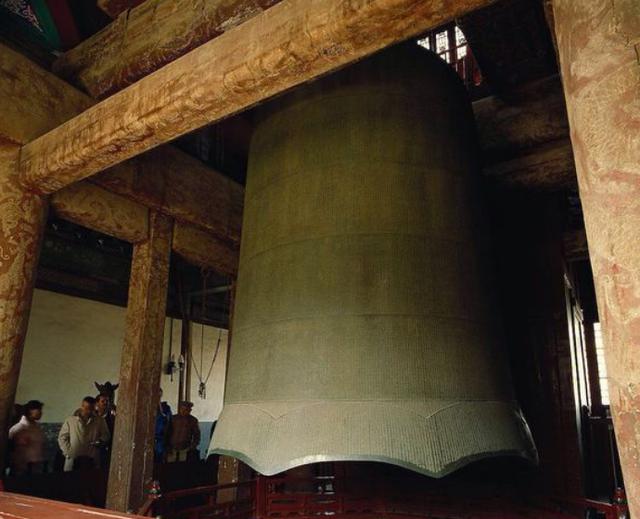
This represents 'gold' in the 'Five Elements' category. Li Hongru mentioned in 'Urban Chronicle' that the 'West Town' in Beijing's 'Five Towns' is the Eternal Bell. The Western Town is associated with the Bell Temple. The Bell Temple was founded in the 1733rd year of the Qing Dynasty's Yongzheng, which was used by the emperor for rain praying, and because the temple was built in that year, a large bell was brought from the Temple of Eternal Bell and was named the Bell Temple. The bell tower height is 6.94 meters, the maximum diameter is 4 meters, and the weight is 46.5 tons. The inside and outside of the bell are cast with 17 scriptures and 22.7 thousand characters. The bronze is exquisite and good, and the script and paintings are well-formed. It is said that it was written by Shen Du and Yao Guangxiao, and it is known as 'China's Bell King'.
North Town – Kunmin Lake
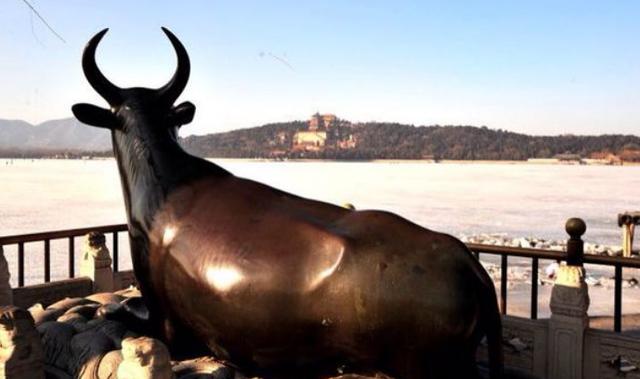
This represents 'water' in the 'Five Elements' category. The 'Five Elements' water in Beijing is now the Kunmin Lake in the Yihong Garden. Kunmin Lake is rippling and picturesque, and it has enjoyed 'Ten Sceneries of West Lake' in history. The copper bull at the edge of Kunmin Lake in Yihong Garden is lying on a carved stone seat, and it is known for its vivid expression and true appearance. This 'Golden Cow' was cast in copper in the 20th year of the Qing Dynasty's Qianlong, and it is said that it was built to suppress water disasters, and there are eight characters engraved on the back of the bull: 'Golden Cow Inscription'.
Central Town – Jingshan
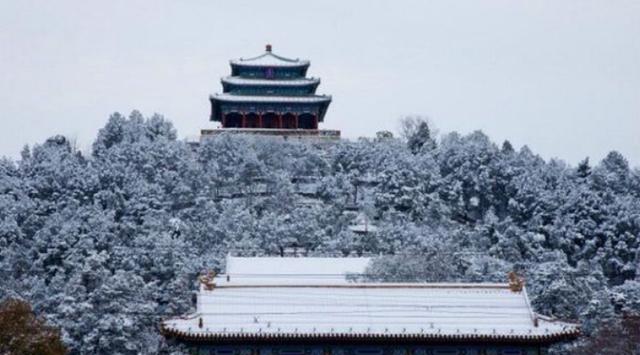
This represents 'earth' in the 'Five Elements' category. Jingshan north of the Forbidden City was only a small soil pile in the Yuan Dynasty. When the imperial city of Beijing was built in the Ming Dynasty, it was because it had been used to pile up coal. By the time of the Ming Dynasty's Yongle Emperor, it was called 'Wan Sima Mountain' and 'Jingshan' was changed to its name in the Qing Dynasty.
During travel to experience the historical features and cultural legends of the old city… What are your views on this? Welcome to browse, forward, and leave a comment below to share your opinions.
"""""""——""
……