Beijing Also Has ‘Jiangnan Water Towns’; Shopkeepers Were Imperial Guards and Palace Maids, Qianlong Visited Frequently
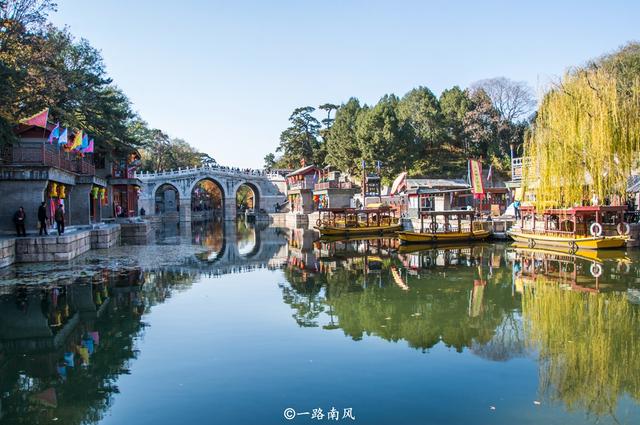
When mentioning the Jiangnan water towns, tourists always think of scenes of small bridges, flowing water, and residences, with willows green and lush along the banks, and women rowing boats while singing songs. The reason for the emergence of water town scenes in the Jiangnan region is mainly due to the intricate waterways, abundant rainfall, and inherent conditions. However, there were no such poetic landscapes in the northern part of China. The answer is no. Beijing has 'small bridges, flowing water, and residences' similar to the Jiangnan poetic paintings, which are of royal attributes. This place is the famous Yihongyuan ().
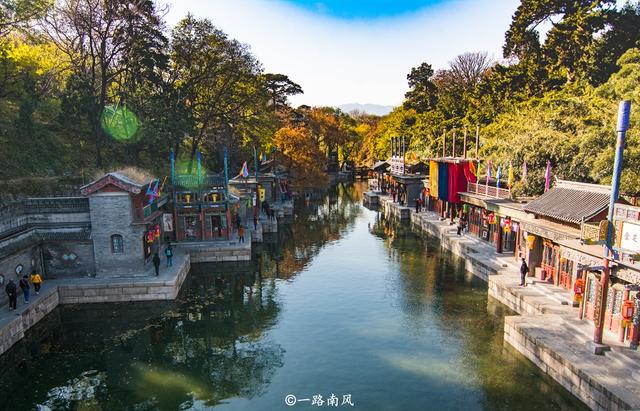
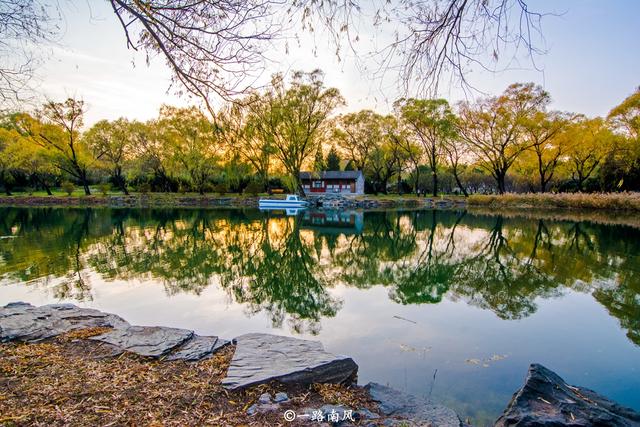
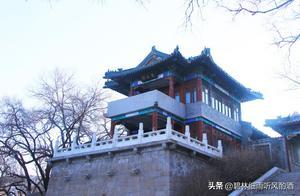
Yihongyuan () is a world cultural heritage and one of the Four Great Gardens in China. When tourists visit Yihongyuan, they will find that the main landscape and the scenery of Suzhou and West Lake in Hangzhou are highly similar. In fact, this garden was rebuilt by the Qing Dynasty Emperor Qianlong for his mother, the virtuous Empress Xiaosheng. Qianlong repeatedly went to the south of the Yangtze River, and he was particularly fond of local scenery. Whenever he went to the south of the Yangtze River, he always took painters with him, and he immediately ordered painters to draw the scenery as it was. The inspiration for the design of Yihongyuan came from the drawings of the painters, and it was based on the scenery of West Lake in Hangzhou and the Suzhou style. For example, along the Kunmin Lake (), there are obvious traces of Hangzhou's scenery, and Suzhou Street showcases the ancient Gusu () style of 'homes nestled along the river.'
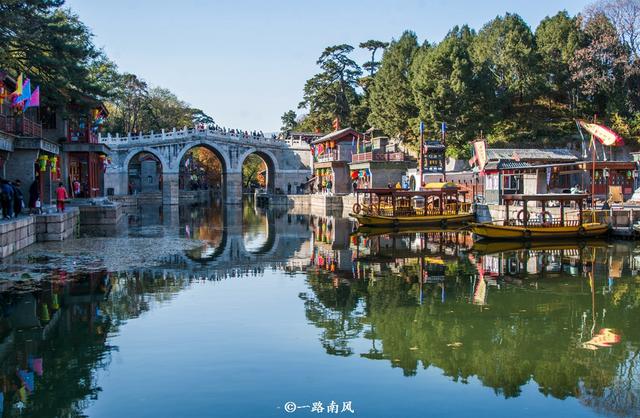
Suzhou Street () is located near the north gate of Yihongyuan (), and it is a street for buying and selling goods. Due to the royal garden's nature, this street was not allowed for ordinary people to visit during the Qing Dynasty. The shops along Suzhou River were only opened when the emperor, empress, and the palace ladies came to play. The shopkeepers were not ordinary city dwellers, but were dressed by imperial guards and palace maids.
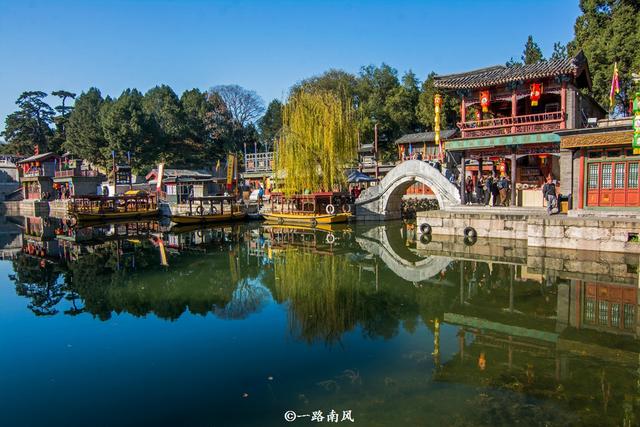
The water quality on Suzhou Street () in Yihongyuan () is clear, and the Qing Dynasty Emperor would occasionally come to this place to take a boat ride on the river. After arriving at a dock, he would get off the boat and walk to explore.
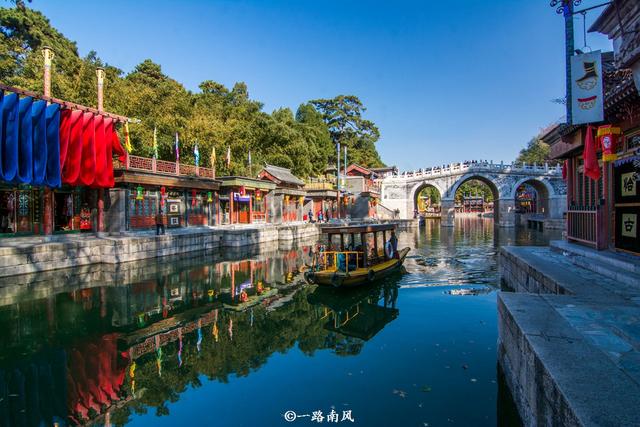
Suzhou Street () has dozens of shops that were destroyed in 1860, and it was rebuilt in 1986. The phased commercial atmosphere on both sides of the river is called 'the Imperial Market,' which is extremely rare in the world.
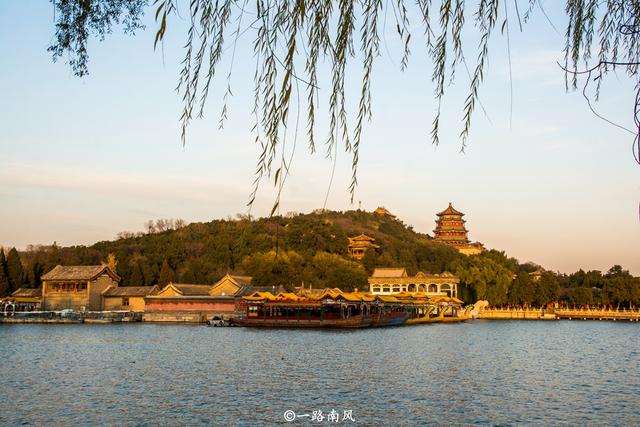
Kunmin Lake () covers an area of 3000 mu and is the main tourist area of Yihongyuan (), accounting for about three-quarters of the total area of the garden.
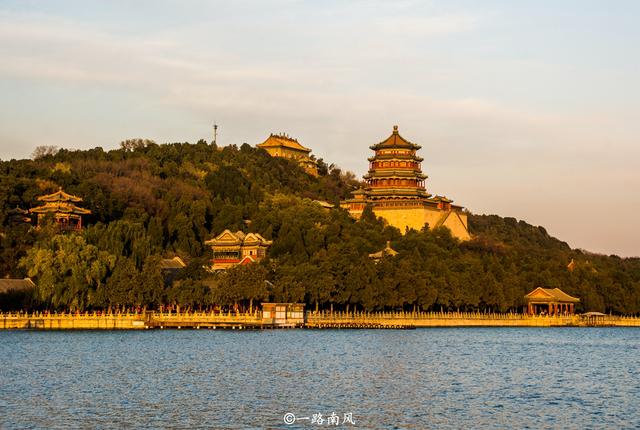
The willows along Kunmin Lake () sway in the wind, and if you look far, you can see Wanshou Mountain (), as if you are in Hangzhou's West Lake. Yihongyuan () was ordered to be built by the Qing Dynasty Emperor, but Kunmin Lake () has ancient roots, and as early as the Yuan Dynasty, the emperor would come to this place to take a boat ride and enjoy the fun of fishing and boating.