After Three Thousand Years: What is the Current State of Royal Palaces and Retreats Preserved in Shaanxi?
I am Cheng in English, a university teacher who teaches tourism, and I enjoy exploring the little-known tourist resources of Shaanxi. Today, I will sort out the current remaining imperial palaces and retreats in Shaanxi. Due to my non-specialized background in history and archaeology, there will inevitably be omissions. Please kindly point out the experts,
One, What are Imperial Palaces and Retreats?
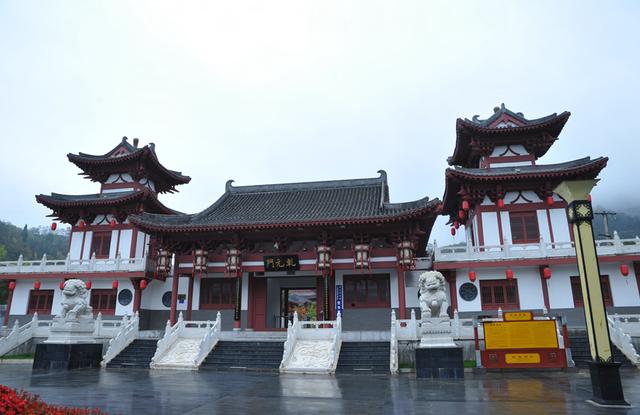
Imperial Palaces and Retreats refer to permanent residences built outside the capital for emperors. Emperors generally spent fixed periods residing in them. During the periods of the Han, Sui, and Tang dynasties in Shaanxi, many Imperial Palaces and Retreats were constructed. After numerous wars and conflicts, most were reduced to ruins or rubble, existing only as ruins or in literature, with few confirmed archaeological remains. The identified ruins and sites were included in the national and provincial key cultural relic protection units based on their cultural value,
Two, Imperial Palaces and Retreats Listed as Key Cultural Relic Protection Units
According to my statistics, there are currently 6 Imperial Palaces and Retreats in Shaanxi that are listed as national key cultural relic protection units: Ganshui Palace, Huaqing Palace, Jiu Cheng Palace, Yuhua Palace, Zhaokuan Palace, and Shanshan Palace. Many people will say: Why are Wancheng Palace, Xiangyang Palace, and Afang Palace not included? That's because these palaces were located within the capital, and were not included within the category of Imperial Palaces and Retreats,
Next, let's take a look at what these Imperial Palaces and Retreats are like,
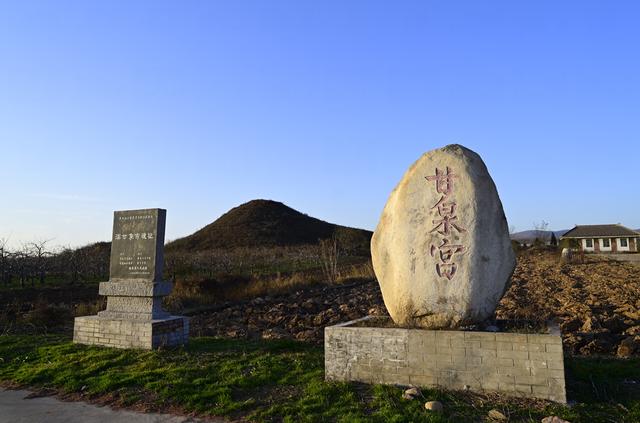
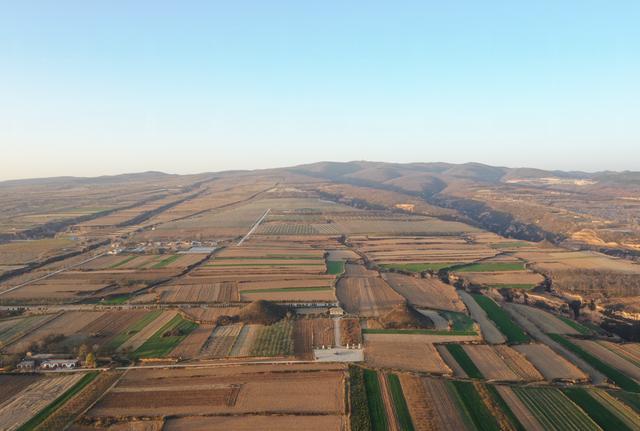
Ganshui Palace is located 25 kilometers north of the city of Chuan'an, Shaanxi Province, near the current Liang Emperor Village. The name 'Liang Emperor Village' originated because Emperor Wu of the Han frequently visited here for respite, taking the meaning of 'Emperor Wu resting in the cool shade.' It later evolved into Liang Emperor Village. Ganshui Palace's predecessor was originally Lin Guang Palace built during the Qin Dynasty. It was renovated and rebuilt by the Han Dynasty's Emperor Wu, and is the second most important place for Emperor Wu to stay outside the capital, besides Wancheng Palace. It was initially a summer resort for Emperor Wu, and later became a place for many political activities. After years of damage, only a small number of ruins remain. From aerial photography, you can vaguely see its former grandeur. Ganshui Palace has not yet been developed for tourism,
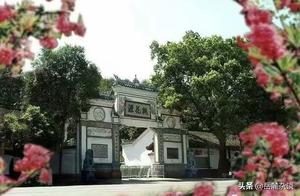
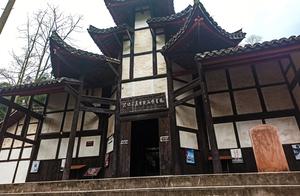
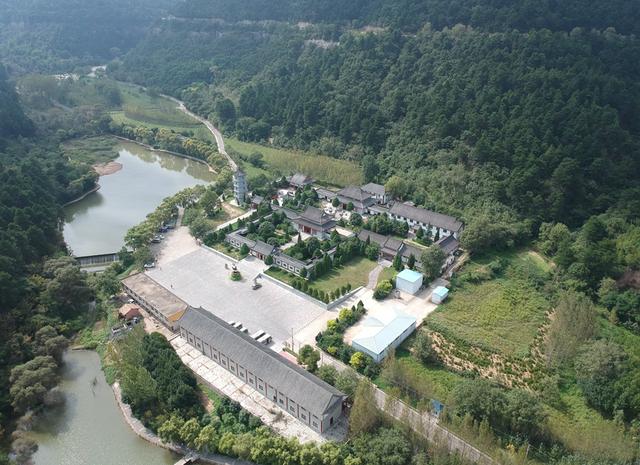
Jiu Cheng Palace. Jiu Cheng Palace was built in Jiaozhi Town, Baoji City, Shaanxi Province, during the Sui Dynasty, originally called 'Ren Shou Palace.' It was the Sui Emperor's Imperial Palace. After the collapse of the Sui Dynasty, it was restored and renamed Jiu Cheng Palace during the Tang Dynasty's reign of Zhenguan, and was renamed 'Wan Nian Palace' during the Tang Gaozu's time, meaning 'Ten Thousand Years', and was later restored to its original name. Jiu Cheng Palace is well-known mainly due to the 'Jiu Cheng Palace Li Quan' inscribed stone, which was written by Tang Dynasty official Wei Zheng and engraved by calligrapher Ou Yang Xiu. It is a representative work of Ou Style calligraphy in Chinese calligraphy history. Currently, Jiu Cheng Palace is a 4A-level tourist attraction,
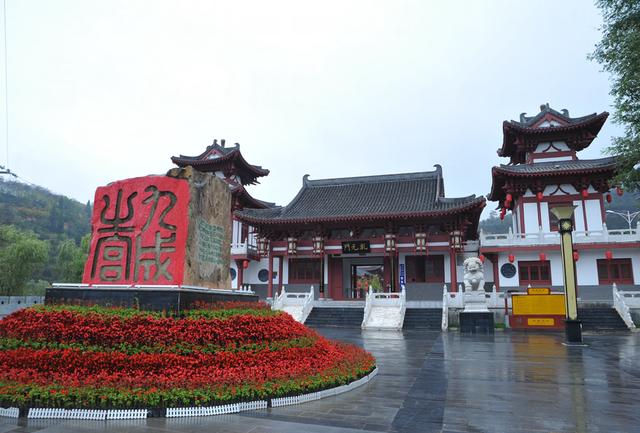
Yuhua Palace. Emperor Gaozu of Tang, Li Yuan, built Yuhua Palace in today's Yingtai District, Shaanxi Province. It was expanded during the Zhenguan period and renamed Yuhua Palace. It was a famous imperial retreat during the prosperous Tang Dynasty. Tang Emperor Gaozu Li Zhaorong translated Buddhist scriptures at Yuhua Temple for more than four years and eventually attained Nirvana at Yuhua Temple. After the Anshi Rebellion, Yuhua Palace became ruins. Currently, Yuhua Palace has built a 4A tourist attraction,
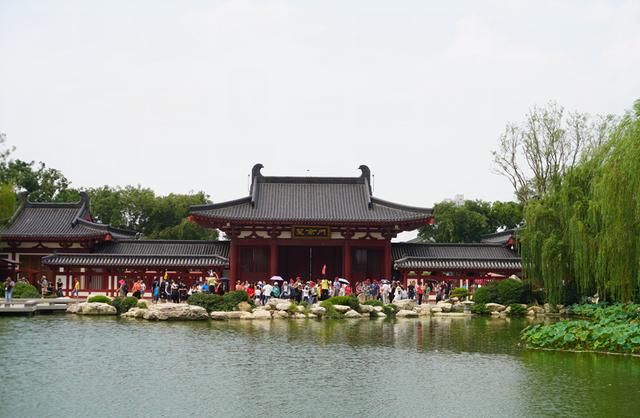
Huaqing Palace. Huaqing Palace is located in Lintong, Shaanxi Province. It has been a famous hot spring area since the Western Zhou Dynasty. The Tang Dynasty built Huaqing Palace here, but it was not particularly favored by Emperors for a long time. Until the Tang Emperor Xuanzong, Xuanzong Emperor loved Huaqing Palace, visiting it 36 times, and he had a passionate love affair with Yang Yuhuan here, leaving behind the story of 'If I could be a pair of Winged Birds in the sky, and a Linked Branch of Willows on Earth' . After the Anshi Rebellion, Huaqing Palace was no longer visited by emperors. Huaqing Palace is currently a 5A national tourist scenic area,
In summary, four of these places – Huaqing Palace, Yuhua Palace, and Jiu Cheng Palace – have been developed into tourist attractions with tourist service functions. There are also two other cultural relic protection units – Zhaokuan Palace located in Dayuan County, Shaanxi Province, and Shanshan Palace located in Mei County, Shaanxi Province. Since these sites are listed as national key cultural relic protection units, they have high cultural value,
Three, Imperial Palaces and Retreats Listed as Provincial Key Cultural Relic Protection Units
In addition, there are 12 Imperial Palaces and Retreats sites listed as provincial key cultural relic protection units, including the Dinghu Yanshou Palace site in Jiaotai Town, Fucheng, Lintong, Shaanxi Province; the Chiyang Palace site in Sanxian, Baoji City, Shaanxi Province; the Huijia Palace site in Ji County, Shaanxi Province; the Liangshan Palace site in Kaiyuan County, Shaanxi Province; the Qin Chongning site in Lintong, Shaanxi Province; the Sunjia Nantou Palace site in Fengxiang, Shaanxi Province; the Xingyang Town Palace site in Xingyang County, Shaanxi Province; the Yang Zhao Palace site in Xingyang County, Shaanxi Province; the Meixian Fifth Village Palace site in Meixian County, Shaanxi Province; and the Fuli Palace site in Chengguo County, Shaanxi Province. To be honest, I haven't visited many of these places myself, and I really don't know where they are,
Four, Conclusion
Based on my sorting results, there are currently less than 20 sites that can be confirmed and verified locally. Only 3 of these sites are currently developed for tourist reception, with the most mature tourism development and the largest number of visitors – Huaqing Palace, and the other two are Yuhua Palace and Jiu Cheng Palace. Ganshui Palace is not suitable for independent travelers, because it is far from the county town and requires a chartered car. If you drive there, it is also difficult to find.