Pilgrims' Journey: Snow Mountain Inn at the Foot of the Mountain
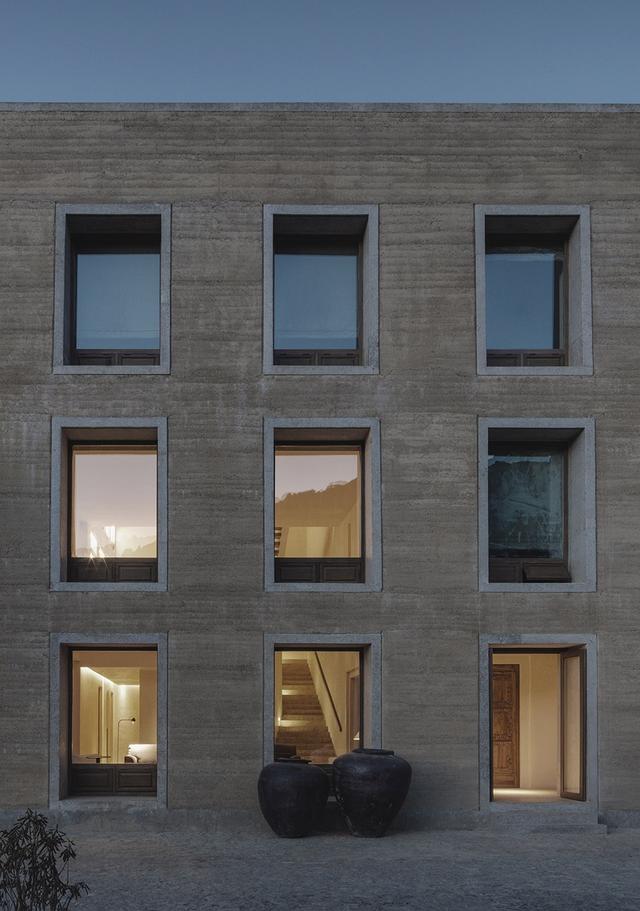
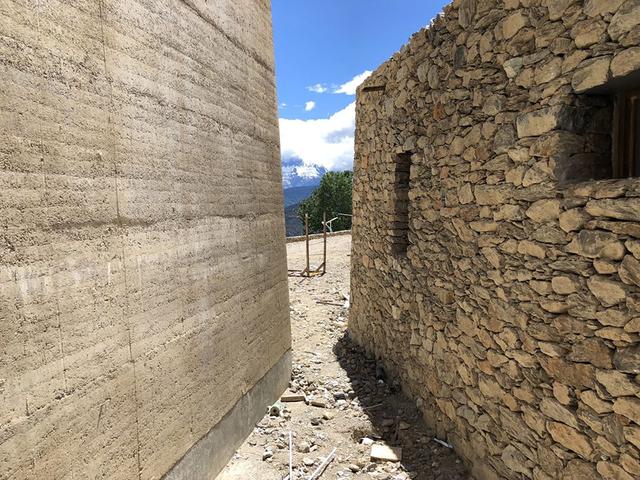
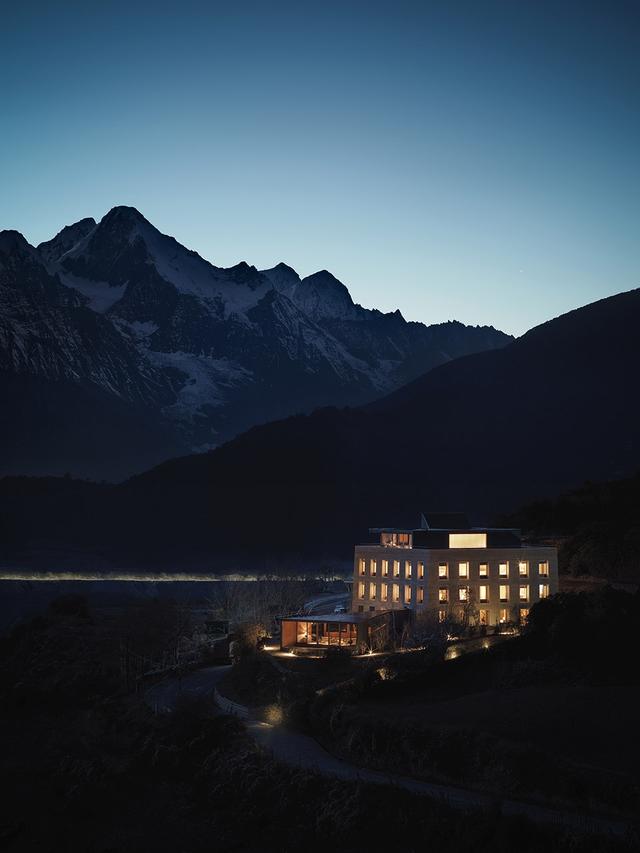
The Snow Mountain Inn at the Foot of the Mountain is a renovation and expansion project, and its predecessor was the Seasonal Birds Snow Mountain Lodge. The project is located in Wutongding Village, Deqin County, Yunnan Province, China, and its land belongs to household number 23 of the village. The Seasonal Birds Snow Mountain Lodge itself was a renovation of a 48-pillar wooden framework rammed earth house. At that time, due to the load-bearing capacity, waterproofing, sound insulation, and fire protection acceptance issues, concrete frame structure replaced the original wooden structure. However, the rammed earth wall and the central courtyard were preserved. After the hotel was completed, it became an important station on the 214 National Highway West and the best location to view and admire the entire Thirteen Peaks panorama.
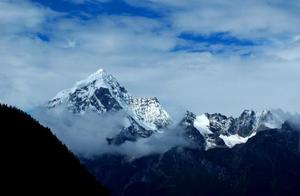
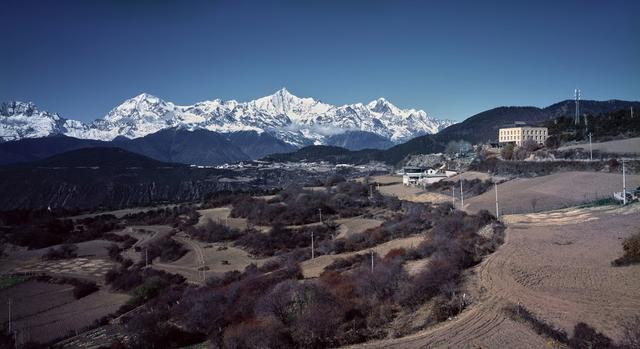
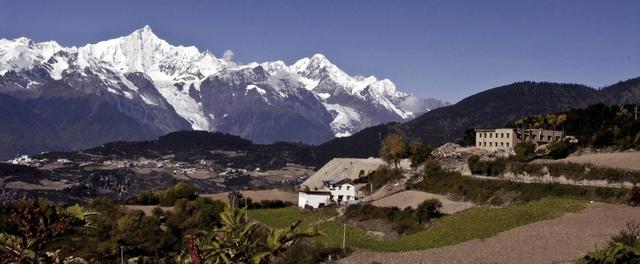
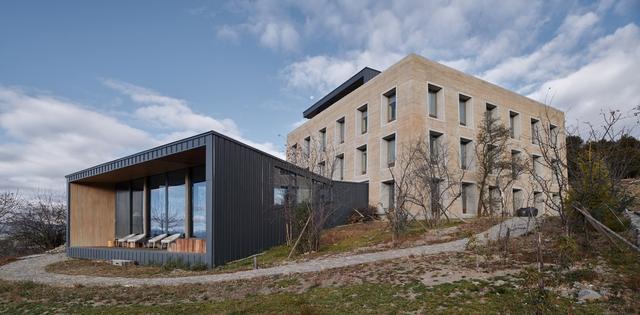
▼Distant view of the Snow Mountain and the hotel on the right side of the middle scene
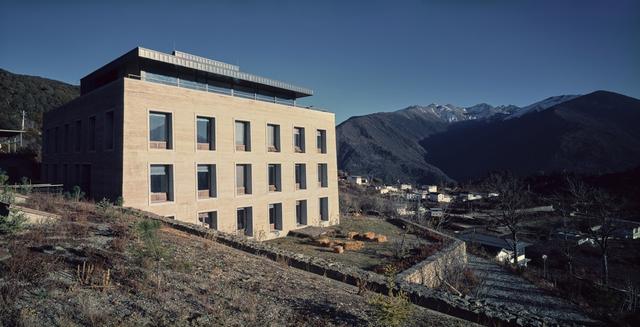
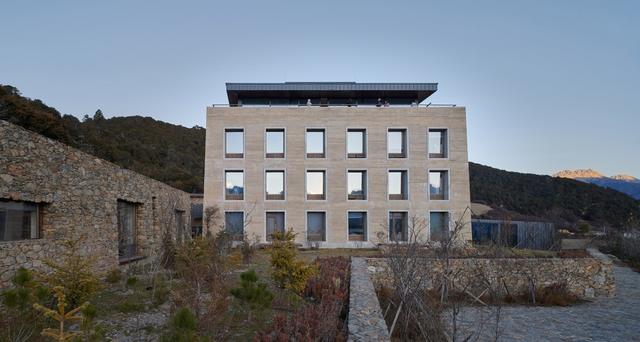
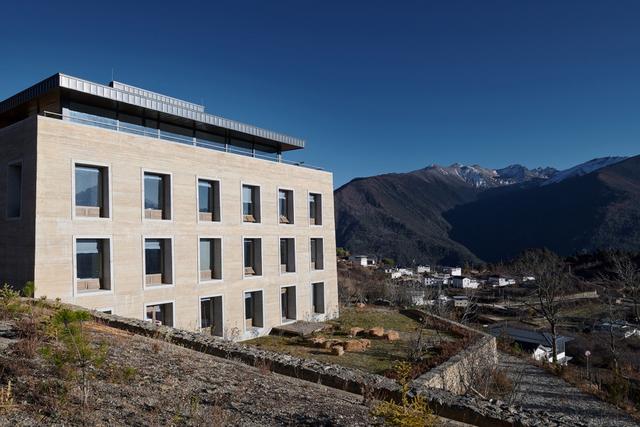
▼Hotel main building
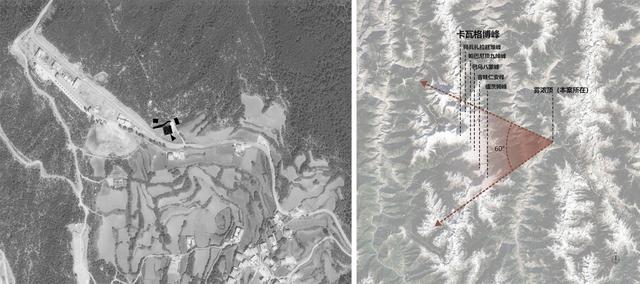
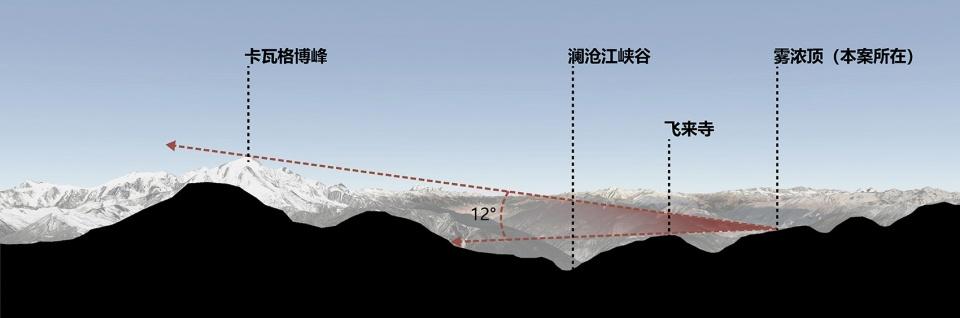
▼Site location and view analysis
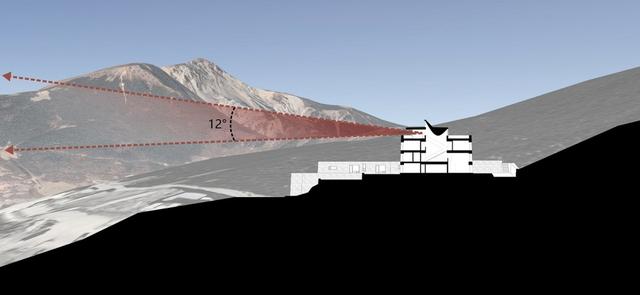
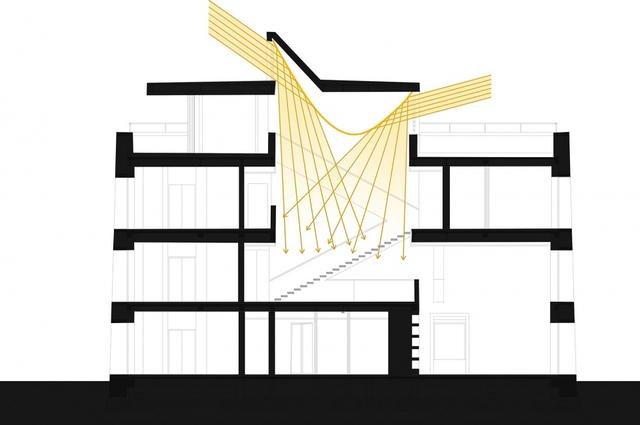
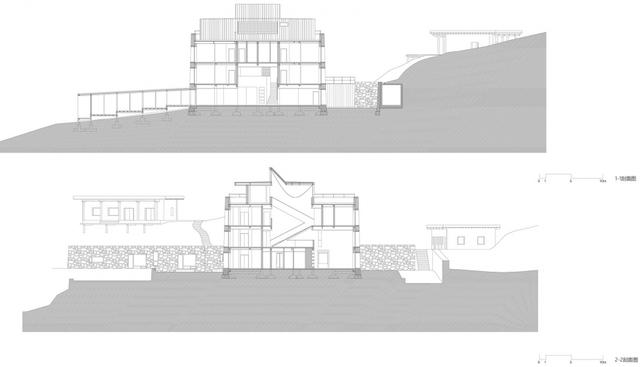
▼Hotel view section
In 2015, the founder of Luggage Travel Hotel Group, Mr. Lai Guoping, decided to renovate the Seasonal Birds Snow Mountain Lodge into a small boutique resort hotel. The new hotel will cancel the ‘Seasonal Birds’ four-month winter closure period and operate year-round. This was the origin of the Snow Mountain Inn at the Foot of the Mountain.
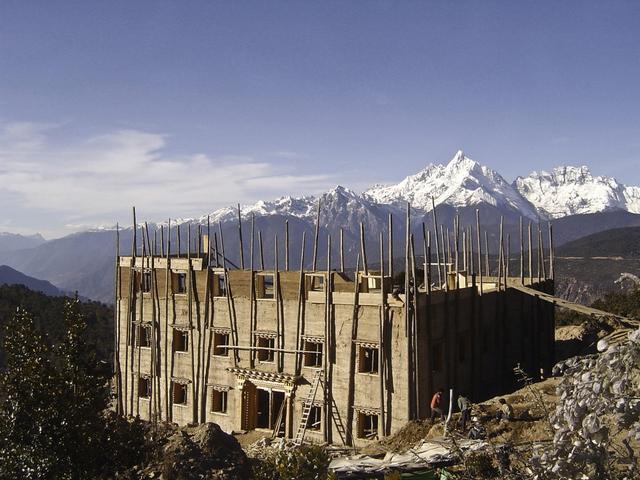
▼Original state of the 48-pillar rammed earth house in 2008
Site strategy
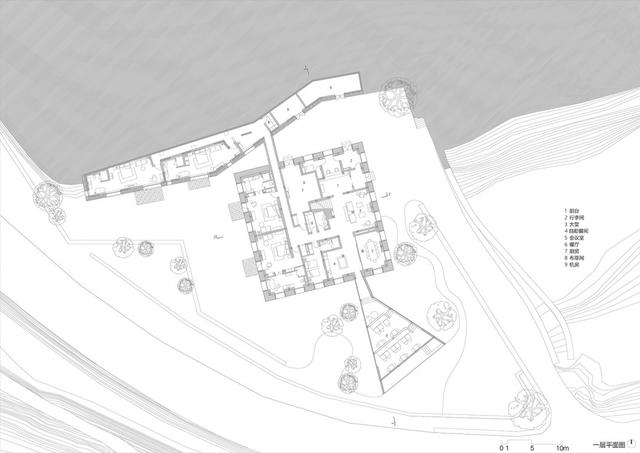
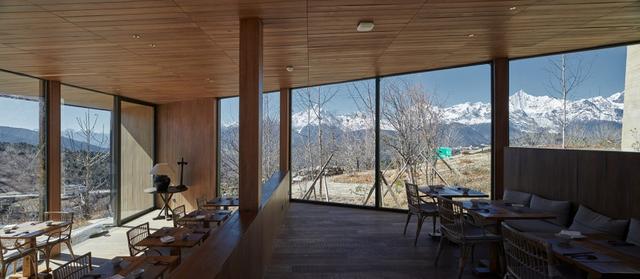
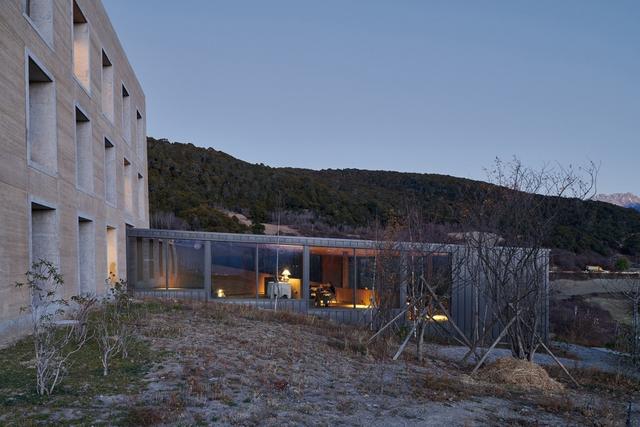
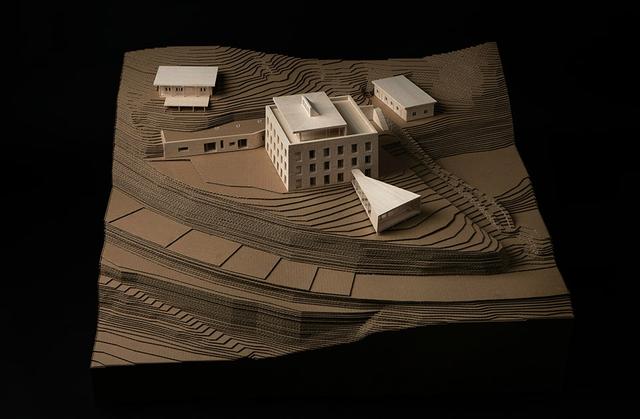
The first requirement for the renovation was to increase the usable area. The building space had to break through the layout of the existing 48-pillar rammed earth house. The 48-pillar rammed earth house had a slope on the south side, and when looking down the slope, it could perfectly overlook the quiet and serene Wutongding Village. We extended a restaurant from the south side of the 48-pillar rammed earth house. The restaurant's floor plan was in the shape of a trumpet, and the trumpet mouth inserted into the exterior wall of the 48-pillar rammed earth house, facing south, and the space gradually opened towards Wutongding Village. From the section view, the floor of the restaurant followed the slope of the terrain completely, so the orientation of the entire space matched perfectly with Wutongding Village, and each table on the floor could directly view Wutongding Village. From the appearance, this triangular restaurant was relatively independent of the 48-pillar rammed earth house, which better maintained the simple and direct impression of the 48-pillar rammed earth house.
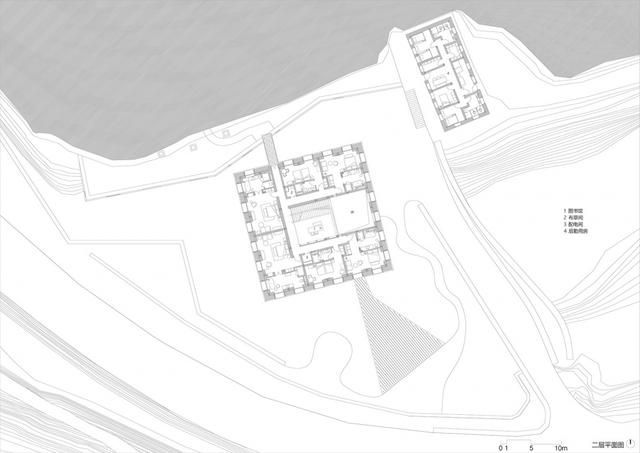
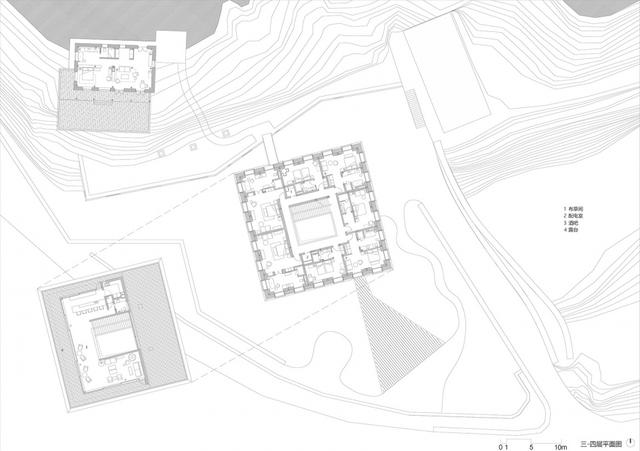
▼Ground floor plan: A restaurant facing Wutongding Village extends from the south side of the 48-pillar rammed earth house
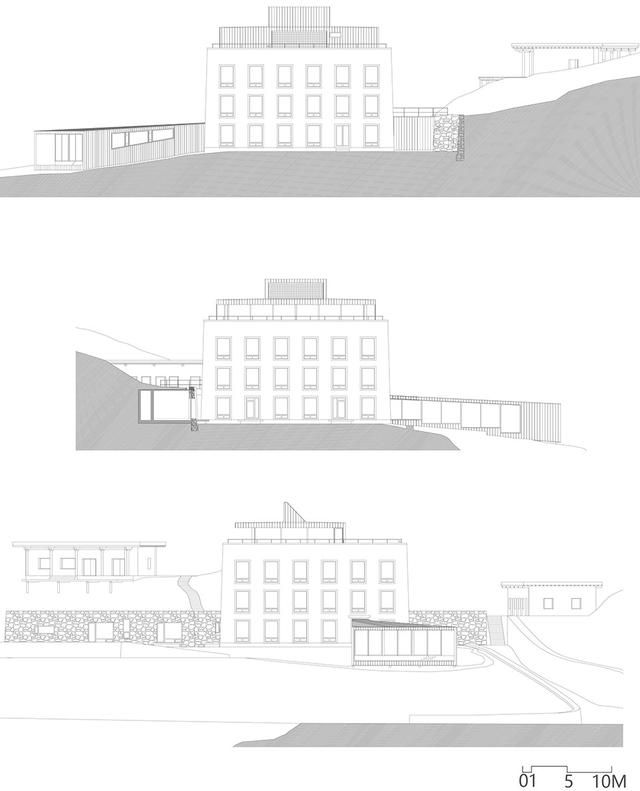
▼Elevation view
▼Restaurant exterior
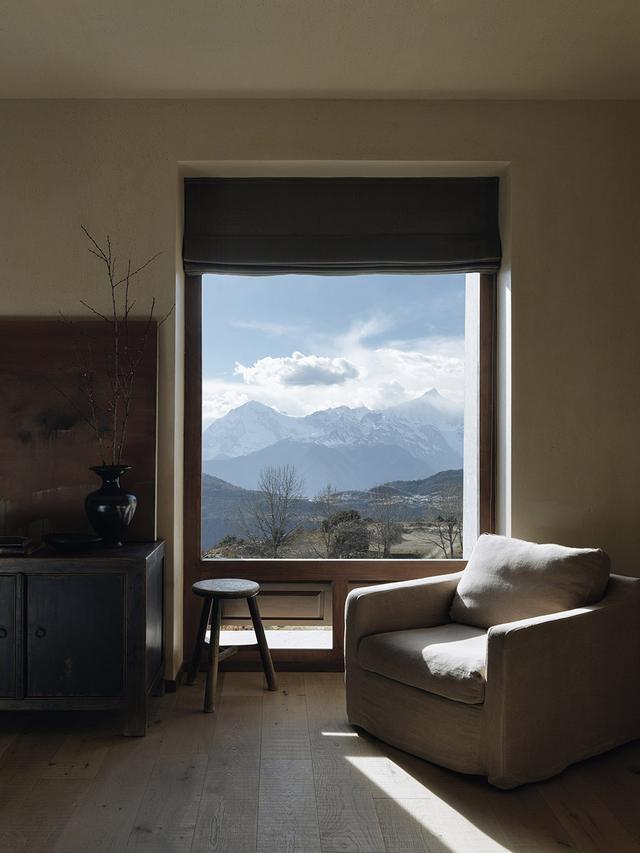
▼Relationship between restaurant interior and external landscape
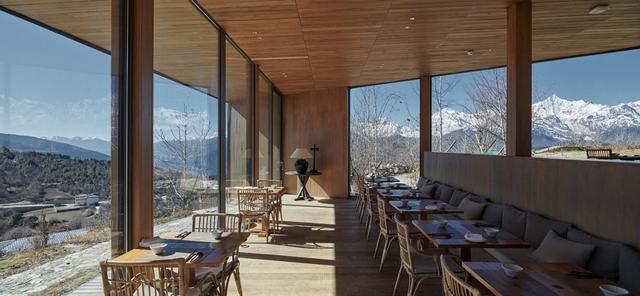
▼Looking back at the hotel body from the restaurant
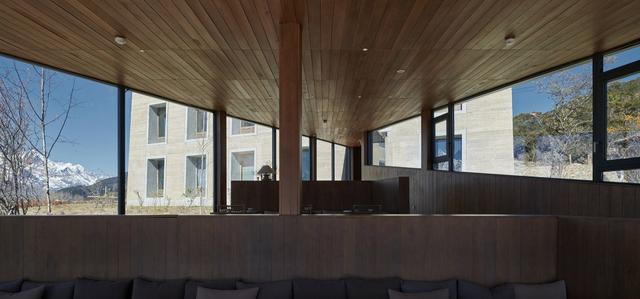
▼Restaurant interior night view
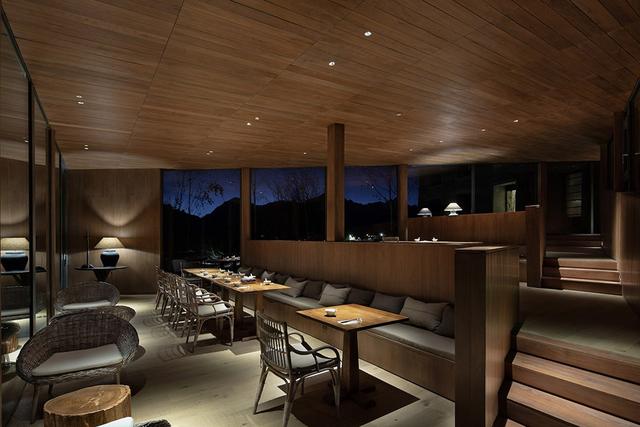
▼Looking from the restaurant entrance to Wutongding Village
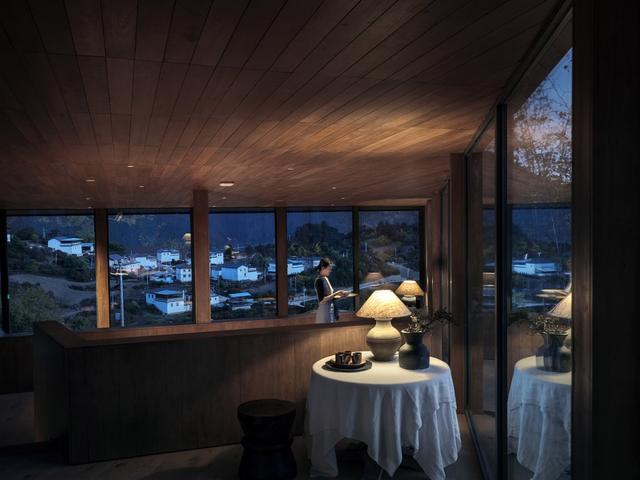
We closed the roof terrace of the third floor of the building and used it as guest rooms, making the 48-pillar rammed earth house appear as a simpler and more direct cube ‘as it is’. Then, we put the bar on the roof of the third floor, and a horizontal overhanging eaves covered a south, west, and north three-sided transparent space. The eaves of the bar and the terrace’s railings limited the upper and lower boundaries of the snow mountain’s horizontal scroll, basically effectively capturing the ideal picture from the midpoint between Flying Temple and Thirteen Peaks. The image did not set left and right boundaries, canceling the framing, and the view shifted naturally to the north and south following the horizon line after finishing the observation of the snow mountain.
▼Looking from the top floor bar to the Snow Mountain
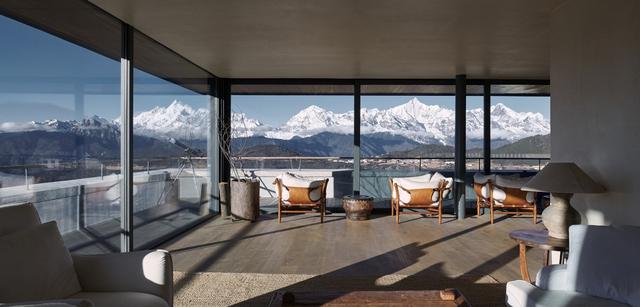
▼Bar west view
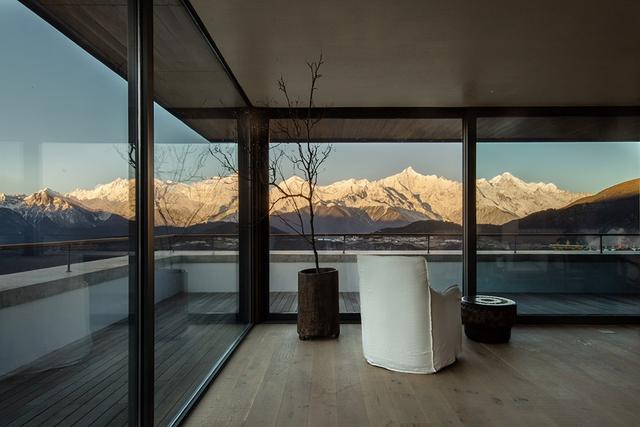
▼Bar south view
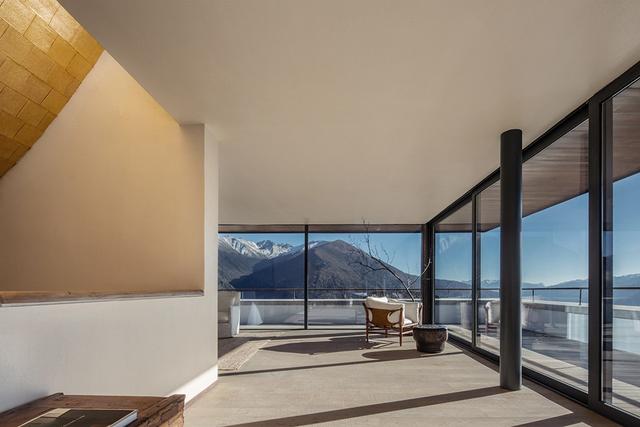
▼Bar north view
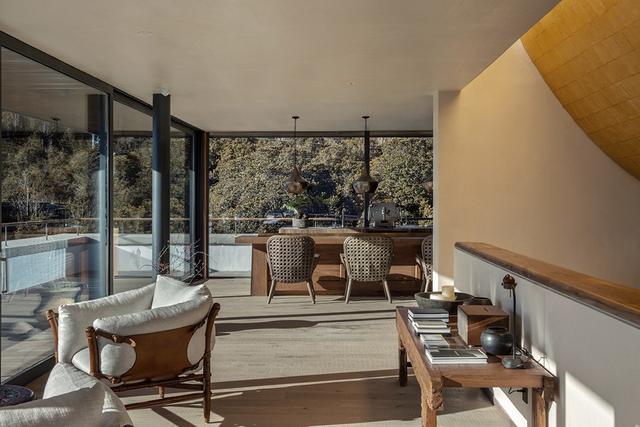
Courtyard
From the perspective of winter insulation, we covered the original building’s roof terrace with a courtyard. The courtyard is the core space of the hotel and the most difficult part to grasp. First, to change the dark and oppressive state of the main hall, we knocked down the second floor floorboards of the courtyard, improving the depth and height ratio of the main hall. Then, considering the high and tall state of the four-story courtyard, we raised the ground of the courtyard to the second floor and used this space as a library.
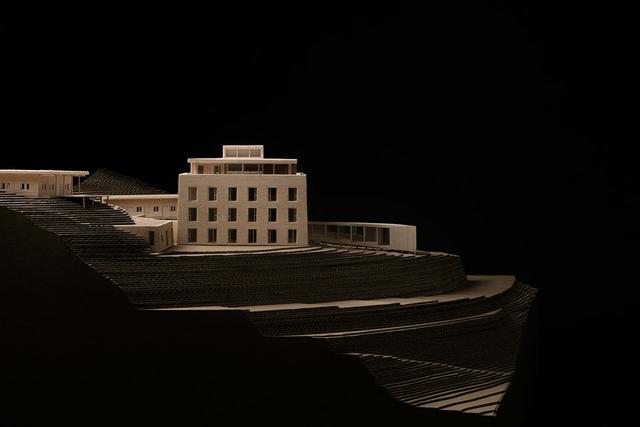
▼Section view model of implementation
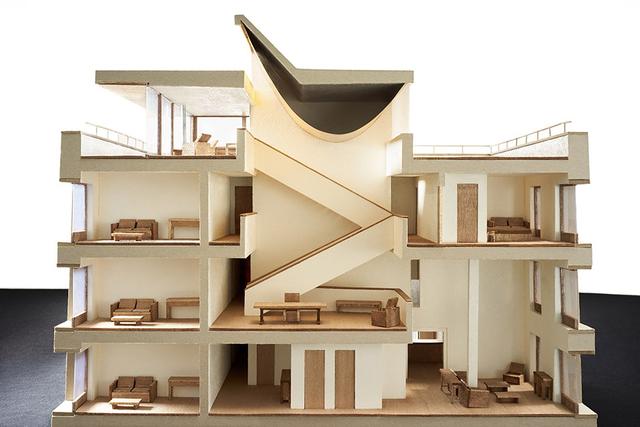
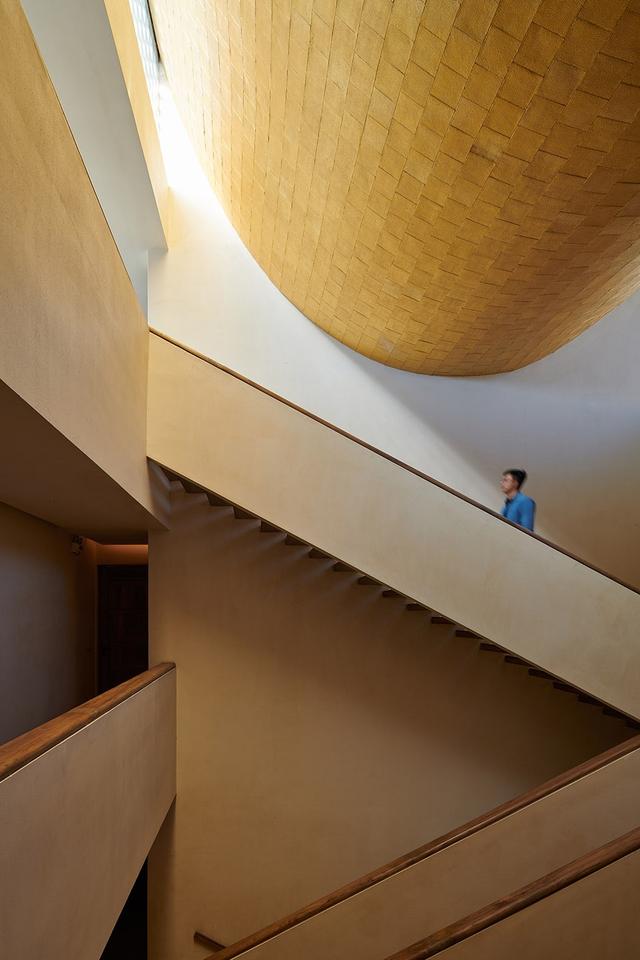
The main hall and library space are connected in section. Guests who arrive at the main hall can easily start a journey upwards through the high courtyard. Finally, we used three straight spiral staircases to connect the main hall on the ground floor, the library on the second floor, and the bar on the fourth floor. These three staircases were connected to each other and formed the shortest path and the least turning path to the snow mountain bar, and they were also the most concise expression. The two staircases from the second floor to the fourth floor concealed the supporting steel structure of the staircase with solid paneling, and they crossed the courtyard sideways in two sections, which were abstract and geometric, and they were separated from the daily life but highlighted in a commemorative way. This sky-lit staircase leading to the snow mountain is a condensed ‘pilgrimage’ journey.
▼Staircase from the main hall to the library
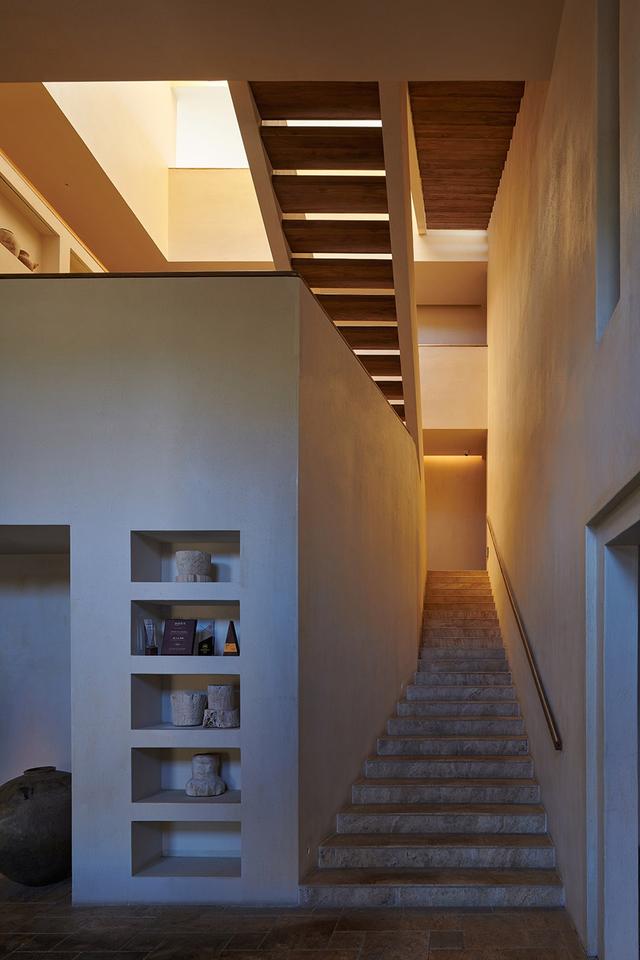
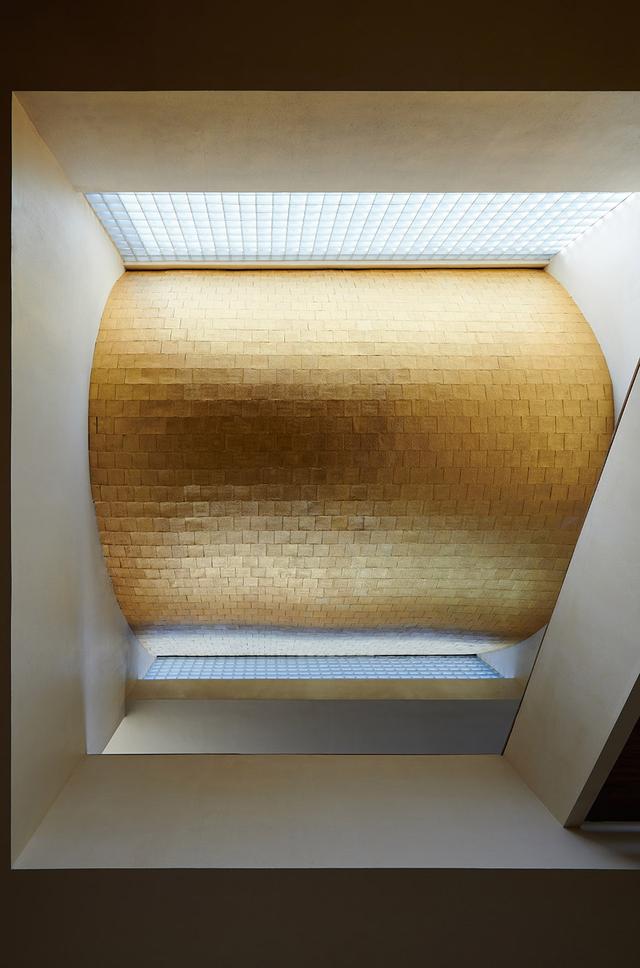
▼Courtyard overview
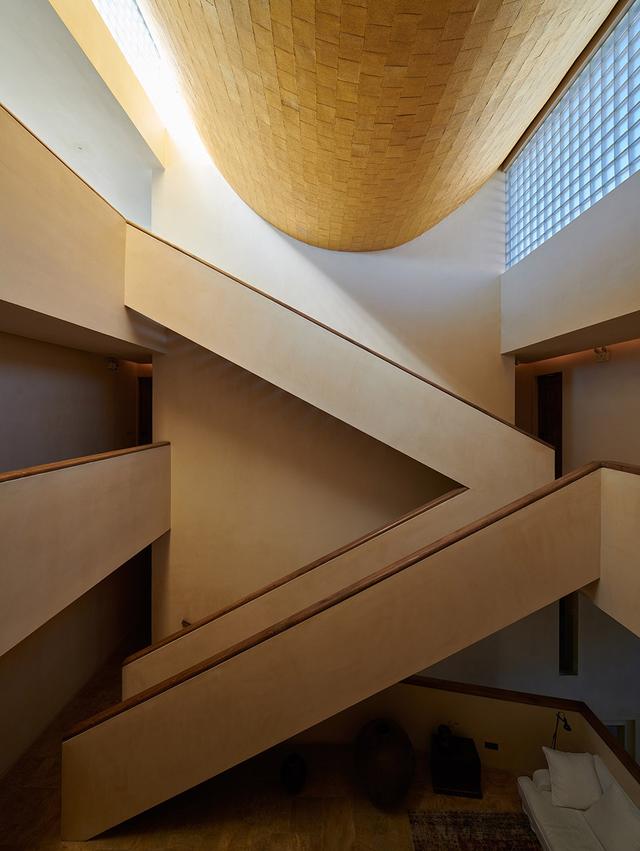
▼Space sequence from the second floor library to the fourth floor snow mountain bar
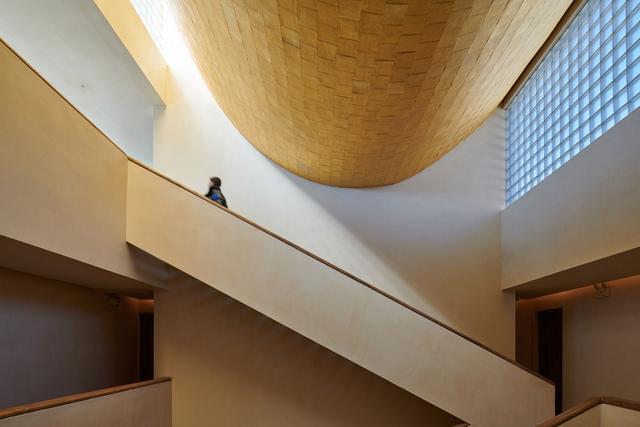
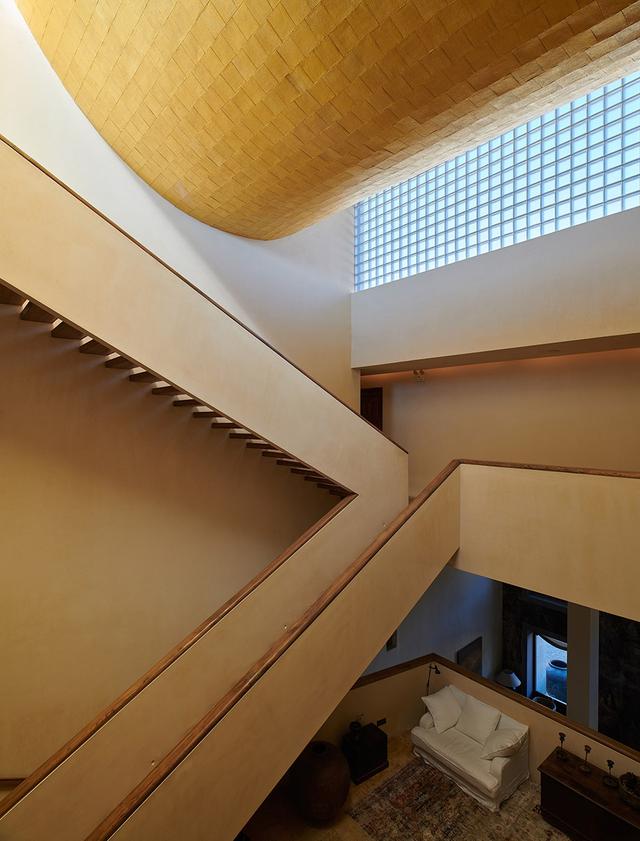
▼The two staircases from the second floor to the fourth floor used solid paneling to hide the supporting steel structure of the staircase
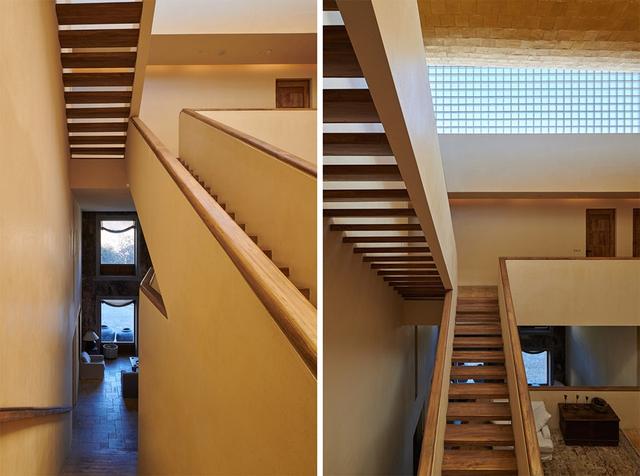
▼The three-section staircase returning to the main hall view
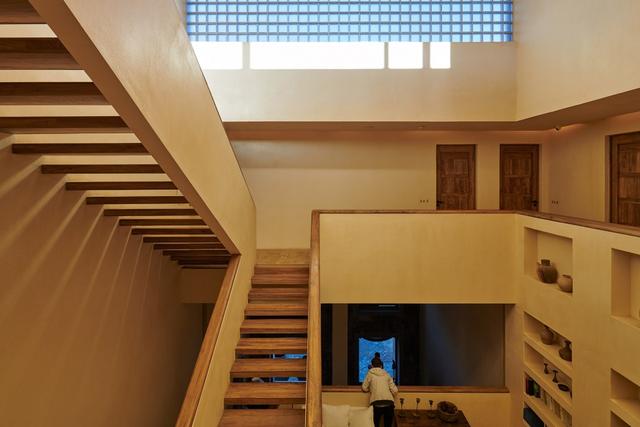
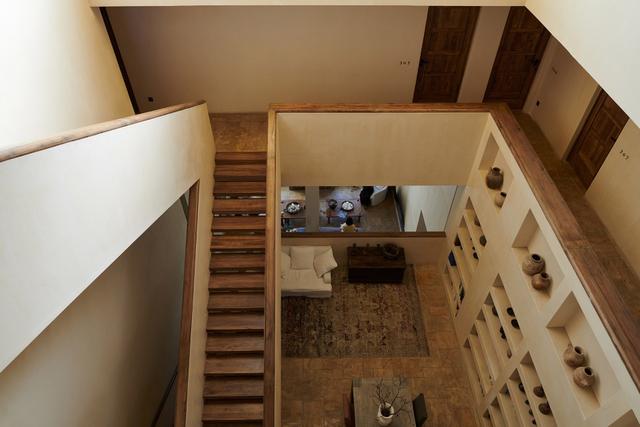
▼Bird’s-eye view of the courtyard
Mid-project name: Snow Mountain Inn at the Foot of the Mountain
Owner: Luggage Travel Hotel Group
Architect: Zhao Yang Architectural Design Studio
Design Team: Zhao Yang, Wang Dian, Li Le, David Dufourcq, Bai Hao Wen, Ding Xiang, Zhang Nan, Zhou Yi Jing
Interior Design: Xie Ke (Shang Yi Yang)
Structural Design: Ma Zhi Gang
MEP Design: Beijing Carlin Architectural Design Co., Ltd.
Project Location: Deqin County, Yunnan Province, China
Design Time: October 15, 2015 – May 5, 2016
Construction Time: June 6, 2016 – November 11, 2018
Total Building Area: 1961㎡
1.5
▼
▼
▼
▼
▼
“”
▼“”
▼
▼
▼“”
▼
▼
▼
▼
▼-
▼
▼
, , , David Dufourcq,
201510——20165
20166——201811
1961㎡