How Ancient People Found Their Way
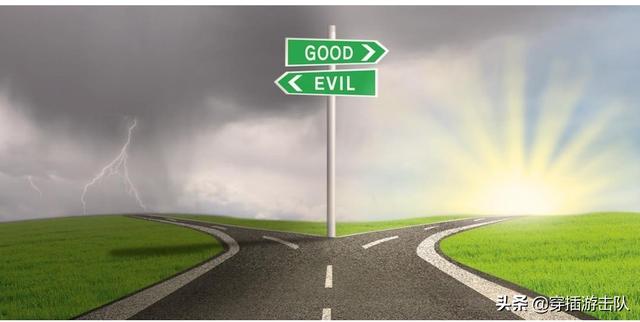
Today we went to a strange place for a trip, whether driving by car or backpacking, we don't worry about getting lost, because navigation devices are so developed now. Just ten years ago, there weren't such developed navigation devices, drivers driving long distances could only rely on carrying road traffic maps. When arriving in unfamiliar cities, if you want to find a specific place, the map doesn't have detailed annotations, you have to find a guide. Back then, every city's roadside along the public road would have many 'professional guides' standing by the roadside holding a white paper and soliciting business, with words written on it like 'Guide for ten yuan'. These guides are usually locals and very familiar with local roads and traffic.
Then how did ancients know the distribution and direction of official roads if there were no navigation devices and underdeveloped transportation?
In the Qin Dynasty, to strengthen control over the entire country, official roads were formally constructed connecting all roads nationwide. This connected the previous main roads of the various feudal states and standardized road standards and vehicle widths. Subsequent dynasties followed this practice – 'Build national highways first to make it possible for the mountains and rivers to be accessible.'
This government-organized road construction, in ancient times, was called 'official roads', also used as 'post roads' for conveying official information. The main trunk lines of official roads radiated from the capital, extending to the highest-level administrative units and major cities, and branches extended to all towns. For example, in the Qing Dynasty, official roads were divided into three grades. The first grade, 'Official Horse Road', radiated from Beijing to the whole country, connecting the main routes to major provincial capitals, which was equivalent to today's toll highways. The second grade, 'Main Road', mainly connected the provincial capitals to the important cities within the province, similar to today's national highways. The third grade, 'Small Road', connected the small towns from the main road or the major cities, similar to today's provincial roads. Therefore, by following official roads, you could basically reach all towns in the country.
Then how could ancients know the distribution and direction of official roads if there were no navigation devices and underdeveloped transportation?
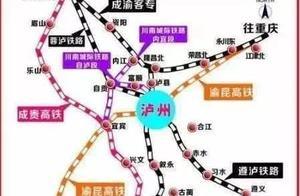
In the Song Dynasty after the commodity economy developed, a large number of merchants needed specific road guidance when traveling throughout the country, so various types of land and water road maps and guides came into being. The main roads distributed and directed by the road maps provided great convenience for people's travel. In the Ming Dynasty, the most famous road map was 'One Unified Road Map', which was both a road map and a travel guide. In addition, officials going to the capital to report on their work also needed road maps and maps to guide their journey. According to the 'Records of the Scattered Hang' , during the Song Dynasty, 'There was a white pagoda bridge on the post road, selling 'Imperial Capital Mileage Map', scholars going to Lin'an must buy it to review.'
When using road maps and maps, how do you identify the correct route and not go off course?
In ancient times, the main roads on official roads were planted with trees on both sides of the road, which could be used to distinguish the direction of the road. 'Column trees to indicate the road' as recorded in 'The Language of the State. Zhou Language'.