Slow Down and Experience Chiang Mai's Thai Culture
In Thailand, the pace of relaxation has 'infected' every tourist, allowing tourists to truly loosen up. The pace here is really slow, feeling like it's from a completely different world from the tense daily life, listening to the gentle tones of the Thai people, watching them walk and work without haste, and oneself unconsciously slowed down and relaxed.
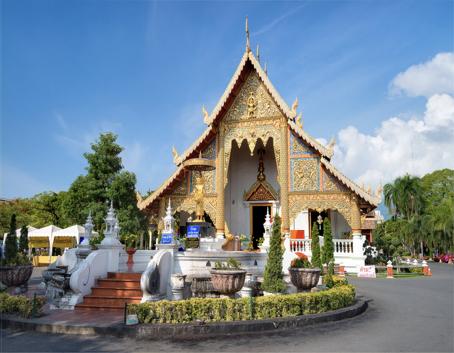
Chiang Mai corner – Photo by Mi Guanghong
Many people's understanding of Chiang Mai tourism stops at the surface, and only by deeply experiencing it can one discover that Chiang Mai's tourism industry has gone far beyond its traditional perception in many aspects. Night animal parks, bathing elephants, Elephant Poom Poom Garden… in terms of resource development, it has achieved the ultimate.
Animal parks are open during the day and closed at night, which is a common operating method. The Thai people have created many night animal parks, allowing tourists to experience something new. Chiang Mai's night animal park mainly includes sightseeing car tours + feeding giraffes and animals, musical fountains, and sightseeing car tours + feeding giraffes is the highlight. The animal park provides each tourist with a small bamboo basket to hold vegetables and fruits. The sightseeing car travels along the dark road at night, adding many mysterious elements. The car lights illuminate the animals on both sides of the car, allowing you to clearly see their nocturnal life. The giraffe area is the highlight of this project. The giraffes wait on the sides of the road before the vehicle arrives, and they stretch their heads into the car to find the food in the tourists' hands. This zero-distance feeding experience makes the tourists shout excitedly.
Chiang Mai has built the 'Elephant Poom Poom Garden', utilizing elephant feces to create paper and handicrafts, allowing tourists to personally experience the entire process of elephant feces collection, boiling, dyeing, spreading, drying, cutting, and handicrafts. Staff introduced that elephants mainly eat sugarcane and banana trees, and about half of the feces are plant fiber, which is not smelly and is a high-quality raw material for paper production. Bundles of elephant feces, transformed into small fans, bookmarks, and notebooks by the tourists, have created a small Elephant Poom Poom Garden, conveying innovative, creative, and environmental ideas, especially to children.
Thailand's concentrated Buddhist temple culture is not limited to a specific attraction, but is spread throughout Thailand's streets and alleys and all aspects of life. You can see a temple every few hundred meters, and everywhere in the temple is monks and believers. Different temples have similar architectural styles, most of which are very magnificent, with pointed conical towers, steep sloping roofs, and towers decorated with gold.
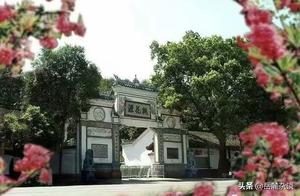
Each temple has its own story. The Chedi Lon Temple, located in the central position of Chiang Mai's ancient city, has weathered the wind and rain for hundreds of years, experiencing earthquakes, wars, and natural erosion. One wall has collapsed, covered with scars. Despite this, the tower is still the tallest building in Chiang Mai's ancient city, with red ancient bricks gleaming with new life under the blue sky, and the collapsed wall still stands tall, standing in the wind, showcasing its magnificence and solemnity. Shuang Long Temple is a pure Thai temple, guarded by two golden dragons on both sides of the road, so it is called 'Shuang Long Temple'. This temple built by the royal family is a famous cool place because of the shady trees and fresh air in the courtyard. The crystal lotus offered by the nine kings is placed on the top of the tower, and the surrounding areas are decorated with gemstones donated by different people. The temple enshrines the relics of the Buddha Sakyamuni, with abundant incense. Thailand is known as the 'Land of a Thousand Buddhas', and the density of temples is beyond imagination, and Chiang Mai is similar, with many characteristic temple buildings that cannot be listed one by one, they are an important part of Thai culture, and you can feel them everywhere, anytime, anywhere.
Traveling to Chiang Mai, you need to slow down and immerse yourself in it to better feel the local culture and life. (Written by Mi Guanghong, Cultural Scholar)
Read the whole text
Source: huanqiu.com - Culture and Travel Channel