This European Travel Avoidance Guide - You Must Save It! (Part 1)
Being your own dream can be the most difficult thing.
Going to Europe and not being noticed by petty thieves

Europe, with its exotic and mysterious mainland, is highly attractive to Chinese people. Churches, castles, landscapes, and shopping paradises... all these terms challenge Chinese people's eyes, and countless Chinese 'travelers' yearn for it.
However, there's also a well-known saying – 'The thieves of the Appenines, the bandits of France' – which has become a 'heartache' for those traveling to Europe. Faced with such a challenge, are we really helpless?
1. Begging for money
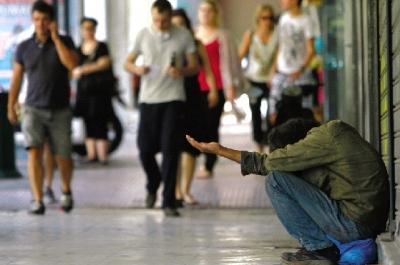
These beggars are simply unprofessional. Every time I see them kneeling on the ground or standing on the side of the road begging, I want to tell them, 'Can you guys study other countries' advanced professional knowledge and experience?' Compared to those who lie and trick people for money, they are really weak!
2. Fake coins
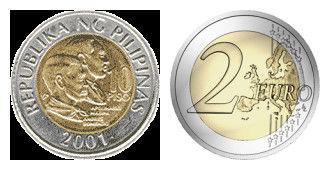
In 2003, a group of Filipinos came to Europe as domestic helpers to buy groceries. They discovered that the 2 euro coins and the 10 Philippine pesos looked very similar. Whether it was in size, material, bicolor structure, weight, or the image on the front, there were almost no differences. These Filipinos went to the supermarket's automatic vending machine to try it out, and they could actually use it. They quickly bought a bunch of vegetables and greens and thought they made a big profit. Later, one of the Filipinos told a Chinese youth about it. That night, he quit his job and flew to the Philippines to buy a sack of 10 Philippine pesos. Each coin was about 20 euro cents (2 yuan). He returned to Europe to sell to locals. He made a lot of money. This story spread, and Thai baht and euro circulated in Europe.
Some unscrupulous small vendors often mix these coins with 2 euros and use them. If they encounter one, you might lose 1.8 euros. It's not a big loss, and you can collect another country's coins, so there's no need to worry too much. However, if he asks for this 'toy', it's a little sad. Some places where this often occurs are nightclubs, where it's dark and hard to see. The bartender basically gave it randomly. So you must carefully check your wallet when paying.
3. Free bracelets
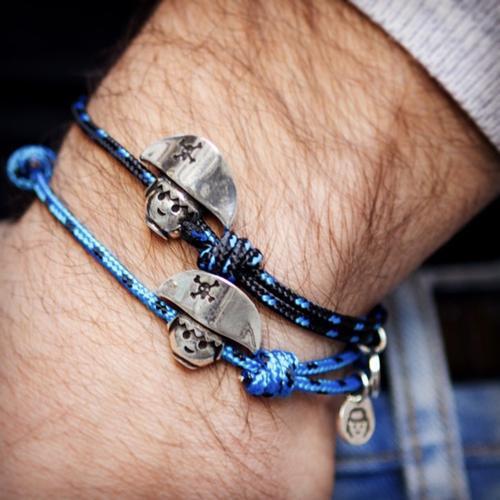
Free bracelets have basically become a classic project at European tourist attractions. 'Free bracelets' refers to a group of people suddenly coming out from a corner, shouting 'free' and tying a colorful bracelet to your hand. The bracelet originally had a knot. This person, who had just shouted 'free', immediately put his two hands out and asked for money. The best way to avoid this is to spot suspicious people in advance and stay outside their attack range.
How to identify suspicious people? First, the bracelet-tying group is mainly black. Secondly, they are frequently found at the entrances of major tourist attractions in France and Italy, especially Paris, Marseille, Rome, and Milan. They are more active in the afternoon (probably because these people are too lazy to wake up in the morning). They are most dangerous at night, when they are semi-hidden, and it's difficult to spot them in time.
4. Small twigs
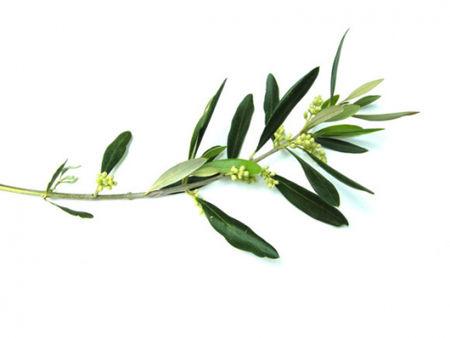
A variation of free bracelets, the methods and bracelets are similar, and they are unscrupulous young men in tourist areas, suddenly appearing and shouting 'free' or 'Gift' and putting a small twig in your hand. The biggest difference from bracelets is that it is more prevalent in southern Spain and Greece. Unlike the group of black men, this group has many people, sometimes up to 10 or more. According to formula 1, their asking price is also higher.
The reason for highlighting this is that Spanish pickpockets are numerous, so you must be careful of these groups that use small twigs as a pretext to steal. Bring some small change with you. If he asks for it, give him the change. Don't show him your wallet or valuable items in your bag.
5. Pigeon food
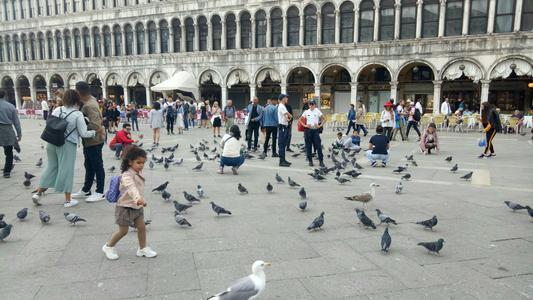
Although it's also a variation of 'free bracelets', it's different from bracelets in that it is usually handled by the elderly, sick, and disabled. It's typical to see this in the entrances of Notre Dame Cathedral and Milan Cathedral. The targets are mainly women.
A seemingly kind and benevolent old man or woman, or a partially disabled uncle or aunt, slowly and leisurely handed out a small handful or small bag of corn, smiling and said, 'It's a gift, take it.' You must understand that there is no free lunch in the world, so don't expect free good things. But like begging, there's not much force. If you feel sorry for him, give him a little. Today's introduction is over! For more anti-pit guide, please pay attention to me~
~