Mysterious! Unique! Little-Known Emeishan Caves

Located 20 kilometers north of Mount Emei is Shuangfu Town's Welfare Village, hiding the little-known Puxian Temple. The main hall of the temple houses not one, but two vibrant 'low-headed dragons', and at the back of the temple, on the hillside, there is a mysterious stone cave carved from natural boulders.
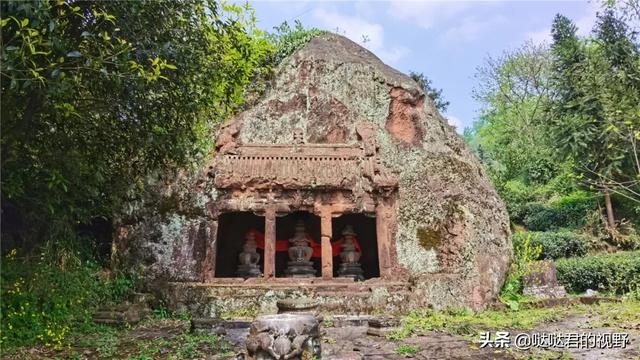
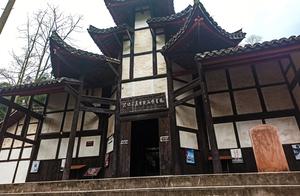
Stone cave overview
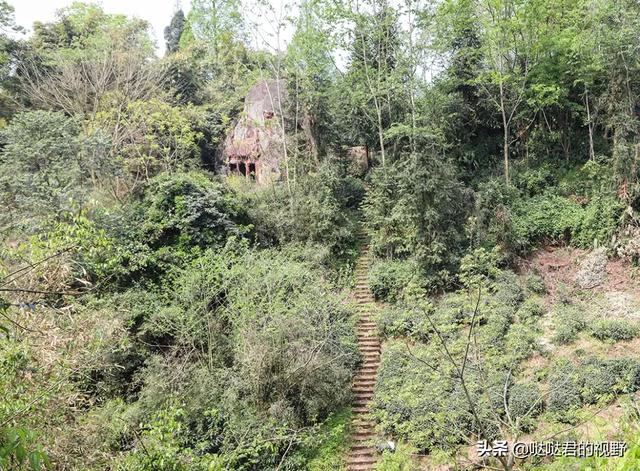
Independent stone cave
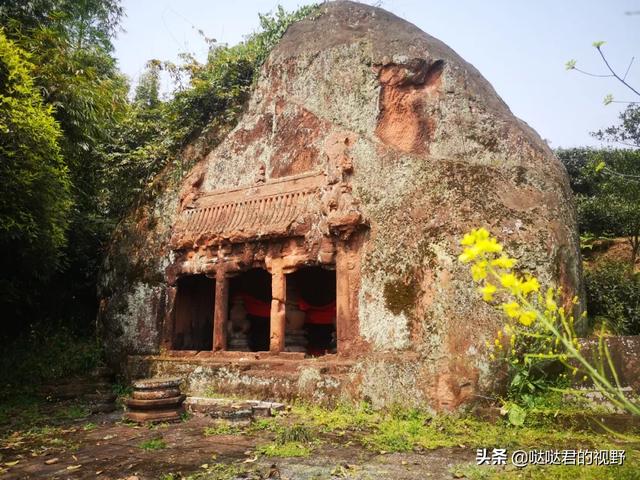
Stone cave for worshipping Master Bao Tam
This stone cave is located beneath the half-mountain, surrounded by lush greenery, and its solitary position amidst the mountains makes it even more mysterious.
The stone cave's overall appearance is exquisitely carved, despite the vicissitudes of time, still discernible from the preserved roof beams, pillars, pagodas, and stone carvings, suggesting the high status and influence of the person worshipped within.
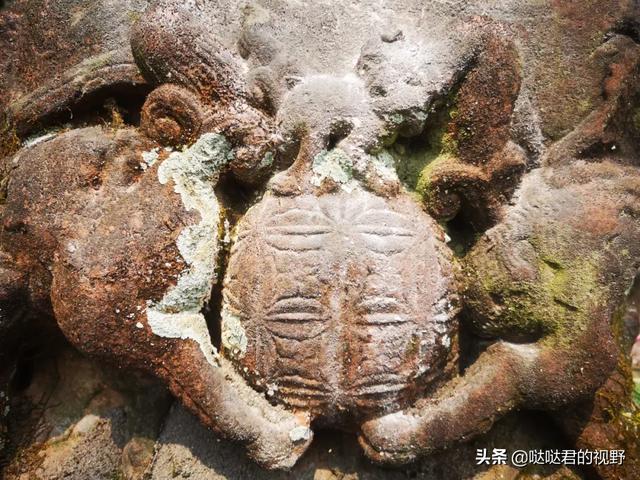
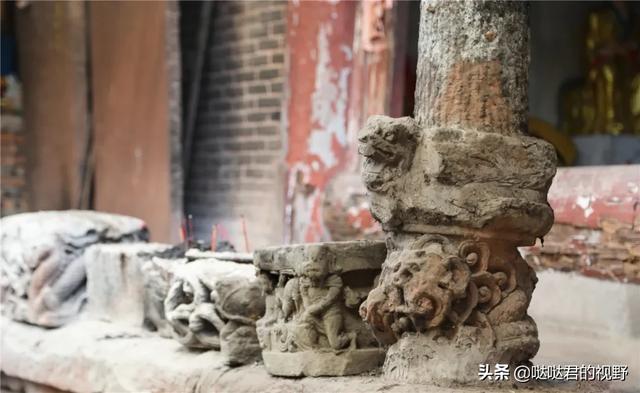
Three-legged open-mouthed dragon carvings
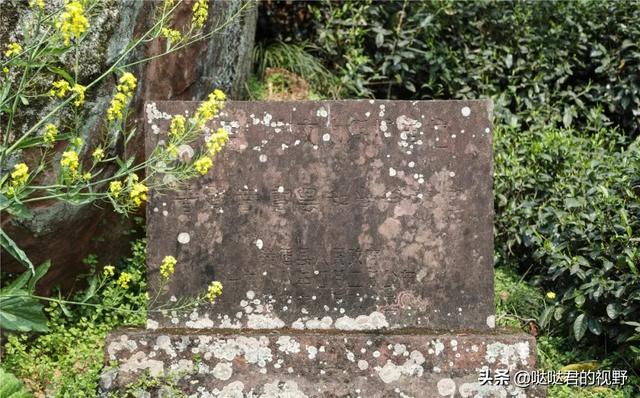
Stele
According to 'Emei Mountain Records', Master Bao Tamguo, from Wu, was the grandson of Master Kuanan. During the Hongwu period, he was() to Eifeng, rebuilding the Iron Tile Hall and casting a Puxian Buddha statue. He remained in Shu for ten years, practicing Daoist rituals. He was later recalled and died in Heaven Temple. Therefore, based on existing historical records, this stone cave is dedicated to Master Bao Tam.
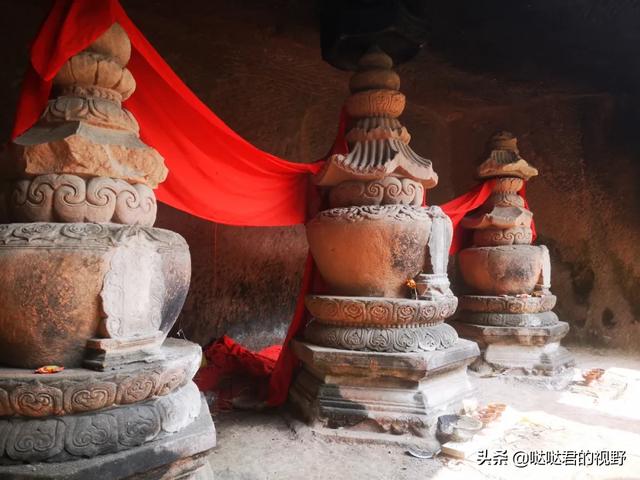
The stone cave's pagoda
Legend has it that Master Bao Tam had a brief relationship with the founding Emperor Zhu Yuanzhang, and he lived in Shu for ten years, rebuilding the Emei Iron Tile Hall and casting a Puxian Buddha statue. Zhu Yuanzhang wanted him to return to the secular world as an official, but Master Bao refused. To escape the hustle and bustle, he remained hidden in the four Emei Mountains for years, later summoned back to Beijing and attained enlightenment at Heaven Temple, and the court held a grand funeral for him as a national official. He resided in the four Emei Mountains, creating a cave and pagoda to commemorate him.
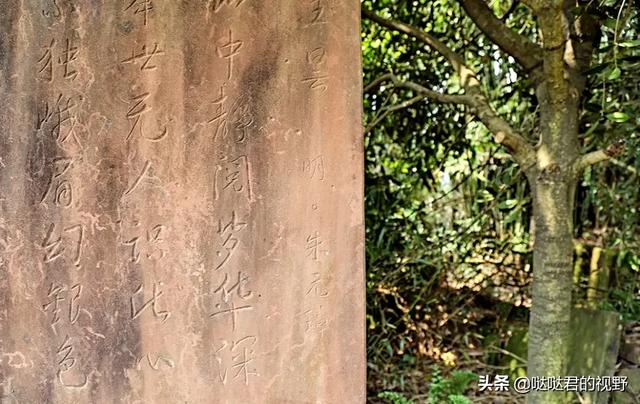
Stele with allegedly inscribed poems by Zhu Yuanzhang
Also engraved on the cave's inscription is a poem allegedly written by Zhu Yuanzhang: 'Quietly reading years in the mountains, few in the world recognize your heart.' 'Not only Emei, but also illusory silver, turning earth into gold.'
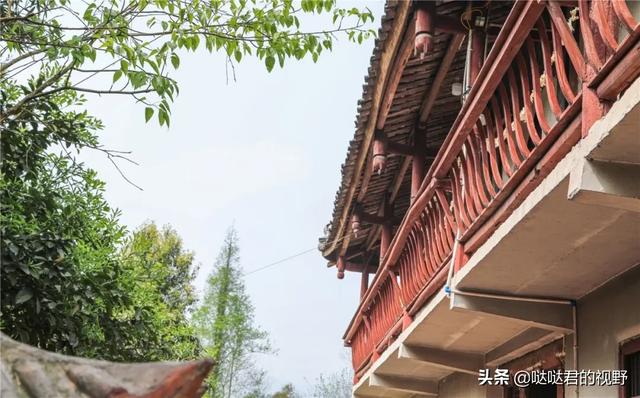
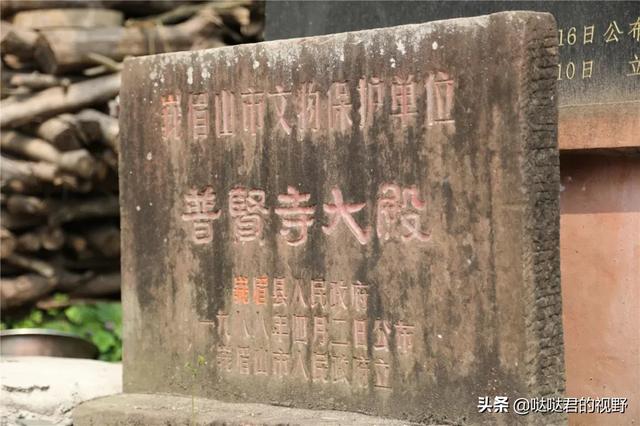
Furthermore, the current Puxian Temple was reconstructed by Master Bao Tam during the eighteenth year of the Hongwu reign (around 1385).
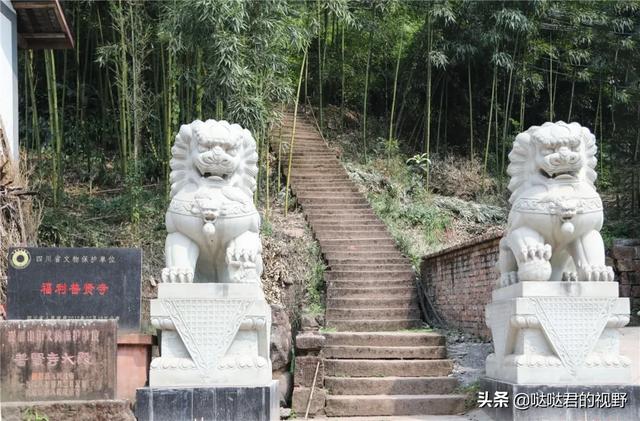
From the original Pu Xingxiang government office road side, following the series of stone steps, you can slowly climb up, and through the lush bamboo groves on both sides, you can see the hidden Puxian Temple in the mountains.
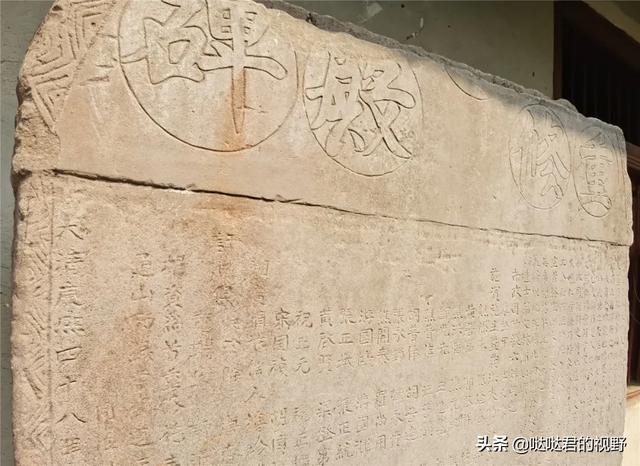
Monument for Merit and Achievements
Three stone monuments stand at the entrance of Puxian Temple, one from the forty-eighth year of the Kangxi reign (1709) for rebuilding the hall, and one from the second year of the Qianlong reign (1737) for the monument for merit and achievements, with neat inscriptions, most of which are still very clear. Beside it, there is another stone monument of a more ancient date, with inscriptions that are difficult to read, but still contains a number of legible characters.
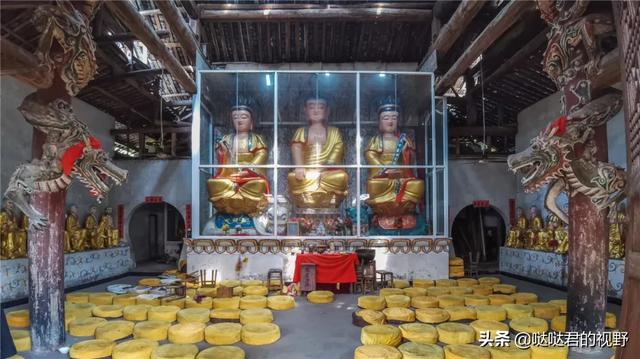
Overall appearance of the main hall
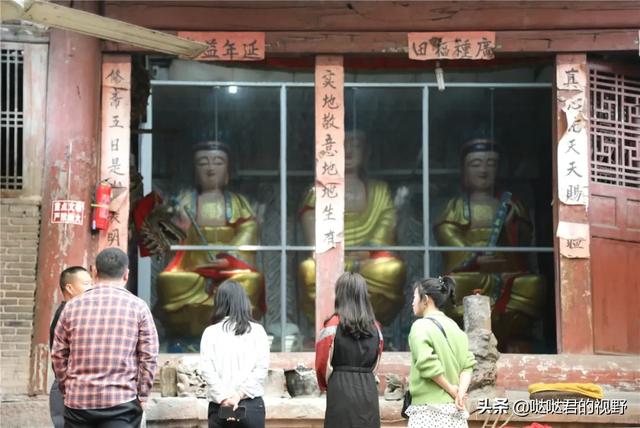
Entering Puxian Temple, the main hall is a wooden-structured ancient building. The horizontal beam on top of the main hall is inscribed with the Yongli year of the Ming Dynasty, which is clearly legible, a testament to its longevity.
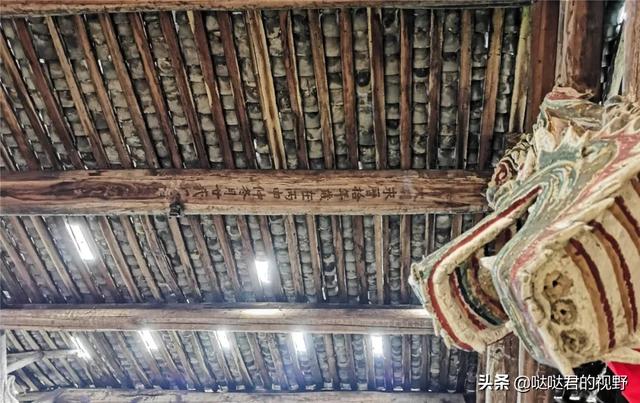
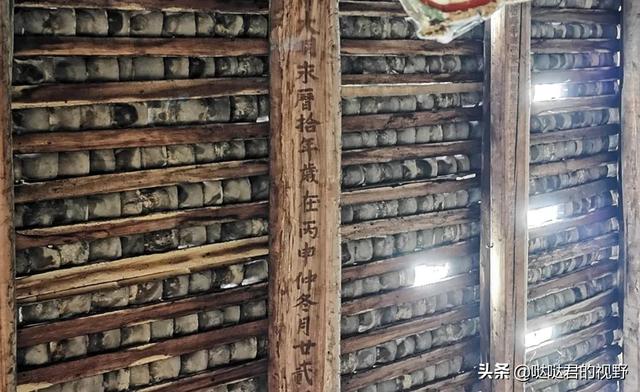
Yongli year inscription on the Puxian Temple's roof
Knowing what 'Yongli' means in the Ming Dynasty! In 1644, the Ming Emperor Zhu Youjian (Emperor Chongzhen) committed suicide in Mount Coal Hill, ending the 276-year reign of the Great Ming Dynasty. Subsequently, the Ming imperial clan members established several small court sessions in the south, with Zhu Youhong's lasting the longest, for 16 years, using the reign name 'Yongli'.Given that the Qing dynasty has been established for many years, to launch a grand project to use the Ming 'Yongli' year to mark Puxian Temple, it shows the lingering influence of the Ming Dynasty in Mount Emei!
Furthermore, there are several rare dragon-shaped carvings on the Puxian Temple's turn-angle support beams, layered and overlapped, supporting the roof ridge. The temple's pillars, beams, arches, and columns all reflect the architectural regulations of the royal palace, especially the turn-angle support beams carved with dragon shapes, indicating that this should be an exclusive building for emperors and officials.
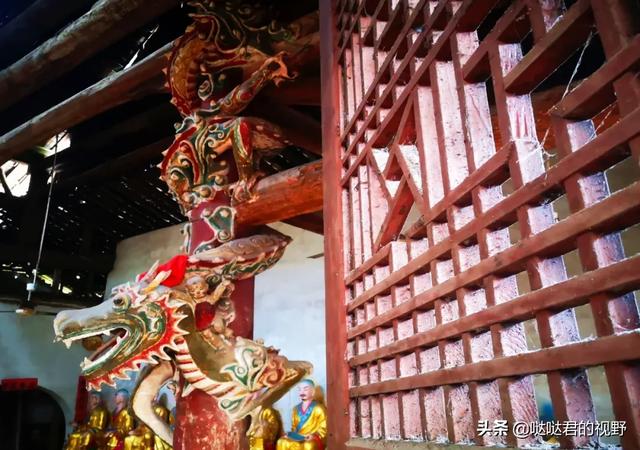
The main hall's low-headed dragon carvings
Inside the main hall, there are two wooden pillar pillars, on which two giant dragons are carved, the sculpture technique is superb, and the colors are clearly distinguishable. On the right side of the dragon's mouth is holding a pearl, the body and demeanor are lifelike. Dragons are creatures of great spirituality, the two dragons in Puxian Temple with their heads facing downward are a rare sight in Buddhist temples across China, and this is believed to symbolize respect for teachers and adherence to teachings.
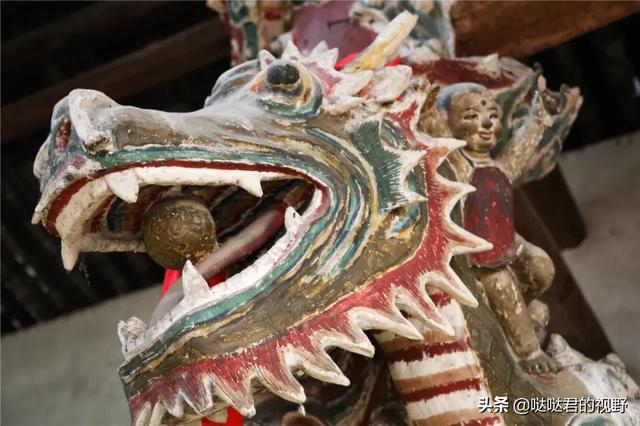
The carving of the dragon holding a pearl is exquisite
Such architectural features prove that Puxian Temple is a building left over from the Ming Dynasty, with wooden structure containing royal symbols.
The exact period of construction for these two low-headed dragon carvings is difficult to determine, and there are no relevant records. Now we can only speculate that during the era of imperial rule, the emperor (Zhu Yuanzhang) could not lower his head, these two dragons are likely the prince dragons, to let the prince respect the teacher, listen to the teacher's teachings, thus promoting the concept of respecting teachers and valuing education.
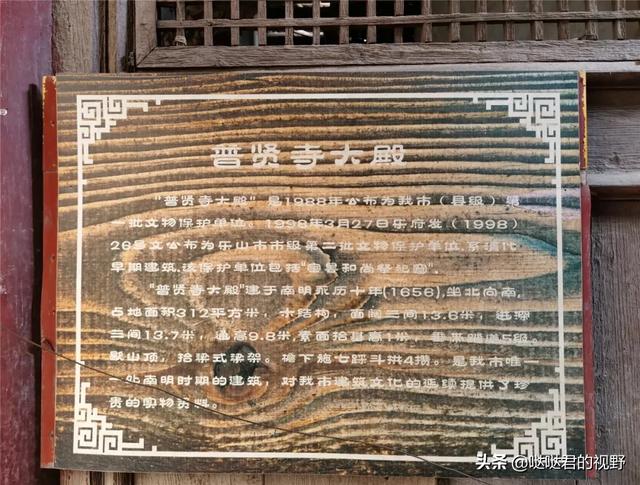
In 1988, Puxian Temple was listed as the first-level cultural relic protection unit by the Leshan City People's Government; in 1998, it was listed as the second-level cultural relic protection unit by the Leshan City People's Government; in 2012, it was listed as a provincial-level cultural relic protection unit by the Sichuan Provincial People's Government.
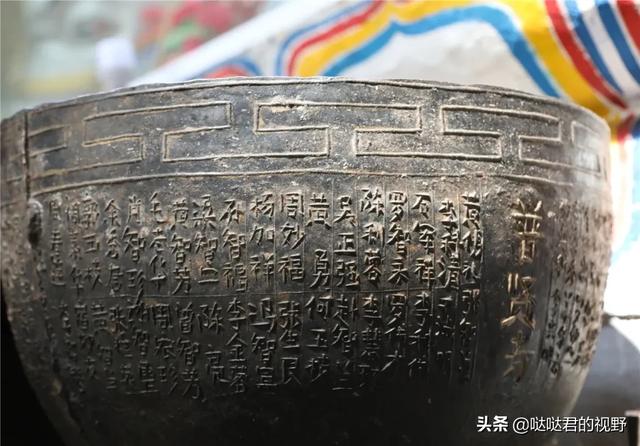
Bronze cymbals in Puxian Temple
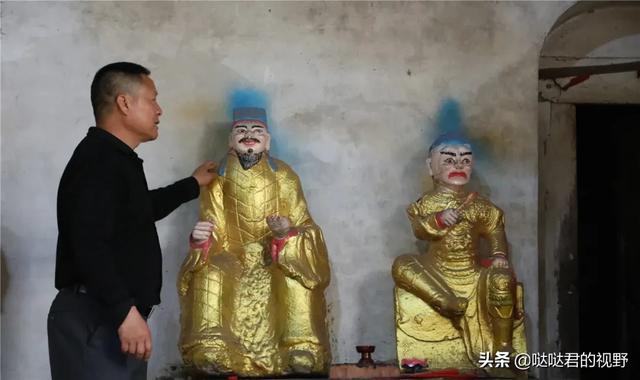
Remaining stone carvings
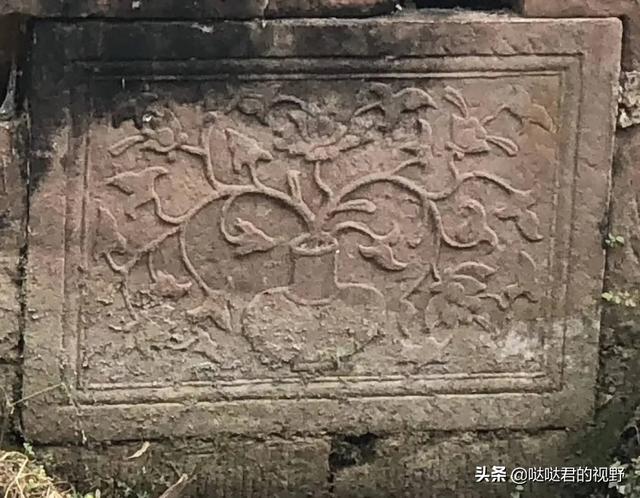
The remaining stone carvings symbolize blooming wealth and happiness, and peace and good fortune.
Eighteen Lohan statues
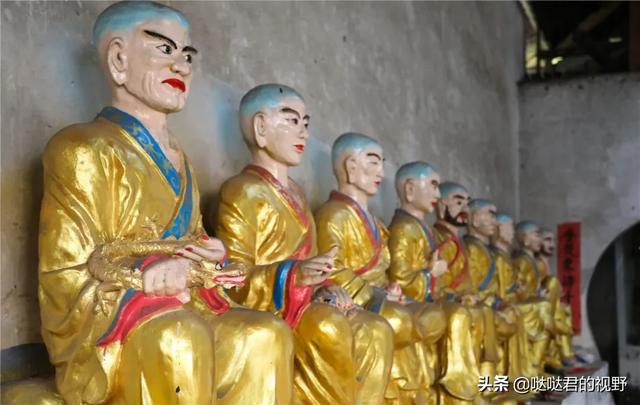
As a provincial-level cultural relic protection unit, Puxian Temple is not normally open to the public, and there are no monks living there permanently. It has a long history and a large number of worshippers. Every first and fifteenth day of the lunar new month, local worshippers and people from Jiajiang, Shawan, Jingyan, Jianyang, Ebian and Meishan, Ya'an, as well as others, come to pay their respects, with hundreds of people sometimes gathering.
This article is a comprehensive summary of the notes of Leshan City's Party Secretary Xu Siewen, and reports from New Cover News.
Source: Micro-Emei