Anhui Province's Mount Dabie Named After Li Bai, Featuring an Altitude of 1777 and Stunning Scenery, Yet Largely Unexplored
China's famous mountains and rivers, with countless landscapes, each with its own distinct beauty, always attract lovers of nature who are willing to endure hardship to appreciate these scenic views. Anhui boasts abundant tourism resources, and besides the world-renowned Yellow Mountain, there are many other attractions worth visiting.
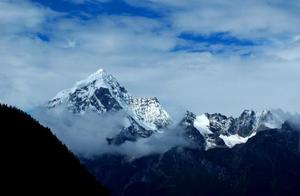
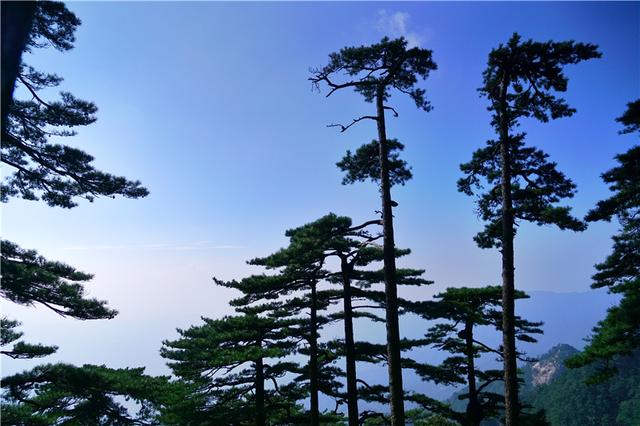
The peak of Baishapin (White Horse Peak) in the Dabie Mountains is located in Huoshan County, Luan County, Anhui Province. This area has long remained closed to the public, representing a pristine, undeveloped wilderness. Here, you'll find strange pines, peculiar rocks, and misty clouds, and few visitors have actually experienced it.
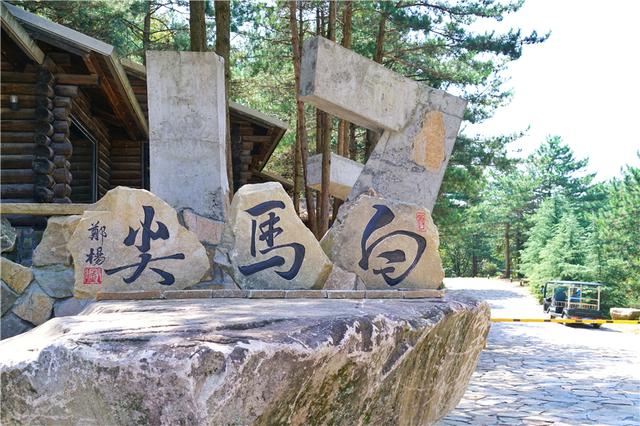
Starting from the foot of the mountain, a return trip usually takes 6 hours. Photography enthusiasts will need even more time. Therefore, it's essential to accurately estimate your time and avoid descending too late, as the mountain road can become treacherous and difficult to navigate in the dark, potentially leading to danger.
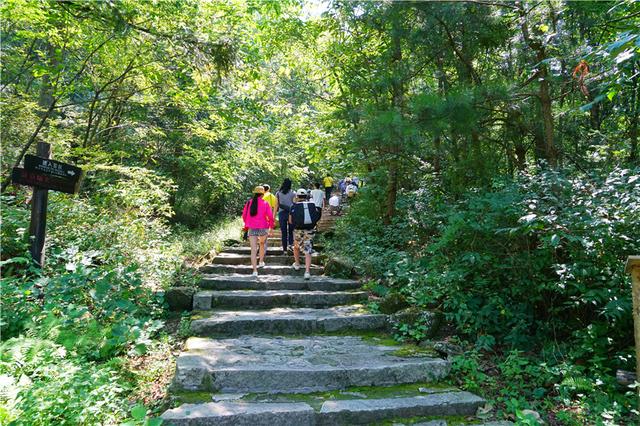
Begin your climb along the mountain path. Initially, the road conditions are decent, but as you ascend, the path becomes increasingly raw and natural.
Have you ever wondered why the Dabie Mountains are named as such? The name is connected to the story of Li Bai, the famed 'Poet Immortal' who visited White Horse Peak. The Dabie Mountains have different climates and scenery on the north and south sides, primarily stemming from a legend.
Legend has it that Li Bai climbed White Horse Peak's main summit and observed the distinct differences in scenery on both sides of the mountain, exclaiming, 'The south side boasts abundant flowers, while the north is covered in snow. This mountain is uniquely different from all others!' Because of this passage by the great poet, the Dabie Mountains received their name.
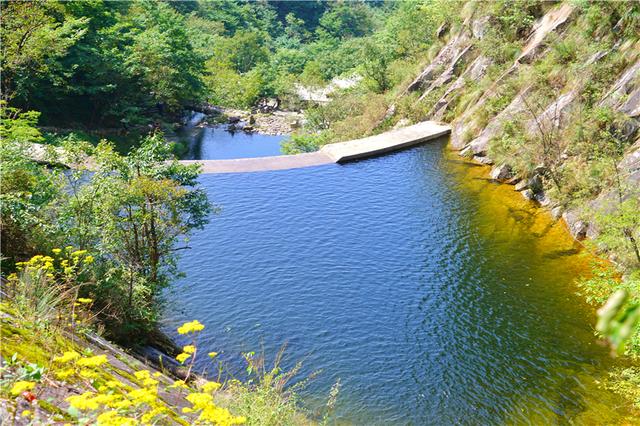
At the foot of the mountain, you'll pass through a clear reservoir and a creek, which will lead you into the dense forest, where you can begin your ascent of White Horse Peak's main summit. White Horse Peak is 90 kilometers from Huoshan County, and the summit is perpetually shrouded in mist, hence its name.
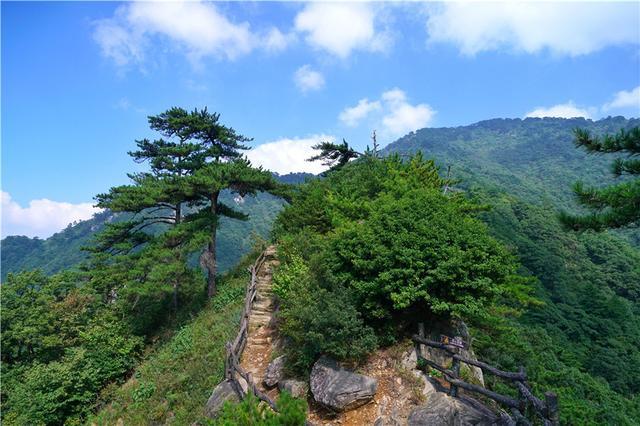
A winding and serpentine road snakes its way up the mountain. Due to the lack of development, the road conditions are not ideal, and this untouched natural environment offers even more spectacular scenery along the way.
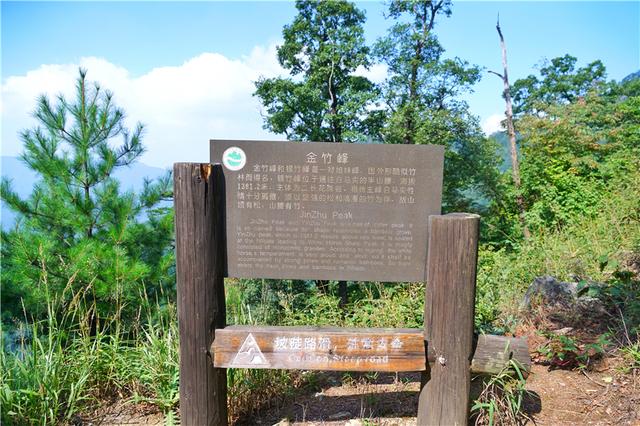
Climbing White Horse Peak is a challenging endeavor, requiring you to ascend from the foot of the mountain to the summit, passing through 7 pavilions. Now, it's a pristine, original forest.
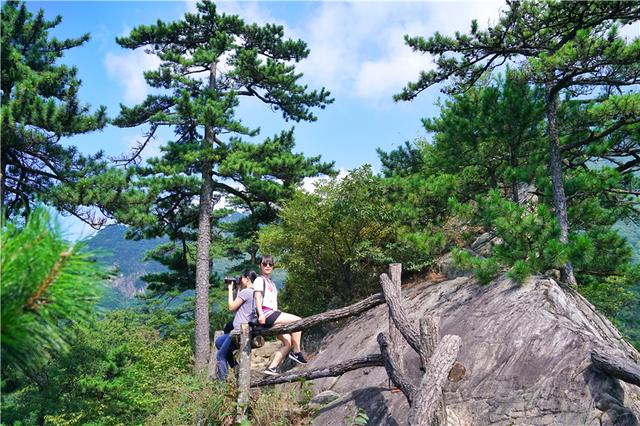
Along the way, you'll encounter various pine trees with unique shapes, which have been affectionately named 'Pine Corridor'.
The pine trees are distributed across four mountain ridges at the highest point of the summit, converging towards the east, south, west, and north. Below the Pine Corridor lies the Qianzhi Azalea Botanical Garden, the original forest, the high-altitude dwarf oak botanical garden, and other botanical gardens, all over a hundred years old. It's particularly beautiful in the summer.
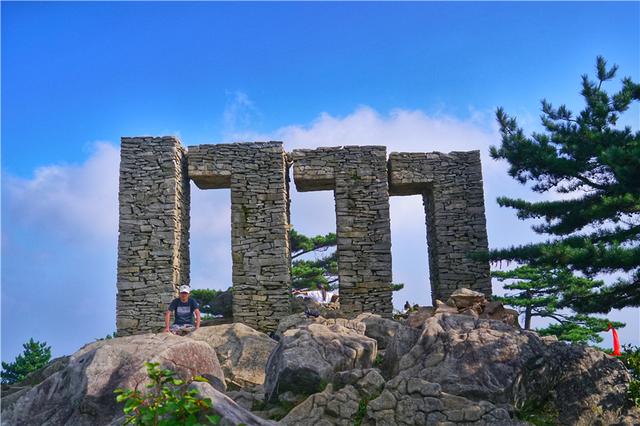
After more than three hours of climbing, you finally arrive at the summit of White Horse Peak, where the four large characters '1777' stand tall against the blue sky and white clouds, highly visible. White Horse Peak has a well-protected natural environment and ecosystem, representing a classic feature of the Dabie Mountains and a highly valuable tourist destination. Those who love natural scenery will find it a great place for hiking and relaxation.
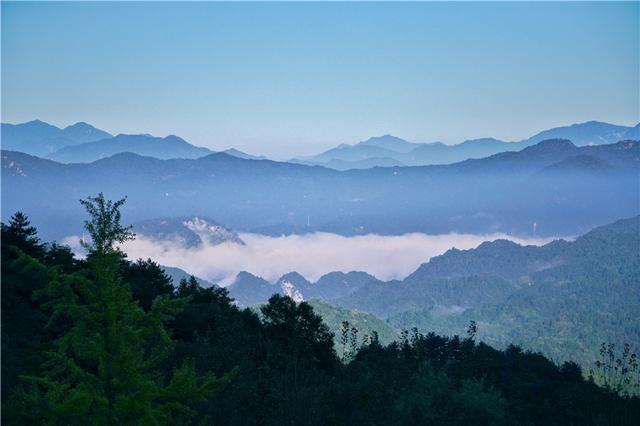
Mist flows through the mountains, and the beauty of the Dabie Mountains is only revealed after a difficult climb.