Migratory Birds 'Meet Up' at Fenyang Fengying Wetland Park
At this time of year, as a migratory stopover site, Fenyang Daban Town’s Hailitu Wetland Park welcomes a batch of special and beautiful guests –migratory birds
Recently, Hailitu Wetland Park has welcomed nearly 1,000 white-necked cranes and over ten thousand geese ‘gathering for a stopover’, forming a brilliant landscape.
Although the weather is gradually warming up, standing by the lakeside of Hailitu Wetland Park, you can still feel a slight chill.

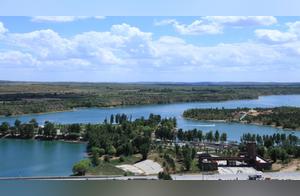
Here, it is open, cool, and full of vitality. Sunlight shines on the lake and, creating a golden sheen.
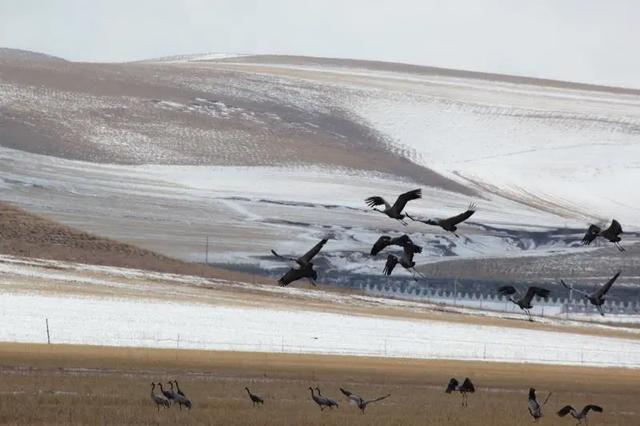
With a gentle breeze, patches of reeds sway in the wind; fresh air mixed with the damp scent of lake water and the fragrance of soil. On the lake, flocks of migratory birds occasionally lower their bodies to forage leisurely, and sometimes chase the water to play……this adds a lot of interest to this quiet and serene landscape!
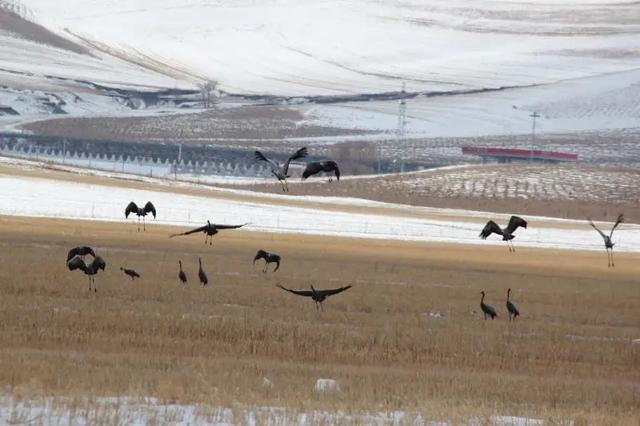
‘In a few days, there will be more migratory birds here! In flocks, it’s especially beautiful!’ According to a local villager who comes to the wetland park to feed the birds every day, there are flocks of white-necked cranes in several small ponds in the wetland park, some resting on the ground, some soaring in the sky, and some walking back and forth to probe for food……These white-necked cranes are very cautious, and as soon as someone approaches, they flap their wings and fly high.
It is understood that white-necked cranes are a national secondary-level protected bird species, inhabiting open plains, grasslands, swamps, riverbanks, vast fields, lakes, and farmland, with high requirements for water quality and environment.
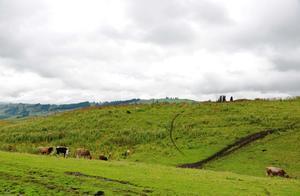
Hailitu National Wetland Park in Fenyang Daban Town is a wetland characterized by meadows, swamps, and rivers on the. The park’s ecosystem is complete, with rich biodiversity and ecological functions. There are 286 wild animals in the park, including 167 bird species. Every spring, large numbers of white-necked cranes, geese, swans, and dabbling ducks ‘refuel’ here before continuing their migration north.
Migratory birds constantly stop here for ‘rest’, which is also enhancing the ecological protection awareness of local villagers.According to staff from the Chengde Forestry and Grassland Bureau, with the increasing implementation of ecological protection measures such as herding suppression and grazing prohibition, the Hailitu wetland ecosystem is becoming increasingly complete. Large numbers of migratory birds stop here from early March to mid-April.
Continuous ecological improvement, combined with increasing public awareness of protection, has led to a growing number of migratory birds, longer stay times, and earlier return times.Source: Chengde Ecological Environment Release