The Humanistic Legacy of Ming Dynasty Soldiers in Guizhou, Still Visible After 600 Years!
I've been in Guizhou for many years and have always wanted to share the unique tunes culture here, but my writing skills were limited, and I never took action. Today, after sorting out my thoughts, I decided to put pen to paper and share it with everyone. Let's start with Tianlong Town in Anshun.
When it comes to tunes culture, Tianlong Town and Yunfeng Town in Guizhou Province are the most representative, with Tianlong Town in Anshun City, Pipa District being the most prominent. It's located on a side street in a bustling downtown area, with convenient transportation and a lively atmosphere. The street leading to the entrance is lined with various shops, selling agricultural products, strange stones, and ethnic clothing. The commercialization of tunes is now evident.
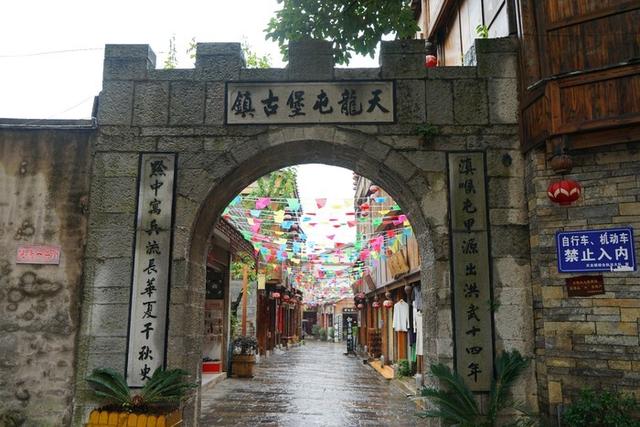
The 'Tianlong Town' archway is very eye-catching and a popular photo spot for tourists.
Tianlong Town and Yunfeng Town share many similarities, both home to a unique Han ethnic group. Six hundred years ago, during the turmoil in the southwest, the Ming Dynasty Emperor Zhu Yuanzhang dispatched 300,000 troops to in the southwest border. The current tunes people are descendants of the soldiers who were relocated from inland.
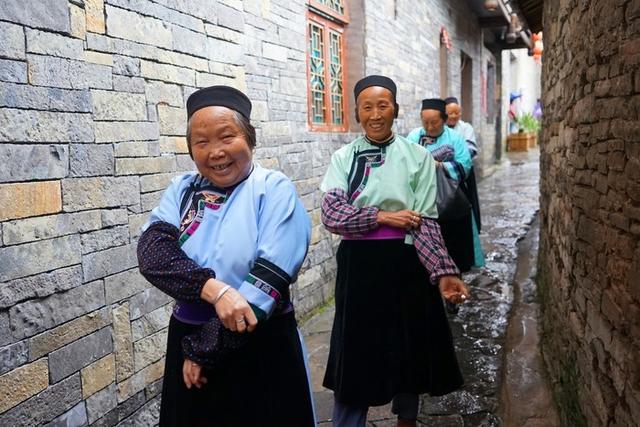
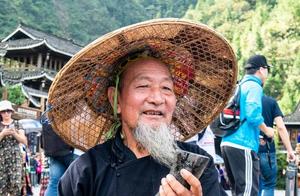
An elderly local wearing traditional clothing.
The tunes people's use of 'towns' actually refers to two concepts: 'town' refers to a military depot, where troops transmitted letters, received officials and hosted the families of soldiers, and '' refers to a place where merchants and ordinary residents lived. Here, you can see fortified defenses, fortresses, and interconnected residences. The villagers say that many of these houses are over a hundred years old. Thinking about it, our modern houses are often only 40-50 years old and considered dilapidated, while these tunes buildings have stood strong for over a century. However, it makes sense that the tunes fortifications were designed to withstand external threats. They not only cultivated land and raised families but also had the responsibility of defending against enemies. Therefore, the buildings here had to meet residential needs while also serving a military function: waterproof, fireproof, windproof, and corrosion-resistant, and robust enough to withstand war and protect the waiting reinforcements.
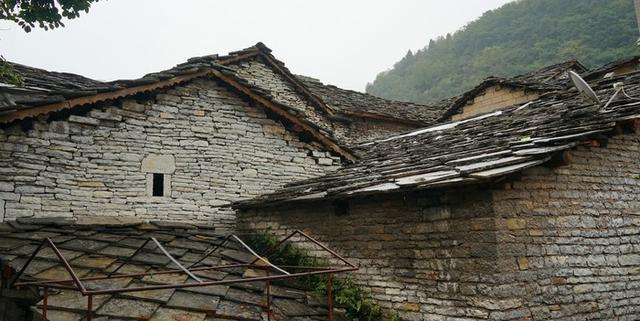
Stone-built houses, interconnected and with military functions.
The architecture of tunes has its scientific basis: built with stone, stone-paved roads, stone houses, and stone roofs, all for the needs of war. The interconnectedness of these buildings was a drawback in terms of fire safety, but using stone avoided this problem.
You can still find a trace of the Jiangnan water towns in Tianlong Town. Stone-built houses, a small stream flows through the town, reminiscent of the Jiangnan water towns. The local costumes reflect the styles of the Ming Dynasty, and you can often see elderly women wearing large-sleeved, blue robes. However, these are mostly older women, and the tradition has been passed down for several hundred years. You can still see traces of it on them.
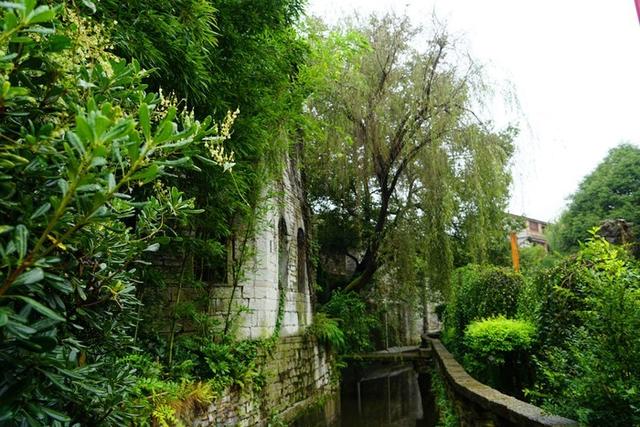
The small stream and stone bridge evoke a Jiangnan water town atmosphere.
However, with the impact of modern culture, you rarely see young people wearing these old costumes, and I'm very worried that tunes culture will disappear under the influence of modern thought!