Lost Great Walls of Jiayuguan: Exploring the Secrets of the Wild Ma Wan Wall Site
I am Lao Li from Runxin Car Accident, and I've filmed three episodes of 'Wild Great Wall' already, the fourth one is about to go online. This is my first time presenting it in a pictorial format. This format will be the norm for the 'Wild Great Wall' series moving forward.
Generally, tourists to Jiayuguan usually visit the three main attractions: Jiayuguan City, the First Pier of the Great Wall, and the Cliff Wall. However, these are just parts of the Great Wall. In reality, there are many other sections of the Great Wall that are incomplete, and most of them have been protected to some extent. Due to specific geographical environments and transportation factors, these places are rarely visited by tourists unless they are Great Wall researchers or enthusiasts seeking out the wall.
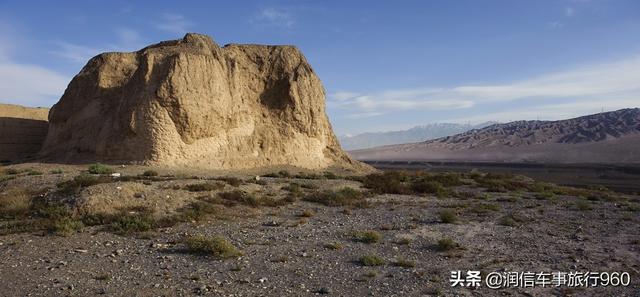
First, we're visiting Wumawang Village Group One of Jiayuguan City. According to 'A Revised History of Juzhou,' this fortress was built in 1616 by Ming Dynasty officials Li Yingqu and Qi Zhongyi after they requested permission from Governor Qi Guangzong. The text records that it was built around a circumference of 140 zhang (a traditional Chinese unit of measure) surrounding the city walls. Wumawang Fortress is constructed of rammed earth, with more than half of its walls well-preserved. The fortress' perimeter is 476 meters, wider on the southeast and narrower on the northwest. The west and south walls are particularly intact, while the east wall is approximately three-quarters damaged, and the north wall is about one-third damaged. The south wall retains a height of 9.9 meters, a width of 7.6 meters at its base, and a width of 3.8 meters at its top. A smaller wall was built along the south wall, 90 centimeters high and 90 centimeters wide. The rammed earth layer is between 14 and 18 centimeters thick. A westward, slightly sloped horse road remnant exists within the north wall, measuring 7.4 meters high and 17 meters long, with a width of 2.2 meters at the top. Similarly, a wooden horse road with a matching height and depth is located within the south wall, with neatly arranged nail holes.
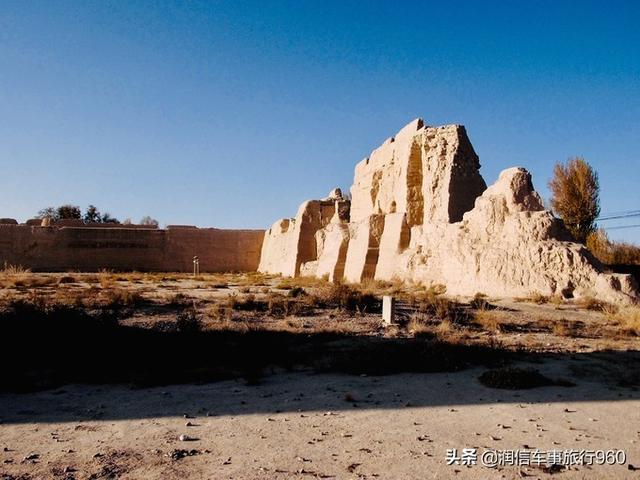
Examining the remnants of collapsed walls, the fortress' construction materials were specially processed rammed earth, which is similar to the materials used in Jiayuguan's city walls. It's believed that rammed earth was processed by screening, sun-drying, and mixed with rice soup, creating a smooth and solid surface. Perhaps due to population concentration, Wumawang Fortress was severely damaged, surrounded by farmland, and its walls have collapsed due to prolonged exposure to water. Man-made destruction marks can be seen in the northwest corner, indicating that the fortress was initially used to extract soil for building purposes. The Wumawang Fortress was listed as a Provincial-Level Cultural Relics Protection Unit in 2003.
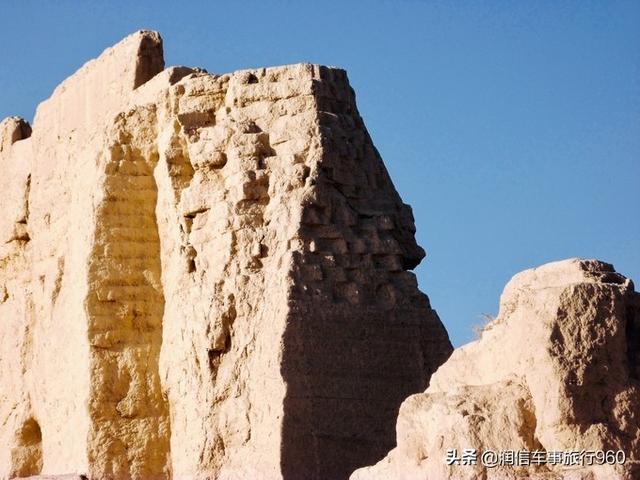
After turning back north from Wumawang Village Group One, we crossed the railway and ventured 7 kilometers into the Gobi Desert, where we found a rectangular fortress. This fortress was built during the Ming Dynasty, facing north and south, with a length of approximately 75 meters east to west and 67 meters north to south. The fortress walls are constructed of rammed earth, with a current height of 6.3 meters and a base width of 3.7 meters. The rammed earth layer is 0.14-0.16 meters thick. The south wall has an opening, with a 5.8-meter-wide gate. The gate leads to a small city wall remnant, with an eastern entrance 2.2 meters wide. A 3.2-meter-wide, 2.2-meter-deep moat surrounds the fortress. The interior of the fortress is now largely indistinguishable. The Wumawang Fortress was designated as a Provincial-Level Cultural Relics Protection Unit in 2003 and a National-Level Cultural Relics Protection Unit in 2006.
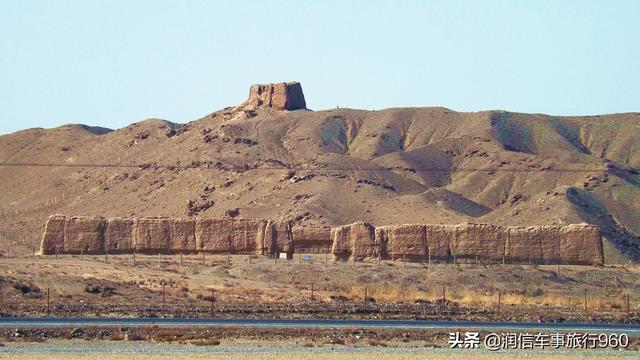
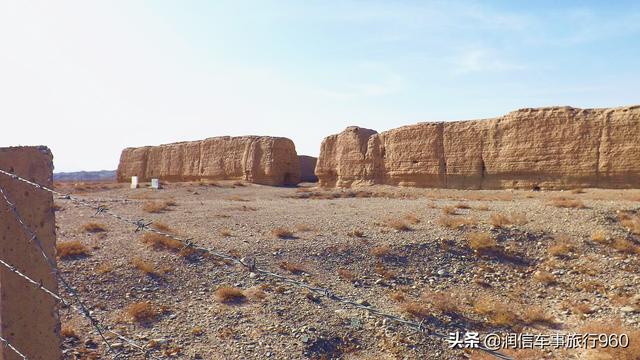
Due to the surrounding wire mesh fence, we couldn't get close enough to observe the wall, but from the walls, we can see that the construction materials primarily consisted of rammed earth and mixed with gravel, which lacks the strength of the rammed earth in Wumawang Fortress. Because of strong winds, sunlight, and rain, the walls have suffered significant erosion, leaving only traces and a rectangular fortress wall. A watchtower is located on the north side of the fortress, a common sight in the Gobi Desert across Gansu province. Because these watchtowers are not well-protected, they are rarely complete.
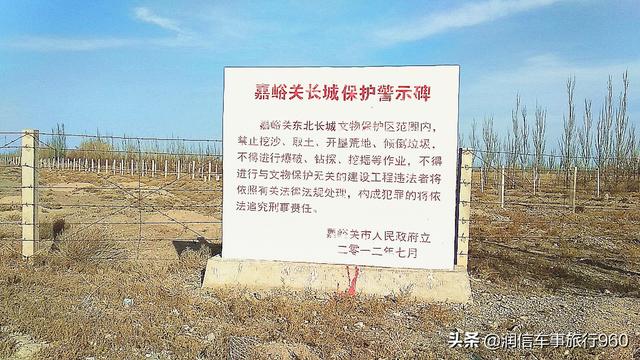
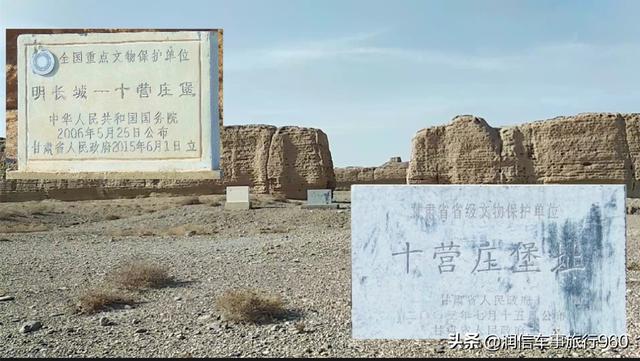
Numerous warning signs about Great Wall protection are scattered around the perimeter of the Wumawang Fortress. Due to the vast distribution and long history of these walls, along with past wars, natural disasters, and human damage, many of the Great Walls we see today are remnants, unless marked with warnings or Great Wall enthusiasts don't know about them. The section I'm shooting now isn't very clear, and we'll see more when we go to Chengxi and Waitimo later, where the Great Wall is essentially a field of grass, and it's almost unrecognizable.
Let's get back to the core issue: Great Wall protection is a long-standing concern. However, after visiting these places, the level of protection is still inadequate and has many loopholes. As a symbol of the Chinese nation, we must give the Great Wall serious protection. As ordinary citizens, we should also strengthen our awareness of protection and contribute to the preservation of China's historical and cultural heritage.