How to Truly Understand Tourist Needs?
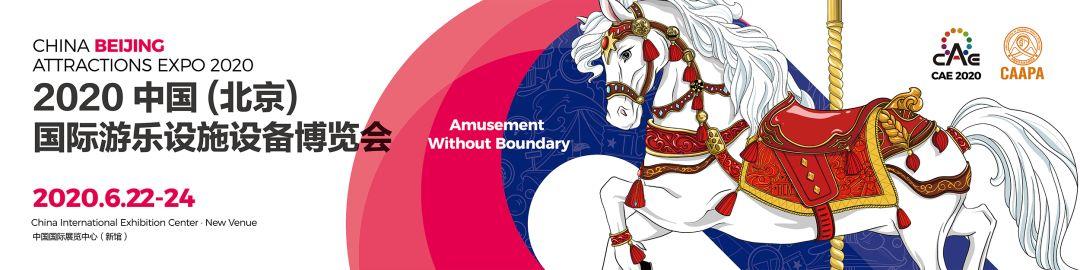
Organized by the China Amusement Machinery Association (CAAPA),the 2020 China (Beijing) International Amusement Equipment Expowill be heldon June 22-24th at Beijing's China International Exhibition Centerwith an exhibition area of approximately 80,000 square meters and around 800 exhibitors, gathering over 60,000+ professional tourism and leisure industry visitors from over 50 countries, showcasing products covering theme parks, scenic spots, resorts, water parks, urban entertainment centers, ice and snow parks/ski resorts, characteristic towns and rural comprehensive complexes, etc., to help upgrade the quality of the tourism industry.
Last year in the second half of the year, my friend Mr. Niu's tourism project came to fruition, operating for two months and with performance indicators significantly different from expectations. He said that when planning the project, he consulted with a variety of top experts and brainstormed multiple times, even meticulously reviewing every stage. After gaining a thorough grasp, he launched the project.
I paused for a moment and asked him a question: 'How well do you understand the real needs of tourists?' He was completely blank.
01
The Conventional Pitfalls of Tourism Manufacturing
When doing tourism products, building content systems, our thinking often starts from two perspectives.
One is the expert perspective.
When doing products, first find a group of experts to brainstorm, which is a common practice. However, it has proven that this approach may be unreliable.
I participated in a performance project feasibility study, and when planning the project, various experts repeatedly offered suggestions and consultations, truly achieving a win-win situation.
However, when the performance was launched, the market used 'foot votes.' For example, the familiar Songcheng, the art critics did not look good at this product, but Songcheng has now become the first brand of tourism entertainment. This fully demonstrates that experts do not necessarily represent tourists, and expert opinions do not necessarily mean correct opinions.
The other is the investment perspective.
As various capital forces intervene in the tourism market, when doing tourism products, the opinions of investors will inevitably influence the product development to some extent.
Therefore, those links that do not have obvious economic benefits and growth space will be cut off.
However, tourism products have aesthetic attributes and are related to spiritual products, many things are hidden, and the conflict between them and the capital's requirements for reality is inherent.
02
Obtaining Tourist Needs
I believe that tourism content manufacturing, from a manufacturing perspective, is most important to think about the product from the perspective of tourists.
Thinking about the tourist perspective, the key is to obtain the real needs of tourists. How to obtain the real needs of tourists?
In 'The Disney Experience,' Theodore Kinsey introduced how Disney obtained the real needs of tourists, which is also the secret of Disney's long-term success.
One is to observe to discover user needs.
Real observation is not just to see what users are doing, but to summarize the underlying behavior patterns of users and study their rules and characteristics.
Taking the Hongya Cave project as an example, we observed that tourists most liked the fourth floor. The fourth floor is an open courtyard street, which is also a food street.
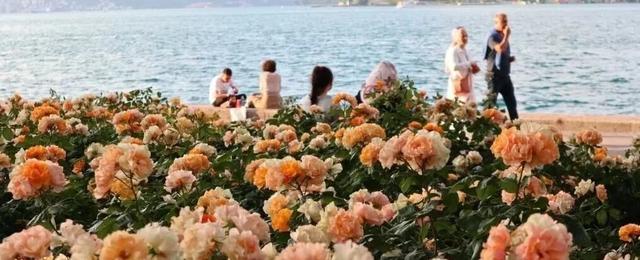
After a long period of observation, we summarized two tourist content consumption patterns, namely the comfort of the environment and the bustling atmosphere of the business forms.
This insight has important guidance for our product design.
Two is through communication to discover tourist needs.
Usually, when you ask a customer what he needs, a customer might quickly give you an answer.
But is that enough?
In fact, the needs that customers say on the surface do not necessarily represent the real desires in their hearts.
This is a truth that any businessman should understand.
The surface needs that a user says is a rough generalization of what he has in mind, while his inner desires are not so obvious.
Therefore, your work is to dig deep into the user's inner desires after the user gives the surface need.
Three is through experience to discover tourist needs.
If you are a hotel service waiter, have you experienced the wait time in a customer's journey, and have you understood the table scene and the noise and hygiene situation.
Most people, when in business, tend to focus on their responsibilities and forget the user's experience.
03
Propagation and Sharing are Also Needs
We often think that propagation and sharing are project needs, in fact, this is also the tourist's needs.
Propagation and sharing are the basic behavior of tourists, but this requires product content to stimulate the tourist's propagation and sharing desires.
In this regard, I have two thoughts:
One is to make one or two product experience points to the extreme.
Making experience points to the extreme will make tourists have an unexpected experience. Only when there is an unexpected experience will it trigger self-initiated sharing.
The book 'Growth Hacking' presents a point: when you cannot guarantee that all target points will be achieved, strive to make one or two target points to the extreme.
When we did the Hongya Cave's 'Reunion 1980' project, we sorted out 76 points that needed to be carefully polished.

While ensuring overall quality, we focused on fine-tuning the group of tourists in the central group and the train station group to achieve a presentation that is extreme and makes people marvel at the time reversal, without any sense of incongruity.
When the experience exceeds expectations, the first behavior of the tourist is to spread the word and share it.
Two is to design elements that are conducive to spreading.
When manufacturing tourism products, it is necessary to design elements that are conducive to spreading and widespread dissemination.
The current popular live broadcast/internet shopping points are all fully utilized for photographic dissemination elements. However, these live broadcast/internet shopping points are often poorly integrated with products, resulting in unsustainable transmission.
In summary:
If tourism products are not well-operated, it is often because they have ignored the real needs of tourists. The conventional thinking from the expert perspective and investment perspective of tourism products has great drawbacks. You can obtain the real needs of tourists from observation, communication, and experience. Propagation and sharing are also needs that should be considered; you need to stimulate the tourist's propagation and sharing by inspiring products.
↓↓↓
2020
CAAPA2020622-24·8000080050+60000+/