Zhangping Donghu: Building the Most Beautiful Leisure Tourism Ancient Village
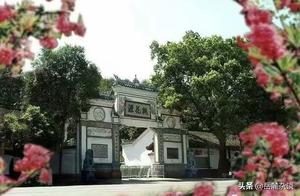
On the 15th, we returned to Donghu Village, Xinan Town, Zhangping City, and found that this most beautiful ancient village in Minxi had changed greatly compared to two years ago: the main village road had been whitewashed, cars drove on asphalt roads, and it was quiet and comfortable. Cherry blossoms and hibiscus flowers were blooming on both sides of the road, which was beautiful and pleasing to the eye. A river pavilion was newly built at the village entrance, and after the spring rain, the pool inside was green and quiet. On the pavilion, the wooden Guanyin Pavilion reflected in the water was breathtaking.
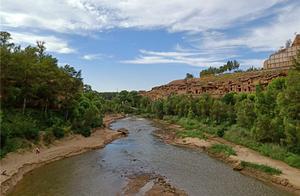
Entering the village, there were one building after another of ancient residences built on the hillside, with a staggered and beautiful layout. One of them was called Renhe Tang, a residence, and several carpenters were busy repairing it, saying that the repair work should be ‘restored as it was originally’, which required ‘slow craftsmanship’. The roads between the houses were mostly made of stone, dating back over a hundred years, and walking on them felt particularly solid. The roads on both sides were vegetable gardens surrounded by neat bamboo fences. The bottom of the river channel in the center of the village had been leveled and paved with cement and pebbles, and the creek flowed quietly. It was a weekend, and several children didn’t fear the cold and played barefoot in the water.
The secretary of Xinan Town, Xu Cijie, told reporters that Donghu Village was included in the 7th Batch of National-Level Traditional Village List, Fujian Province’s Key Villages List, and Provincial Rural Revitalization Demonstration Village, which provided an opportunity. They insisted on planning first, emphasizing development and protection, and continuously accelerating ‘Habitable Donghu’, ‘Tourist Donghu’, and ‘Vibrant Donghu’ construction. Combining the environmental characteristics of the ancient village and integrating its unique ancient residences, ancient buildings, local traditional millet noodle craftsmanship, etc., they planned and generated 17 projects, planning to invest more than 170 million yuan, focusing on building a stepped-into rural life experience zone, forming a place for ancient village tourism, rural leisure, traditional culture experience, and experiencing ancestral customs.
During the new village construction, the ancient village core area and the new village area were separated. Surrounding the ancient village core area, 800-meter pebble road and 6-kilometer leisure footpath were built. The Central Chinese Artists’ Calligraphy and Painting Base, Rencheng Tang Restoration and Village History Museum, Donghu Millet Noodle Traditional Craft Experience Center, and Farmhouse Restaurant Services were completed. In the new village, the village square, archway, river channel, farmer’s park, parking lot, ancient post road, and village landscaping and beautification lighting were professionally planned and designed, both preserving the original ancient village style and meeting the needs of residents relocating to new homes. They encouraged villagers to use traditional buildings to develop homestay leisure and agricultural tourism, increase income, and form a virtuous cycle of protection, renovation, and development.
Xu Cijie said that the town’s Party Committee established the Donghu Village Rural Revitalization Strategic Leadership Group, adhered to ‘original simplicity and true spirit’, implemented a ‘retro strategy’, and controlled planning for ancient residences, prohibiting construction, and adopting a ‘restoration as it was originally’ principle for repair. They implemented an ‘ecological strategy’, focusing on protecting the original appearance of ancient residences, being close to nature and returning to tradition; they implemented a ‘cultural strategy’, preserving important historical sites and scenic spots around Donghu Village, connecting them with the ancient village, and re-conducting integrated planning. They also fully excavated the cultural and humanistic elements, humanistic anecdotes, residential characteristics, historical sites, ancient trees, local customs, regional characteristics, and non-material cultural heritage in the ancient village. Outsiders donated their ancestral homes to build the ‘Donghu Village History Museum’, preserving historical, cultural, and folk information in its original form, creating the most beautiful leisure tourism ancient village.
At the same time, the Donghu Village Party Branch correctly guided and opened a road to enrich the village and increase the income through millet noodle, bitter tea, ecological tourism, and the village economy continuously strengthened, and the village appearance and environment were renewed. (Lai Weiyuan, Lian Changhua, Chen Junyi)