Travel Diary – Hallstatt Village
Hallstatt town is a village in the Salzkammergut region of Austria, located on the shores of Hallstatt Lake. The 'Hall' of Hallstatt may originate from the Celtic word for 'salt', referring to the salt mines near the village. Historically, this area was prosperous due to salt, hence it is also known as 'the most beautiful lake town in the world' or 'the world's oldest salt town'.
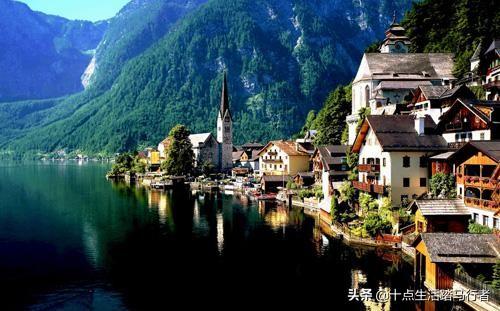
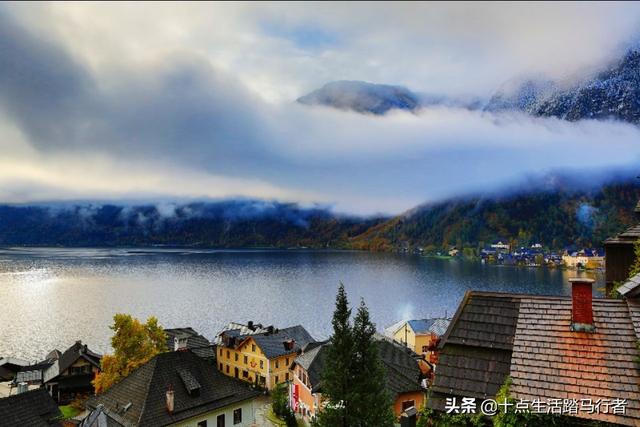
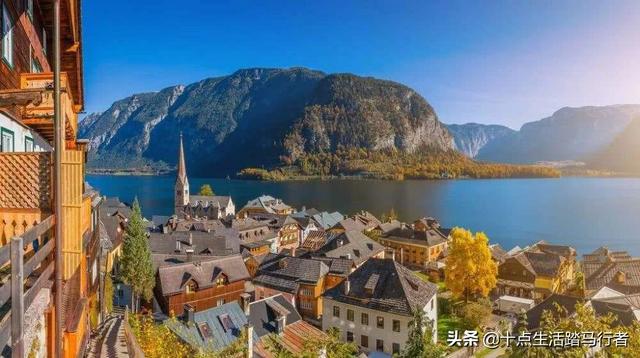
Hallstatt has a warm climate and is suitable for tourism all year round. Situated between the steep slopes and the emerald-green lake, this lakeside town is full of fairytale-like quaint and charming houses, with peaks over 3000 meters high and a crystal-clear lake, making it a paradise on earth. Living in lakeside courtyards, you can see the lake through the windows, watching the lake smoke rise, as if entering a fairyland.
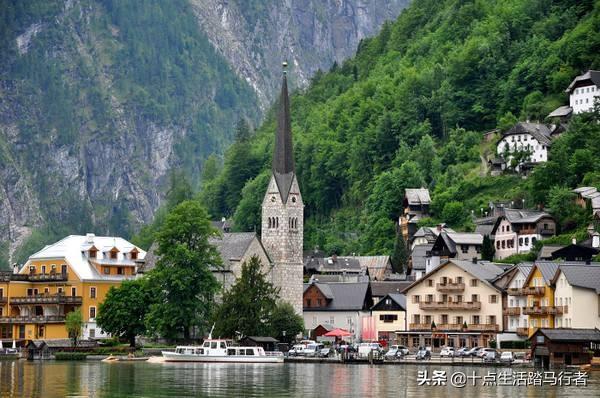
In the morning, the lake surface is often shrouded in a thin mist, and occasionally a small boat is driven across, and the ripples it creates on the calm lake surface draw countless ripples. In the evening, the lakeside is even more charming, with red leaves and yellow leaves covering the mountains, swans and ducks swimming to forage for food, and cafes on the shore all become beautiful scenery in Hallstatt.
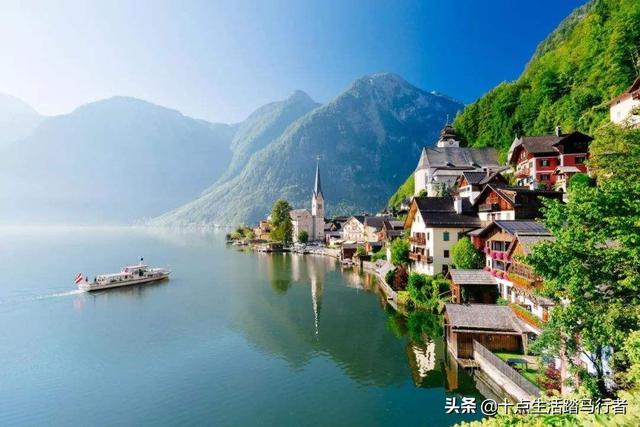
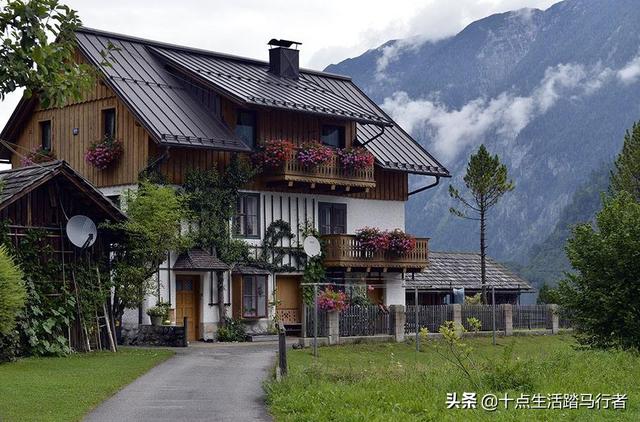
The lake is like a wide green ribbon in the mountains and valleys. A row of wooden houses built along the lake is particularly eye-catching. These houses are very similar to Jiangnan houses, but the walls, windows, and balconies are all made of wood. In order to distinguish themselves, each house also shows its own style in terms of shape and color. Because it is located on the lakeside, each family has a wooden boat house built in the water to stop their small boats or yachts, as a means of transportation.
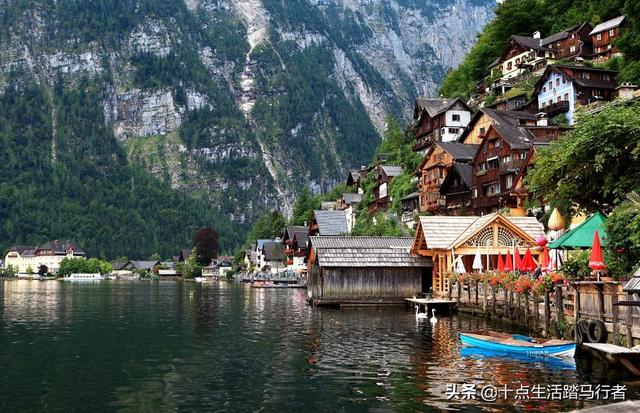
Upon arriving, unexpectedly, the residents here are all artists. All the wooden doors of the houses are open, and they display and sell various handicrafts they have made: decorative items made of yarn, ethnic dolls, and various pottery. The most numerous and attractive are wooden carvings, cute cartoon animal shapes, modern-style household items, and celebrity sculptures, etc.
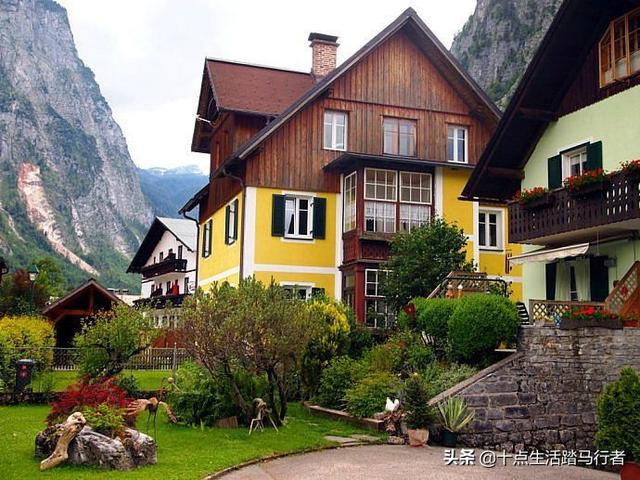
Walking through the narrow town, you can also see various wooden signposts from time to time. At a crossroads, a wooden plaque is engraved with three arrows, and it reads the name of the road. A hotel hangs a man sleeping soundly in bed on the wall; a restaurant simply decorates the outer wall with a wooden fish head to tell visitors not to miss the delicious food. Schools, companies, and so on also have various wooden signs. The residents of Hallstatt love wood for a reason. According to legend, Hallstatt people began to mine salt here thousands of years ago.
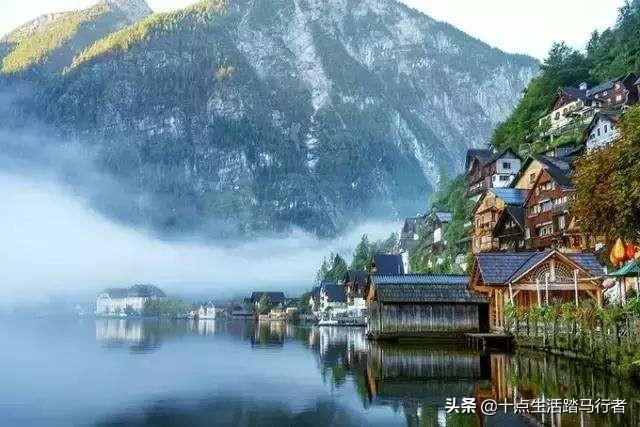
Salt was the hallmark of Hallstatt. In the distant past, the rocks on the mountains were covered with seawater, and after the geological changes of the sea, the sea salt remained in the rocks. As early as 900 BC, the people of Hallstatt began to mine 'white gold' – salt. Salt has always been the main economic source for the local bishops and nobles, and the prosperity of the town was also brought by the Vienna Emperor, bringing considerable financial revenue.
To mine salt, the salt miners had to climb 400-meter-high mountains every day, then slide to the bottom of the mine, knock on pieces of salt-containing rocks, and then carry the heavy rocks out of the mine to the bottom of the mountain, and distill salt from them, drying it and then taking it out. Every day and every night, every month, every year, they endured the same life burden. Today, the salt mine, as a tourist attraction, still retains the original appearance of the mine shaft for decades or even hundreds of years, and there is still a salt mine operating and open to tourists.
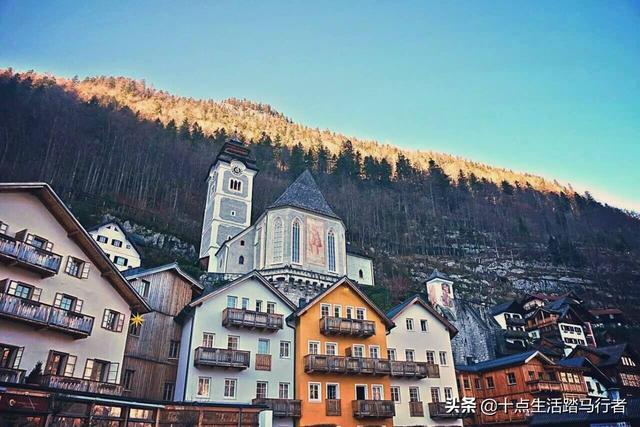
There is a museum called 'The Door to History' on the hillside, which is a very evocative name, as if you open that door, you will fall into the long history corridor. From the clothing, tools, and early steam ship models used in the old salt mine, the history and civilization of the town are carefully displayed. Carefully examining the artifacts of different eras through glass, they are like a chain connecting the past and the present, time flows like water in seven thousand years.
Extensive prehistoric cemeteries were discovered here – this is Hallstatt's unique prehistoric civilization site in history. The entire site is located at the outlet of the Salt Valley, about 450 meters above the lake. The oldest tombs excavated in the tombs are from 800 BC, and the most valuable ones include a bronze or iron knife, called 'Hallstatt' sword, and many copper sacrificial objects. The younger excavation layers have more decorations, and the most valuable one is a well-preserved mummy, known as 'Salt Man', which once again proved the existence of ancient civilizations in Europe.
The people of Hallstatt have a strange custom. Because the town is located in the mountains and by the lake, the soil is as precious as gold, so the burial method is unique. According to locals, all deceased people will be exhumed 10 years after their death and placed in caves on the mountain, in the bone hall, and will be buried there. The bone hall is filled with bones after a long period, and it can be seen with these unique scenes.
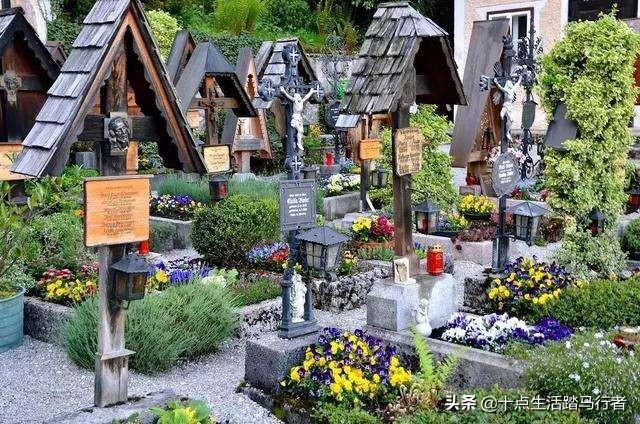
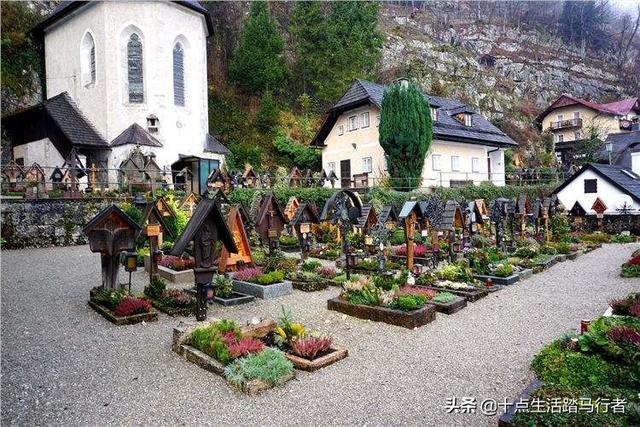
To distinguish, some skulls are attached with labels, and some are decorated with patterns. It is understood that this practice has a history of more than 1600 years. There is a cemetery on the hillside in Hallstatt, with various plants accompanying the wooden tombstones, and the tombstones are engraved with various artistic patterns. The beauty and artistic quality of the cemetery is rare.
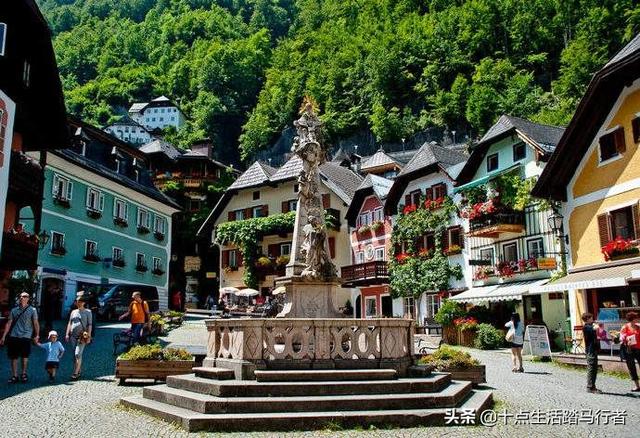
The sunshine and flowers make the atmosphere without any cold feeling. Even the bone hall has a unique cultural value because of the exquisite paintings. The value of life seems to be extended by these art pieces. The attitudes of the East and West towards death are clearly distinguished, one continues the blessings expected by the descendants in one world, and the other is remembered and missed by people in the same world……
……