Chongqing's Bund Conceals Elegant French Buildings, Alongside a Bustling Old Street, Yet Largely Overlooked by Tourists
Chongqing is an important Tier 1 secondary city in Southwest China and a rising star among trendy tourist destinations. It boasts numerous attractions, with Hongya Cave and Jinyuan Gate being the most popular. Shifting your gaze beyond the bustling Yuzhong District to the Nanshan District, you'll also discover many worthwhile places to visit.
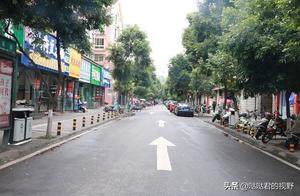
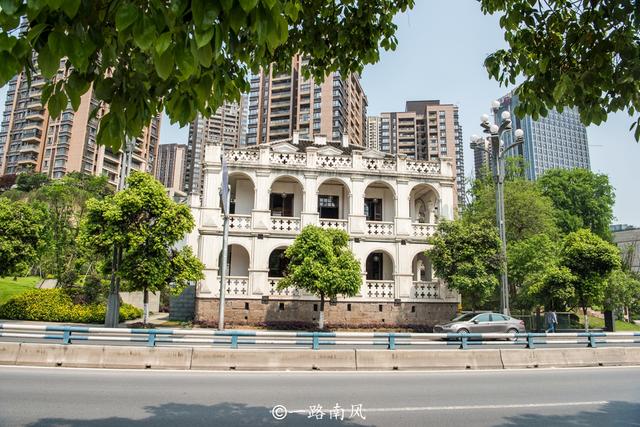
The area of Nanshan District along Nanbin Road was once a gathering place for foreigners in Chongqing. The commercial area centered around Danzi Stone Old Street is known as 'Chongqing Bund,' featuring a stylish French building. Although it's less than a five-minute walk from the core tourist area, it's consistently overlooked by tourists.
This French building is called the French Water Army Barracks, with a history of over 100 years.
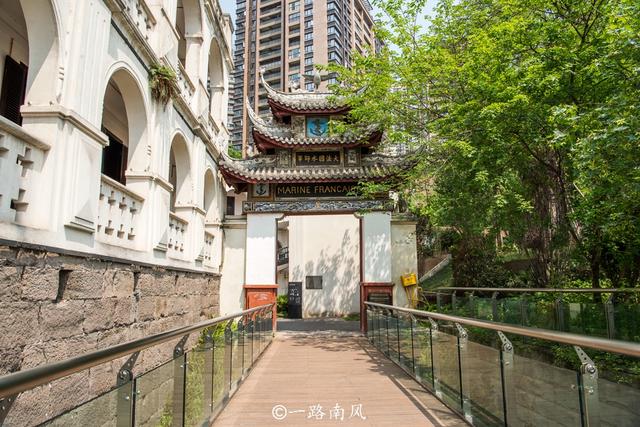
As you walk along the road outside, you'll first see a Sino-Western style archway, with a classical structure and a soaring eagle on top. The lower part of the archway is in a (mi bai se tuo - milky white) and matches the color of the main building. The upper part of the archway is in a traditional Chinese style, resembling the entrance archway of Chinatown in some European regions. The archway is inscribed with Chinese characters on the inside and flanked by intricate Chinese carvings, with a maritime symbol above and a row of English letters below.
The green foliage to the right of the archway moves with the wind, imprinted on the (mi bai se qiang mian - milky white wall) like a spontaneous ink painting.
What could Chongqing have that has a 'French Water Army Barracks'?
The story needs to start from the beginning.
In 1891, Chongqing was opened to the outside world, and in 1896, France established a consulate in Chongqing. The first consul, Ha Shi, oversaw related affairs in the provinces of Sichuan and Guizhou. In 1902, French officers built the Water Army Barracks in Chongqing's Nanshan District. This majestic and elegant, (mi bai se jiang chu - milky white building) was completed the year after its construction, supervised by Hu Xi.
The total building area of the complex reached 1617 square meters, serving as the residence for French water army soldiers and officers, and also as a warehouse and repair workshop.
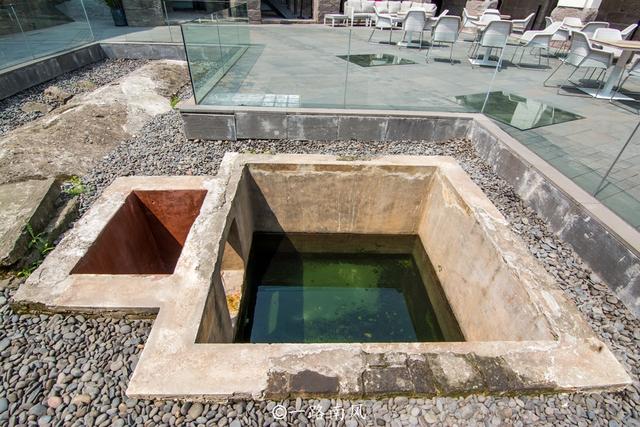
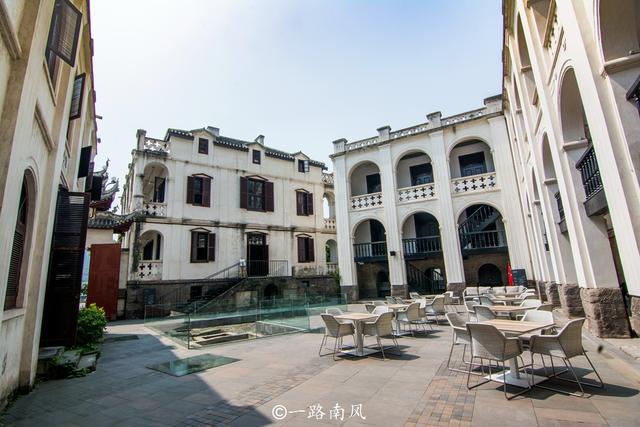
Entering through the archway, you discover a courtyard, which was formerly the training ground for water army officers and soldiers, and is now a part of an outdoor leisure bar.
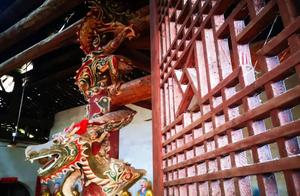
A display room is located in the corner of the courtyard, detailing the history of the barracks and the opening of Chongqing to the outside world.
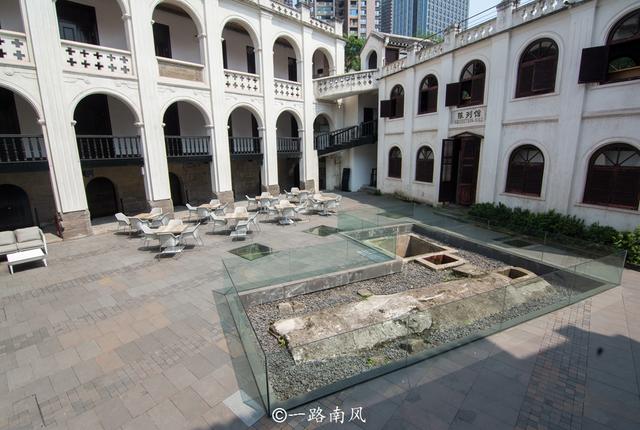
The French Water Army Barracks is a complex of buildings oriented east-west, with a courtyard and corridors, comprising main building, side building, watchtower and archway, witnessing the development of Chongqing in the 20th century.
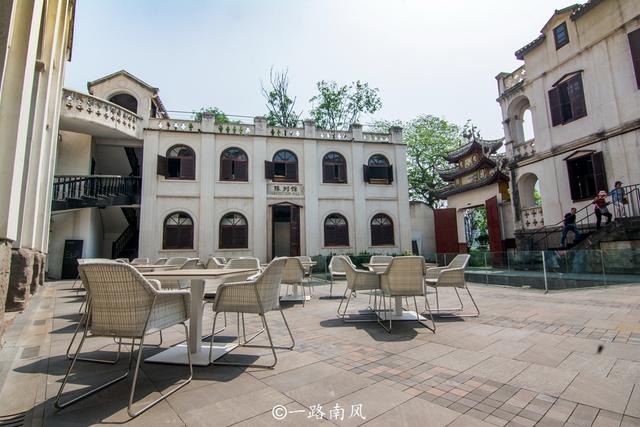
As one of China's early international trading cities, Chongqing absorbed a wealth of Western cultural essence and integrated it into its own culture. The French Water Army Barracks is a remarkable artistic achievement in this unique historical context.
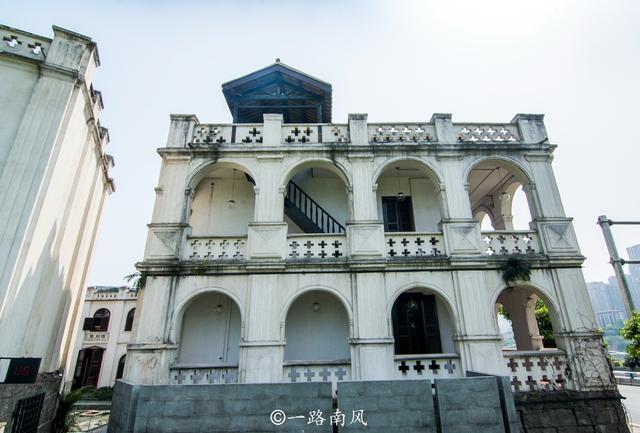
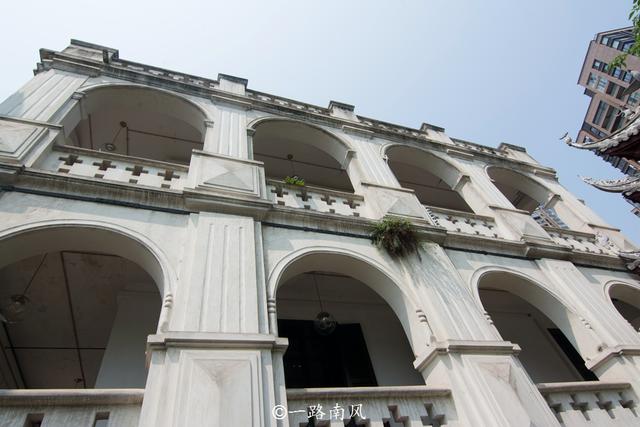
The main building of the barracks follows the style of European medieval castles, with features such as pointed-arch windows and arched pillars, and arched doorways, showcasing the elegant beauty of European architecture.
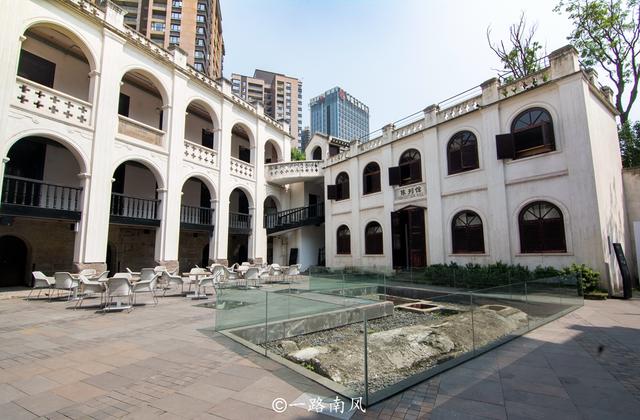
Time has passed over a hundred years, and the former barracks, after maintenance, still stands gracefully by the Yangtze River, day after day gazing at the rushing Yangtze River flowing eastward, watching the Chongqing port culture change.
Sunlight casts long shadows across the courtyard, and the sound of wind rustling through the leaves within the barracks is audible.
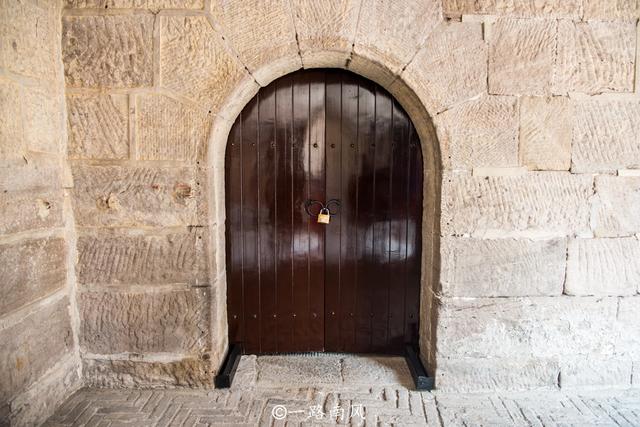
There's no entrance fee here. If you have ample time, it's a good choice to come and admire the beauty of the architecture and experience the history.