A Return Without a Response: Eight Banyan Mountain Aerial Tour, Review of B-7802 Air Tour Accident in Yanjing
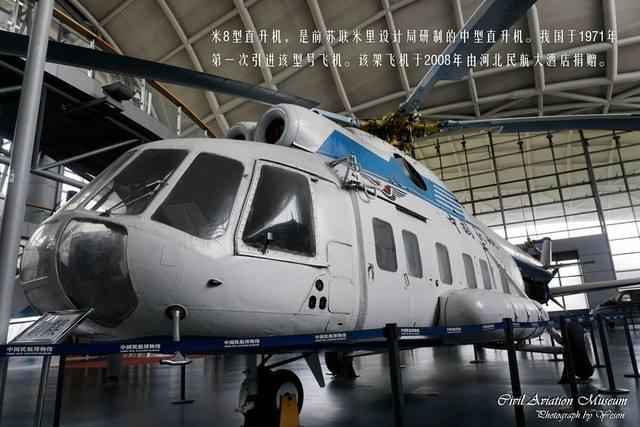
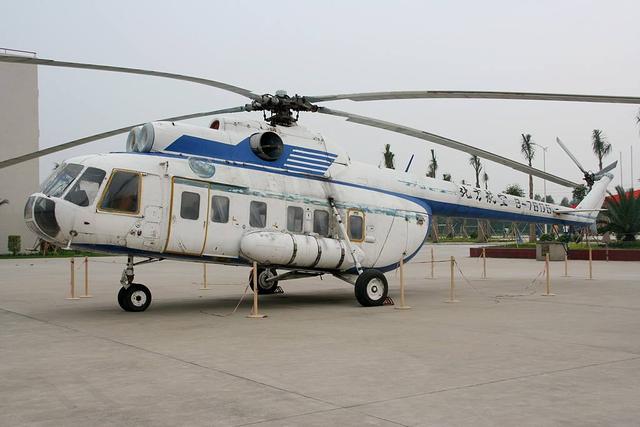
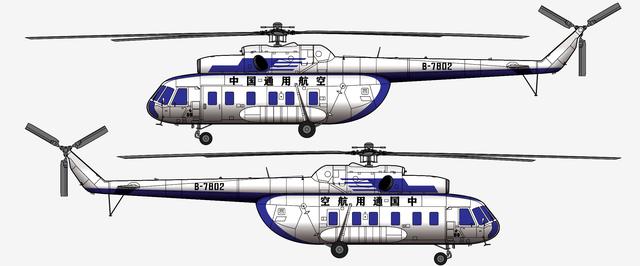
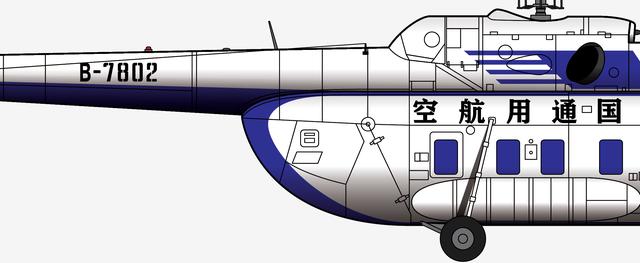
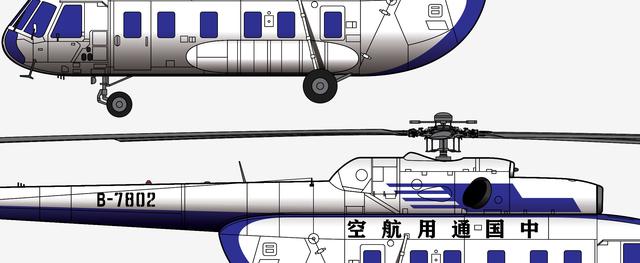
On August 11, 1992, at 10:53, a helicopter belonging to Beijing United Aviation Tourism Company's model Mi-8T (T stands for passenger version) was taking off from Changping District Dingling Airport. The helicopter was operating a sightseeing tour package to the Eight Banyan Mountains, planned to fly from Dingling Airport via South Entrance to fly over the Eight Banyan Mountains before returning to Dingling Airport, with a flight time not exceeding 35-40 minutes. The registration number is B-7802, purchased from the Soviet Union in 1972 (manufactured by the Kasan Aircraft Manufacturing Plant), with a service life of 25 years and a total flight time of 12000 hours. It underwent a major overhaul in September 1986 at the 102 Factory, and its flight time prior to the incident was 20 years, totaling 2888 hours and 15 minutes. The helicopter carried 4 crew members (pilot, co-pilot, mechanic, and flight attendant) and 1 sightseeing guide and 19 passengers, primarily from a Japanese tour group.
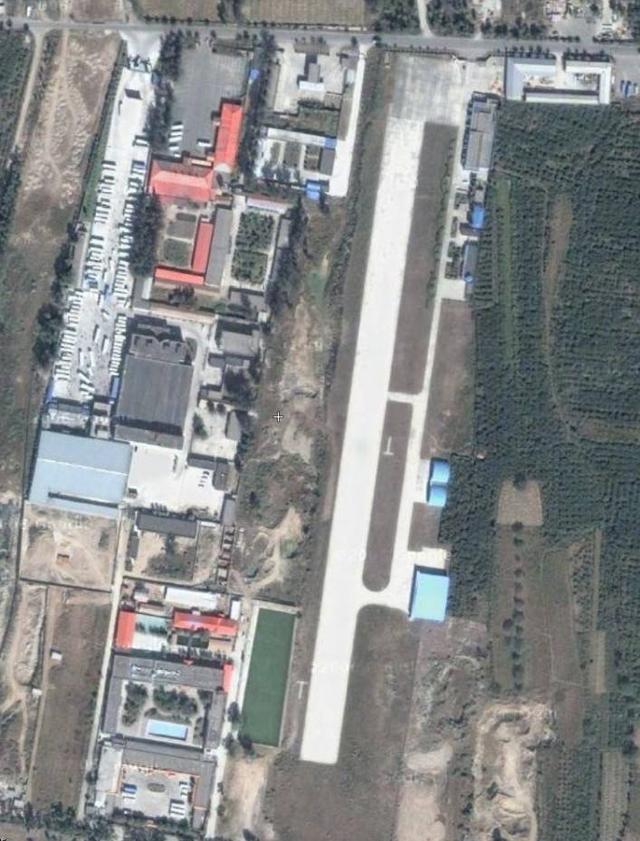
Dingling Airport satellite map

The aerial view of the Eight Banyan Mountains by a helicopter truly offers a different experience compared to ground travel.
On that day, Dingling Airport was experiencing heavy fog, with the fog gradually clearing after 10:00 AM. The visibility at 10:30 AM exceeded 5 kilometers (5.5 kilometers), meeting the take-off conditions for that day. The atmospheric pressure was 989 millibars, therefore, Dingling Airport granted permission for the helicopter to take off at 10:53 AM.
During the flight, the helicopter's co-pilot (responsible for radio communication) said, '7802, we are passing South Entrance.'
Dingling Airport Tower: '7802, what's the weather like at South Entrance?'
The crew replied, 'We have two clouds, we're not entering them.'
Dingling Airport Tower: 'Received, received.'
However, no one anticipated this brief conversation would be the last contact between the helicopter and ground control.
On that day, the route in front of South Entrance, near Liu Giao Valley, had extremely poor weather conditions, according to a description of the construction workers working nearby: 'The fog is very dense, it's impossible to see anything beyond 20-30 meters.'
Although the crew didn't want to fly into clouds, due to the poor weather conditions in Liu Giao Valley, the aircraft was forced to enter the clouds. According to the recollection of Japanese tourist Seiichi Hoshi in the aftermath, 'When the helicopter was flying uphill, the bottom of the aircraft was enveloped in fog. Within a few seconds, the aircraft's top and bottom became invisible.'
The helicopter's second pilot (co-pilot) was 43 years old at the time, and prior to the incident, his total flight time was 2276 hours and 43 minutes, including approximately 2000 hours on Mi-8 helicopters. He was sitting in the left-seat pilot position during the flight. The mechanic was 24 years old, with 130 hours and 26 minutes of flight time on Mi-8 helicopters (including 16 hours and 43 minutes flown in 1992).
All crew members were in good physical condition and with stable emotions in the 48 hours before the flight, and did not consume any alcoholic beverages or drugs.
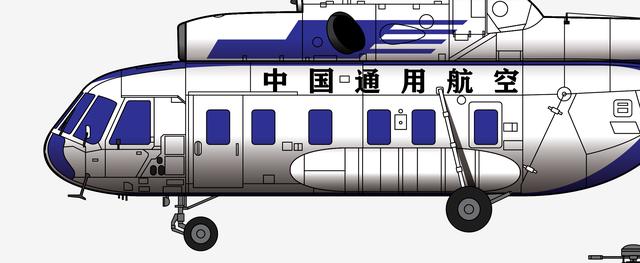
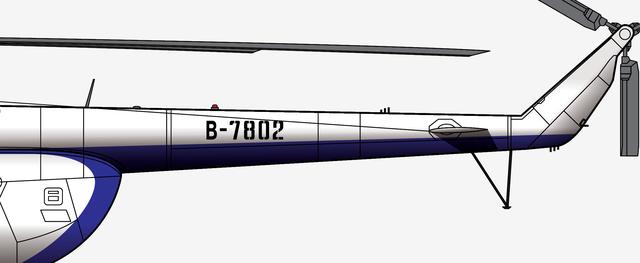
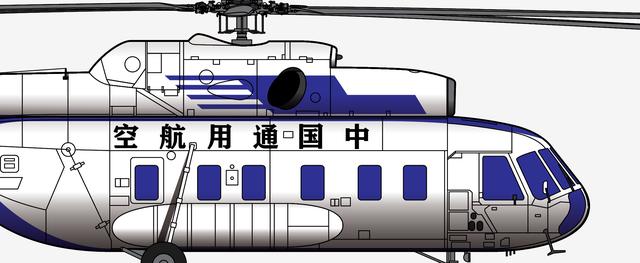
The Chinese civilian retired Mi-8T helicopter
The helicopter took off at 10:53 AM from Dingling Airport and flew directly towards South Entrance, and after 7 minutes it flew over South Entrance and reported to Dingling Airport Tower via radio.
The crew said, '7802, we are passing South Entrance.'
Dingling Airport Tower: '7802, now what's the weather like at South Entrance?'
The crew replied, 'We have two clouds, we're not entering them.'
Dingling Airport Tower: 'Received, received.'
But no one anticipated this brief conversation would be the last contact between the helicopter and ground control.
The helicopter followed its planned flight route south to South Entrance for 7 minutes before flying over it and reporting to Dingling Airport Tower via radio.
The helicopter's crew (co-pilot) said, '7802, we are passing South Entrance.'
Dingling Airport Tower: '7802, now what's the weather like at South Entrance?'
The crew replied, 'We have two clouds, we're not entering them.'
Dingling Airport Tower: 'Received, received.'
But no one anticipated this brief conversation would be the last contact between the helicopter and ground control.
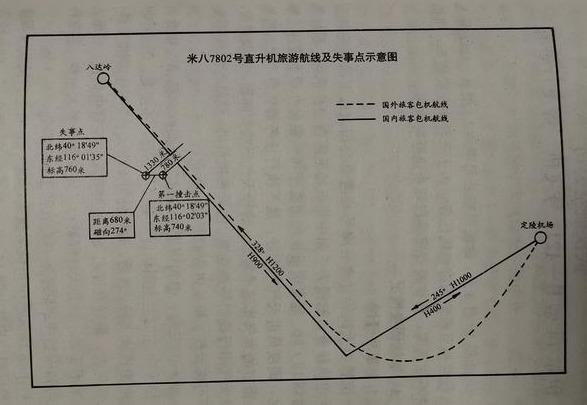
The helicopter continued to fly in a distorted manner for 14 seconds, during which time it flew approximately 650 meters westward. Finally, it could not maintain control and crashed into the steep slope near Liu Giao Valley (distance from the first impact point, 272° direction), eventually causing the aircraft to spin and burst into flames.
At 11:08 AM, the helicopter was scheduled to return to South Entrance and contact Dingling Airport Tower, but it was 5-6 minutes late, and the tower couldn't reach it via radio, so they immediately dispatched a rescue team from the ground to search the Liu Giao Valley area where the helicopter disappeared. They finally found the wreckage, which had been largely burned. All the crew and 24 passengers aboard the helicopter, with 24 people dying (a significant portion of the deceased were still alive when the helicopter crashed, but were unable to escape the burning aircraft) were killed.
The Dingling County Helicopter Crash was classified as Level 1 flight accident by the Chinese Civil Aviation Bureau according to the standard.
The investigation team, after examining the crash site, checking the wreckage, and interviewing witnesses and survivors, concluded that the direct cause of the Dingling County Helicopter Crash was the helicopter's crew failed to strictly implement Paragraph (86) of the Civil Aviation Bureau's Report No. 619, 'Regarding the Task of Sightseeing Tour Package Flight to Eight Banyan Mountains,' which clearly stated 'Visual Flight Rules.' In the face of poor weather conditions and visibility, when attempting to avoid clouds, they did not take decisive safety measures, such as returning to base or maintaining a safe altitude, which caused the helicopter to fly below the safe altitude and drift into the mountain, causing the helicopter to crash into the mountain slope.
The investigation team's accident diagram
The investigation team summarized three lessons learned:
First, safety consciousness was lacking, and management was poor. The Dingling County Helicopter Crash exposed that the leadership of Beijing United Aviation Tourism Company did not have a strong safety consciousness, and discovered problems should be solved in time to ensure flight safety.
Second, temporary airports or temporary operating points must be equipped with sufficient communication equipment to ensure smooth communication across the entire flight route operating area.
Third, sightseeing tour package small aircraft should be required to install flight accident recorders and voice recorders to ensure the safety of the flight.
Fourth, for the safety of flying sightseeing tourist flights, it is necessary to require the installation of flight accident recorders and voice recorders.
The helicopter's performance data
Model: Mi-8T helicopter
Crew: 3 crew members + 24 tourists
Length (with rotor and tail rotor): 25.24 meters
Rotor diameter: 21.29 meters
Height: 5.65 meters
Own weight: 6799 kg
Maximum take-off weight: 12000 kg
Engines: Two TB2-117A turboshaft engines, single engine power of 1723 horsepower (1267 kW)
Economic cruise speed: 225 km/h
Maximum range: 465 km
Useful lift limit: 3975 meters