Walking Through Korea: Diverse Impressions of the Chinese
In the heart of every travel enthusiast, there's a persistent sentiment called 'the allure of elsewhere.' The landscapes, the people, the cuisine, and every detail of a journey contribute to its appeal.
Considering cost-effectiveness, traveling to North Korea is arguably the most affordable. Taking a train from Dandong to Pyongyang for a four-day trip costs no more than 2000 yuan, and a five-day trip adds the Songdowon Youth Palace and Kyonhongsan Cooperative Farm projects, increasing the price by approximately 500 yuan. Flying is slightly more expensive, but it's not recommended due to the aging aircraft; they're quite bumpy. However, the flight attendants are exceptionally beautiful and friendly.
As a first-time Chinese visitor to North Korea, a flood of new experiences washed over us. This stems from a combination of unfamiliarity and familiarity with our neighboring country, and more importantly, its retention of many symbols from the 7080s. Let's experience it together.
Images sourced from the internet.
Pyongyang's Sunan International Airport is North Korea's only civilian international airport. Our experience began upon arrival, marked by three key impressions:
First, the duty-free shops didn't stock Chinese products; instead, they offered goods from Korea, Japan, the United States, and Germany. We were puzzled, and our guide explained that the primary clientele were Chinese tourists, so they wouldn't display Chinese products.
Second, the ground crew's uniforms were strikingly beautiful, which was unlike our initial expectations. We had imagined them to be wearing copper-colored attire, but they were actually very elegant and regal. Combined with their sweet and delicate faces, it instantly won our hearts.
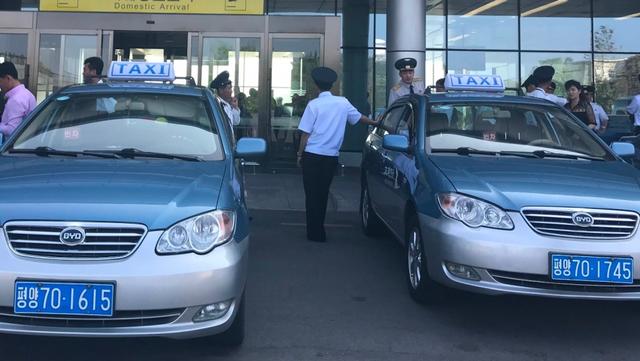
Third, the taxis were surprisingly familiar. Upon exiting the terminal, we felt a sense of warmth, and the taxis were remarkably similar to our own – including a (BYD) and a (Walkway). There are reportedly over 3000 taxis in Pyongyang, with over 80% being Chinese-made. These cars are said to be North Korea's luxury vehicles, making our own Chinese cars seem even more sophisticated.
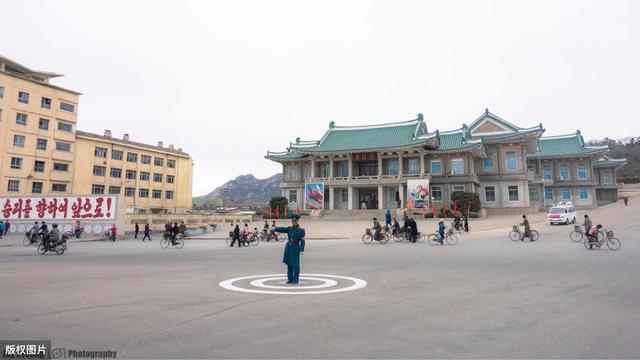
Pyongyang is North Korea's largest city and a hub of contemporary trends. This trend began with its vibrant color palette.
It's said that Pyongyang was built starting in the 1950s, characterized by a strong symmetrical Neo-Classical architectural style. However, beyond the impressive scale of the buildings, we didn't perceive a profound sense of historical depth. The exterior walls of Pyongyang's main streets are painted in shades of orange, pale yellow, pink, or green, seemingly striving to make a good impression on foreign visitors and showcase prosperity.
Our guide informed us that the paints are refreshed approximately every two years, to give a positive impression to foreign tourists and demonstrate growth.
Later, we visited Kaesong, where it was less bustling than Pyongyang but still vibrant in color.
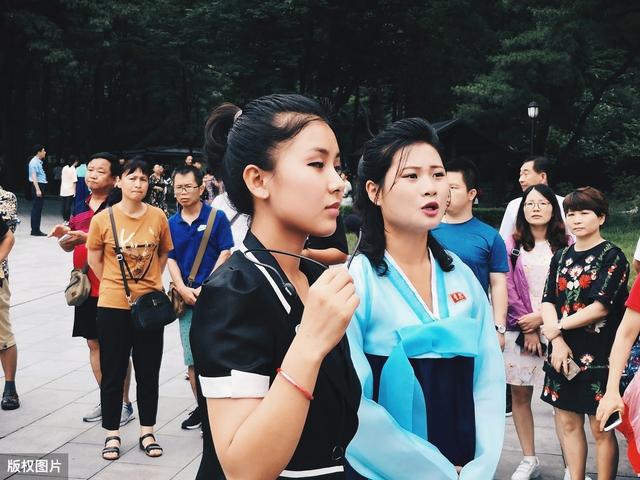
Walking along Pyongyang's streets, we noticed an interesting phenomenon: young men walk hand-in-hand, while young women walk side-by-side, without physical contact. We were impressed by the friendly and open nature of the North Koreans, and we were curious about the numerous hand-holding young men, fearing a close relationship.
Our guide, noticing our expressions, proactively introduced the explanation. He said that hand-holding is a normal and friendly expression of greeting among North Koreans, not as we imagined. We hadn't even voiced our assumptions when our guide immediately explained, likely having provided this explanation many times before. Of course, we also explained our assumptions to the guide: we didn't mean anything by it.
Images sourced from the internet.
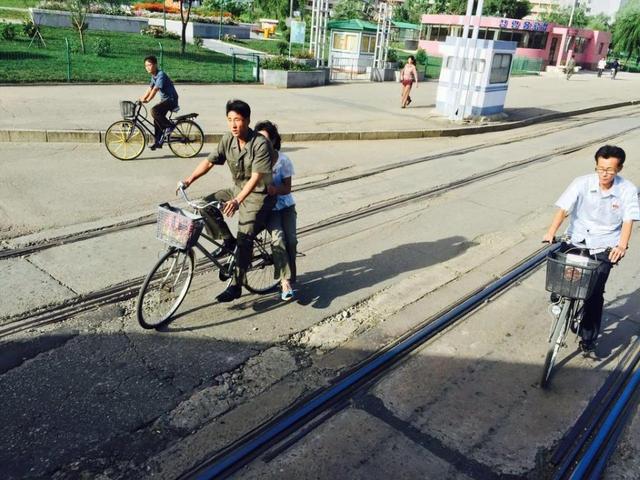
North Koreans don't have private cars; bicycles are a common form of transportation, serving as both a means of transportation and cargo carriers. With a population of 25 million, North Korea is believed to own approximately 1 million bicycles – a true bicycle nation.
According to our guide, bicycles are typically purchased by the women in North Korean families as a wedding gift, similar to how a car might be gifted to a bride in our culture. North Korean couples often work in the same unit, and the husband rides a bicycle to work while the wife accompanies him on the back seat, returning home together at sunset; they have little nightlife and enjoy a peaceful, timeless existence.