Thousand Islands Lake: 'The Most Magnificent Water' on the Path of Tang Poetry
The thousand-year Lion City sleeps beneath the lake, a thousand peaks transform into islands, with a shoreline extending for over 2200 kilometers, resembling a golden belt embracing a lake of shimmering water. This is the Thousand Islands Lake, renowned as Hangzhou's 'Garden of the South' and 'First Showy Water' in the world.
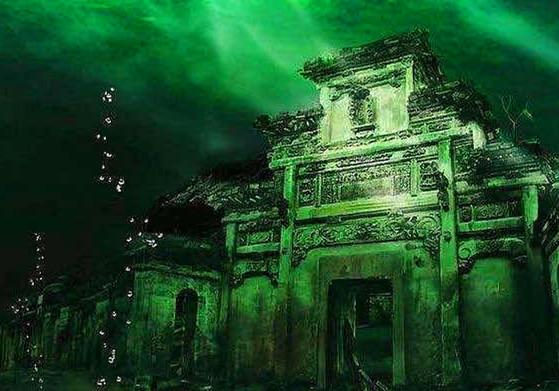
Illustration: Underwater Lion City Source: Network
The national 5A-level tourist attraction Thousand Islands Lake is located in the rural area of Chun'an County, Hangzhou, with its northwest bordering Anhui Province. It is China's largest artificial lake and also the lake with the most islands in the world, named Thousand Islands Lake due to the 1078 emerald islands within it.
Meifeng Island
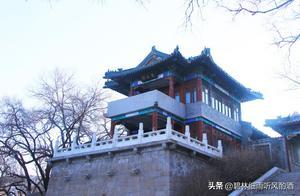
Do not go to Meifeng Island to view the archipelago, and you will miss the true face of the Thousand Islands. Explore the three thousand islands in the lake, and you will not be complete without visiting Meifeng Island. Meifeng Island is the highest island in the Thousand Islands Lake, also a first-class scenic spot in the scenic area. Take a boat to the island, with lush grass and verdant trees on the island. Follow the steep stone steps, and as you ascend, the scenery becomes more and more beautiful. To the peak of Meifeng, you can reach the viewing platform, with a panoramic view, the islands look like a thousand blooming plum blossoms floating on the lake, and the entire beauty of the Thousand Islands Lake is within sight. On one side of the viewing platform at the peak, there is a tea house built into the forest on the peak, where you can taste the fragrant and refreshing Chun'an high-mountain tea while enjoying the beauty of the Thousand Islands.
Dragon Mountain Island
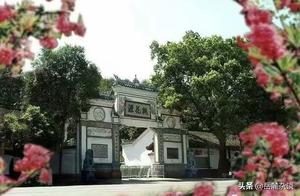
Dragon Mountain Island is named because its shape resembles a lying dragon eager to fly. Dragon Mountain Island has the Hai Rui Academy (Hai Rui Temple) built on it, and the newly built Hai Rui Academy consists of the Wanghu Tang, Gatehouse, Hall, and Study. The entire building retains the Chun'an folk style while also having characteristics of (Hui Pai) architecture, with upturned eaves and ridges, carved brackets and pillars, and is ancient and elegant. A nine-meter-high statue of Hai Rui was erected in the back hall. In 1562, Hai Rui left Chun'an after his term of office expired, and the people of Chun'an erected a memorial tablet to commemorate him. From the Hai Rui Academy, you can climb step by step, along the way is full of birds and flowers, and you can reach the Ninggu Clock Tower. The clock tower contains a cast iron bell, and visitors can knock the bell for fun.
Underwater Lion City
Through GPS positioning system, side-scan sonar detection and other multiple scientific means, the location of the main buildings and streets of the ancient Lion City beneath the Thousand Islands Lake have been precisely measured, including the Yuan Tai, Xin An Guild Hall, Yinyin Tang and Fang Shi Clan Hall. The detailed location of the 23 pavilions was also determined one by one. The divers discovered that the ancient Lion City underwater, some of the residential buildings' wooden beams, staircases, brick walls and carved brackets did not rot and remained intact. The Lion City started from the Tang Dynasty as the administration center of Su'an County, known as 'Little Heaven in Western Zhejiang'. The ancient Lion City had convenient water and land transportation in its time, and was a major town in western Zhejiang, with many ancient sites inside.
Wen Yuan Lion City
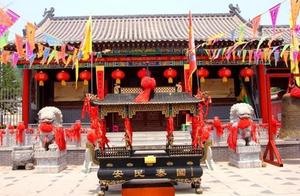
Wen Yuan Lion City is located on the southwest shore of the Thousand Islands Lake in Jiangjia Town, and has restored the ancient city of the Lion City. Wen Yuan Lion City opened to the public in 2016 and is one of Hangzhou's first batch of characteristic towns. The town has a unique advantage due to its Thousand Islands Lake's abundant water and mountain resources, and also has a deep cultural foundation. The scenic area of the town inherited the Hui Pai architectural style of the Lion City, and not only restored the old street of the Lion City’s heyday, but also recreated the seven pavilions of the Lion City’s famous virtues and morals, and precisely restored many details of the ancient Lion City.
Xinmin Evening News reporter Xia Qing