Slow and Deliberate Living
On one day, while walking along the Tian Shan Road in front of the Shanghai Hongqiao Development Zone, at the base of an old courtyard housing block, two elderly women greeted each other. One of them held a small aluminum pot, the pot was clearly old, having been refitted with a new base and showing signs of warping. The older woman told her companion, 'I'm going to ask the construction site for some yellow sand to wipe the pot with,' as she was about to boil rice and risk burning the bottom.
The two elderly women were surrounded by towering skyscrapers in the development zone. The new, glossy building materials, and the rational and abstract lines of the buildings, formed a giant modern theatrical backdrop. The two elderly women, however, were vivid and embodied everyday life, representing the life of the past.
Back then, life was meticulously detailed, everything was carefully considered.
In late summer and early autumn, the aging cucumbers were nearing harvest, and their prices had dropped accordingly. Therefore, diligent housewives purchased baskets of cucumbers, carefully picking, washing, and then stringing each cucumber onto a long thread for drying.
The sewing thread used for quilting was cut precisely to length, and then meticulously cut to the exact amount needed for stitching. When disassembling a quilt, each stitch was carefully removed, straightened, washed, and dried, before being re-sewn. The lines used to plant rice and pull seedlings for farmers were also carefully preserved, as they were essential for a year's success and could be passed down through generations. Many movie theaters lacked air conditioning, but offered paper fans placed in boxes at the ticket counter. People would take one when entering and return it when leaving, for the next audience to use.
This way of life nurtured the hope for life's possibilities; this year, it was fine; next year, it would still be okay; and the year after, too. Unlike today, where things are used and discarded immediately, wasting resources and enthusiasm. Such short-sighted behavior is prone to 'playing around'.
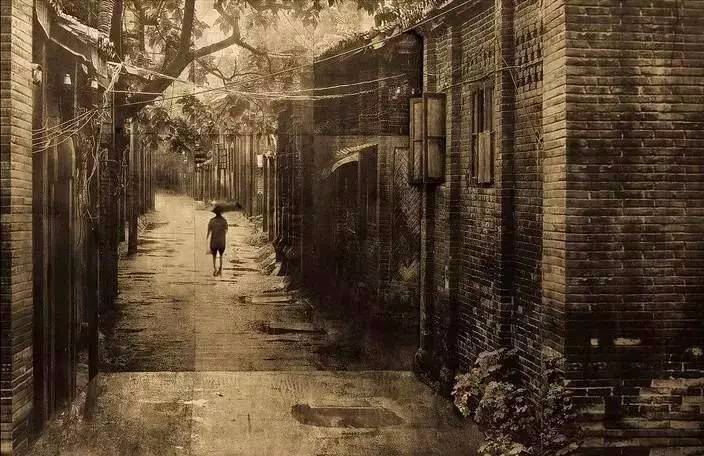
The daylight of the past seemed to slow down, accompanied by an umbrella and a person; a single journey lasted a lifetime.
During the rainy season, many umbrellas were dilapidated. Whether the umbrella frame was broken or the fabric was torn, half of it was reattached, and rainwater poured down from the synthetic fabric, often small and short-handled, forcing people to huddle inside. In the past, umbrellas were not as vibrant or colorful as they are today; they were simple, sturdy, and made of black or yellow oilcloth. The sound of rain falling on them was solid and resonant – 'pa, pa, pa'.
A paper umbrella was more colorful but also more fragile; a hole would easily appear. However, the oil paper umbrella's wooden frame was finely grained, and the people of that time valued their possessions. Unlike people today, who treat things carelessly.
Back then, craftsmen were plentiful, as were repairers of bowls! A broken bowl, as long as it wasn't reduced to powder, a skilled craftsman could repair it by inserting a row of nails. Today, it sounds like a myth. People today would think it's a fairy tale. Children's broken rubber balls could be repaired by rubber workers. Bamboo chairs and mats, and even broken bamboo baskets were repaired by (miè jiàng – bamboo workers). So many skilled artisans! Now, they're all gone. As a result, waste piled up like a mountain. Today's life is far more rough and unrefined; a huge amount of material is quickly consumed. But in the past, life was savored and enjoyed slowly.
Ultimately, are they so attached to the old, or are we simply too impatient?
Food was rationed. Wealthy families would only have a single piece of large bone to eat per meal. A fish had to be shared among the whole family. A chicken was a significant event, imbued with a sense of occasion. Today, chickens are raised in feedlots, fed artificially, and have no experience of walking; their meat is loose and tastes like wax. But in the past, the taste of meat was richer and more authentic.
Today's business is similar – it's one-time sales. Unlike the distant past, when customers would become familiar after a single visit, and a regular customer relationship would develop. Businesses relied on repeat customers, which was the key to long-term success. Unlike today, where stores close after a day and disappear without a trace the next day…
……