The Slowly Aging 70s: A Memory Called 'Market Day'
People in their 70s, a blink of an eye, have reached middle age. The first generation of 70s have already turned fifty. Looking back, the roads they've walked are winding and, their footprints are also crooked and uneven. Along the way, it's truly not easy. It's often thought: 'Once this period is weathered, we can truly relax ourselves. The future will be easier, we'll return to our hometown to renovate the old house or build a new one, in the courtyard we can plant flowers, and on the slope behind the house we can plant fruit trees, and on the adjacent land we can plant tea. When it's hot, we can move a chair and sit in the melon shed to take a nap, and watch TV, and chat with our loved ones...
However, 'once this period is weathered', how long exactly does it take to weather it? From the time we were young, we weathered middle age, and now we still can't escape the 'struggles' of life. Happiness is in one's heart, but it has gradually turned into an unreachable dream.
In fact, we always yearn for the 'hard days' of our childhood, from the countryside into the city, from this city to that city, our hearts have always stayed in 'home'. Every time we return to our hometown, we feel most comfortable. Living naturally.
Gradually aging 70s, there is a memory called 'market day'. During market days, it's when we 'entered the city' originally. Market days are our 'starting point' for happiness.
At that time, every family was very poor, and there was one millionaire in the village, which was a very remarkable thing. Many people still lived in low-lying mud-brick houses or in ancestral houses left by their ancestors. It was a common thing to eat meat only once a month, and a family would wear the same clothes, it was not strange, we patched our clothes, and many 70s wore patched clothes, and we didn't feel it was ugly, we didn't feel it lacked face.
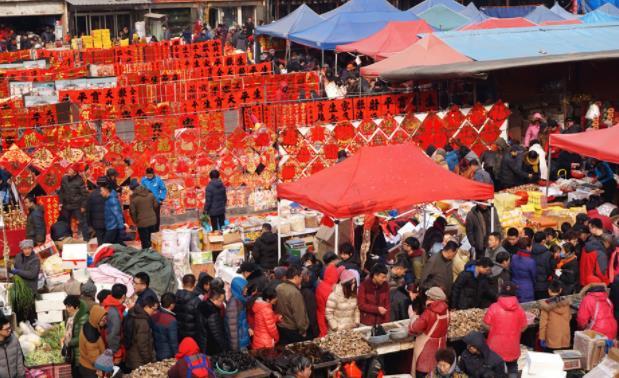
The exchange and sale of things mostly had to go to the market. There was a market in every village, and some villages had a large population, so they set up a market. Market days were generally divided into 'third, sixth, ninth' or 'second, fifth, eighth' according to the lunar calendar, or 'first, fourth, seventh' according to the solar calendar. Some places used the solar calendar, and there were three market days in ten days, and some more developed places had four market days in ten days, and the 'zero' days were also counted as market days.
On the day before the market day, parents would prepare the goods they wanted to sell to the market, and they would also think about what they wanted to buy. On market day, parents got up early, carried vegetables, corn, and rice, or drove cows and sheep, carried piglets, and rushed to the market. It was hurried and rushed.
The market was very lively, just like a bustling street in the city now. There was also a farmers' market in the market, which was the most lively place. Many small vendors wandered around the market to buy agricultural products, and then transported them to cities or other places to sell. The small vendors and farmers haggled over prices, and sometimes they would argue. Farmers painstakingly cultivated vegetables and livestock, and if they didn't sell them at a satisfactory price, they felt that they hadn't benefited the farmers. The small vendors felt that the cheaper the better, because they were concerned about personal interests.
The agricultural products in the market are unstable in price, especially when a certain product is gathered in the market, some things are sold almost 'at cost'. If they don't sell out, the goods will be carried back, wasting energy, and it's not certain whether there will be a market day next time to sell at a good price, so they 'sell at a low price' is a common thing.
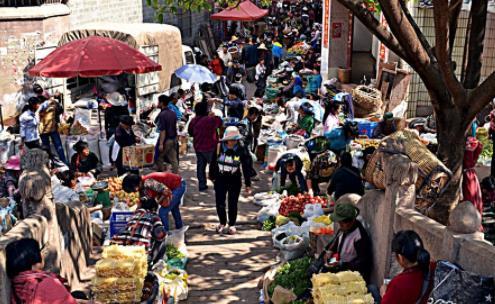
Parents sold their things at the market and then entered shops. They bought a few packs of cigarettes, a few packs of salt, a few yards of cloth, a new dress, a pack of biscuits... When they went to the market, they carried baskets, and when they returned, they still carried baskets.
When parents came back from the market, they divided the bought things among their children, which was the happiest time for the whole family. As long as it was a new dress, no matter what color or style, we all liked it and we could show it off for a long time.
70s, the happiest time is when they go to the market together. When they go to the market, they help their parents carry things, and even use small bamboo baskets to carry a basket of goods. Along the way, they walk very quickly, fearing to miss the market time, and the goods will not be sold. It's a very happy thing.
At noon, many market people gradually went home, although there were packages, buns, and places to eat in the market, market people didn't want to buy. It was a happy thing to buy a few buns and have a meal. Once, I remembered that when I went to the market, my mother didn't sell all the vegetables, and my mother pulled me to eat noodles. The noodles didn't have meat or bone broth, but the smell was fragrant, probably because we were too hungry.
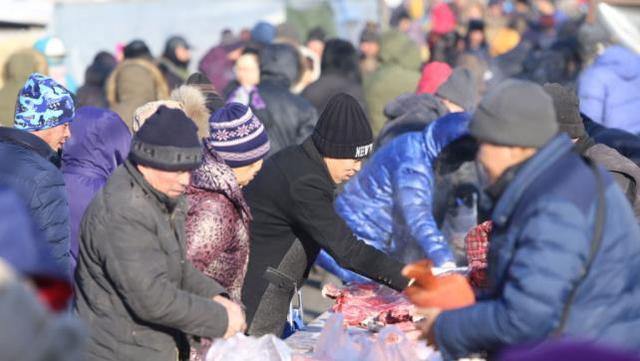
Now there are markets in rural areas, but they are not as lively as before. Rural products are less, mostly sold by city people to bring rural products to the market. Market people are mostly older people, mostly buying farming tools or agricultural inputs.
Some villages have a cement road at the entrance, and families have motorcycles and cars, they don't need to walk to the market, and they can go to the city to buy things at any time, so they don't expect market days.
During the New Year, the market will be more lively, some workers who went out to work returned to the village, and they liked to go to the market to reminisce about 'the bustling life'.
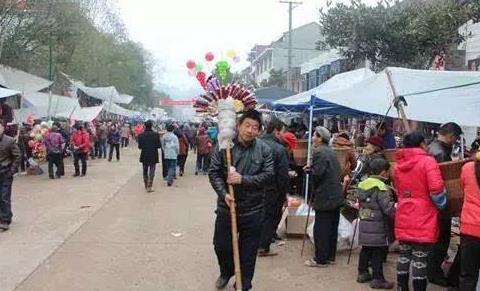
Many markets have closed down, especially in small cities. Some remote villages have only a few old people living, and they need to buy things by calling their children in the city, and they will bring them back when their children come home.
Do you remember when 70s went to the market, it was 'entering the city', seeing the 'bustling scene' of the market, it was a happy thing. Seeing the things in the shop, everyone stretched their necks to buy back. Gradually aging 70s, is it still in your memory the bustling market scene, parents bringing back new clothes, warm buns, a pair of sandals, a pair of furry socks... I remember when I left the village, I also passed through the market.
Life in the city is 'every day entering the market', but it's never as happy as the market. Our youth is gone, and the 'market' we remember has become a memory that has witnessed our growth and departure from our hometown...
Author: Plain Food and Simple Taste
Follow my text, enter your soul.
Pictures in the text come from the internet.
“”“”......