Drinking Should Have a Sense of Ceremony!
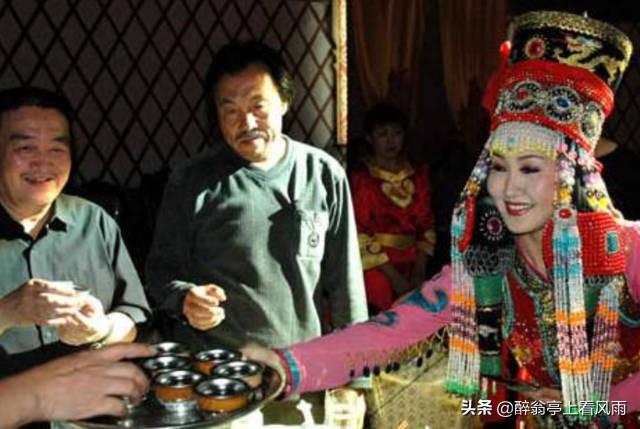
What is ritualism? Ritualism can transform mundane and ordinary things into something different, evoking a sense of awe. In a boring life, where flatness is the norm, you always need to find a new way to spend dull days.
Life is often unremarkable and monotonous, filled with the trivialities of daily life and the repetitive boredom of two points and one line. This can easily turn life into a stagnant pool, and we're still complaining about why it's so dull and uneventful.
Life needs ritualism; it's not about being frivolous, but about your love for life and pursuit of pleasure—especially when drinking. Ritualism is truly important.
The Chinese nation has practiced rituals for five thousand years. When it comes to rituals, they take it very seriously.
The ancients said, 'Take a bath, burn incense, play the zither, admire chrysanthemums.' They did this specifically to play the zither and admire chrysanthemums. This shows how the ancients valued ritualism when they enjoyed 'playing the zither and admiring chrysanthemums.'
The ancients' rituals around drinking were even more important. As Wang Wen Zhong put it, 'Wine was a grand gift in ancient times.' Since it was a 'gift,' it had to be presented with a ritual. The ancients elevated the 'gift' behind the ritual to a 'civilization' level, creating the 'Bronze Age' and the 'Poetry Age.'
Compared to the ancients, modern Chinese people have greatly reduced their ritualism. As Yuan Du once wrote in an article about ritualism, modern people lack the ritualism of the ancients, and without it, life is not majestic and the heart is not quiet.
I remember a classic scene from Stephen Chow's early film, 'Loach King.'
Stephen Chow, as the pork seller, stood in front of a messy stall, surrounded by a bustling market and road. Yet, he still gracefully held a Dry Martine and drank it.

It was as if he were 'building a hut in the human world, without the sound of carriages and horses.'
With feeling, attentively, and yet relaxed and joyful, fully stimulating the taste buds, sense of smell, and nerves, to capture, savor, and understand every molecule of fragrance, to compose a perfect wine-tasting program, and thus gain a comprehensive aesthetic enjoyment.
Perhaps some people think it's 'exaggerated,' but compared to a life without interest, who doesn't like to be leisurely and enjoy the process?
Haruki Murakami said that rituals are important things. Without small happiness in life, it's just a dry and barren desert.
Drinking, especially Chinese wine, cannot be without a little ritualism!
It's about savoring the moment and appreciating the experience.

“”