Exhausted and at a dead end? Try reading this Zen poem by Wang Wei to help you out.
As Mo Yan wrote in 'Frog,' 'Over the years, I've summarized an experience: the most superior way to solve tricky problems is to observe them and let them unfold naturally.'
Mo Yan's words actually reveal the essence of life. Throughout our lives, we will inevitably encounter some thorny problems and difficult situations, and when we reach a dead end, we may feel lost and confused.

However, the more critical the moment, the less we should act rashly, avoid or give up. The best approach is to 'observe them and let them unfold naturally.' Treat life's low points as a vacation, and solutions will naturally appear.
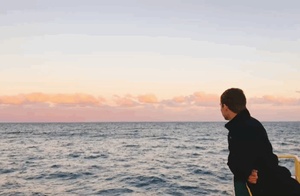
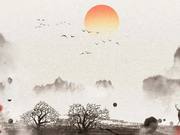
This is just like the Zen poem by Tang Dynasty poet Wang Wei: 'When you reach the end of a stream, sit and watch the clouds rise.'
The original meaning of the poem is: While walking in the woods, the poet pauses and stops, until he reaches a place where the stream runs dry, and he discovers that there is no path ahead, so he simply sits down and watches the clouds rise and fall in the sky.
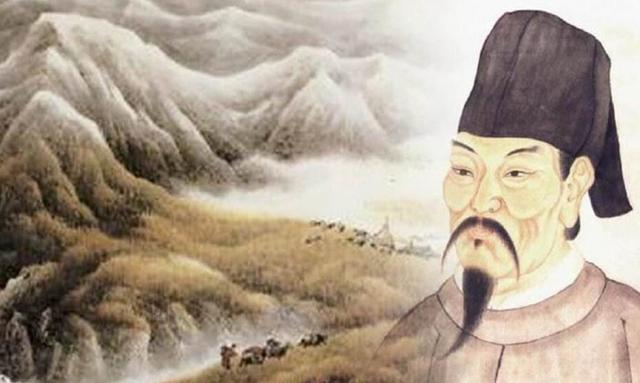
This poem seems to be about scenery, but it is actually Wang Wei's description of his own life situation at the time. At that time, Wang Wei had experienced the 'An Lushan Rebellion,' and had almost been killed for serving in the rebel army. Later, his brother, Wang Jin, saved him from death with his ability, so he had a chance to reflect and write this deeply meaningful poem.
Life undoubtedly has difficulties, but overcoming them is like blooming flowers and green willows.
'When you reach the end of a stream, sit and watch the clouds rise,' actually means persevering through the hardships we encounter in life. This is the ultimate dead end in life.

Like the protagonist Chris Gardner in the movie 'Paycheck,' he was on the verge of bankruptcy, his wife left him, and he had to take his young children with him, with no way out, he slept on the subway, lived in toilets, and entered shelters – life had pushed him to a dead end, but Chris Gardner never gave up. He always smiled and maintained an optimistic attitude, letting the storm rage, and he smiled forward.
Finally, he turned things around and achieved a happy life.
Everyone's life will inevitably encounter some troubles, but if you can overcome them, you will be rewarded with success.

As Mo Yan said: 'Life is bound to have many grievances. The more successful a person is, the more grievances they will suffer. To achieve the extreme and dazzling of one's life, one cannot be too concerned with grievances, one cannot let them tighten one's heart and disturb one's life. One must learn to smile and let it go, learn to be detached, and learn to transform potential energy.'Mo Yan's words are actually the second part of the poem, 'sit and watch the clouds rise.'
Throughout our lives, we shouldn't be too concerned with grievances; we should learn to accept them with a calm attitude, treat life's low points as a vacation, and we will become better and better.
Poet Wang Wei's poem reveals the fundamental principle of life: when we reach the dead end, we shouldn't resort to desperate measures, but maintain an optimistic attitude, and eventually, we will reap a magnificent and unparalleled beauty.

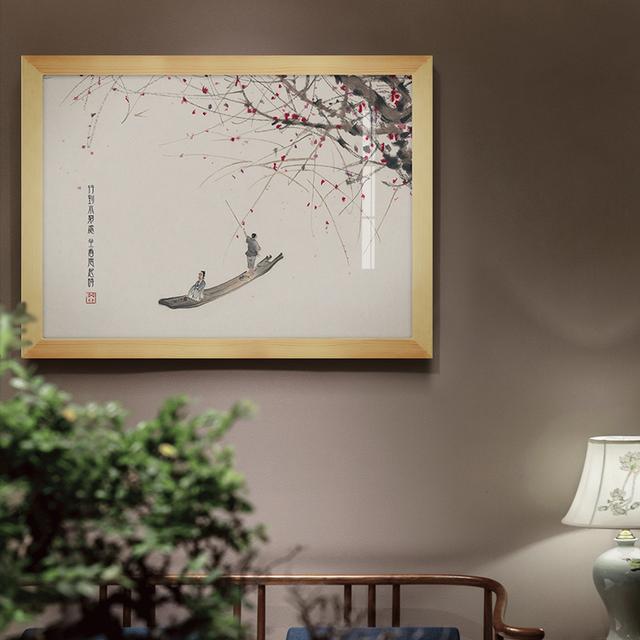
If you like the high-definition copy and decoration of 'When you reach the end of a stream, sit and watch the clouds rise,' please click 'Learn More' below, there will be surprises!
—Editor
——