He Who Sees the Deep Water Fish Remains Unknown
The origins of the 'Yang Yu' () are unknown, and the principles of human conduct are similar – one should not be excessively astute, especially when leading others. Sometimes, it's wise to overlook minor details.
A person who is excessively clever tends to only consider their own perspective, disregarding the viewpoints of others. Such individuals lack the ability to maintain their positions, constantly seeking to usurp the authority of others. If they are leaders, they will be extremely strict and demanding with their subordinates, leaving no room for error. This is an unwise approach; 'too much clarity leads to no fish' – discernment without moderation can be detrimental. 'Too much speed leads to failure,' and 'excessive fullness inevitably leads to reversal.' In life and in business, when one goes too far, misfortune is sure to follow.

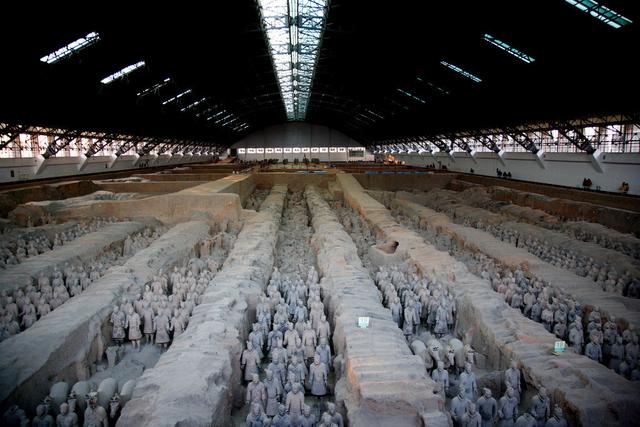
Throughout history, there have been many instances of 'Yang Yu' () and '' (water to clear then no fish). The Qin state's reforms under Qin Shangyang strengthened it, and Qin Shi Huang used Legalist thought to establish the empire, continuing to rely on Legalist ideology to maintain it. He employed brutal laws, harsh punishments, and forced labor, disregarding benevolence and cultural development, ultimately transforming Qin into a war-machine. Qin Shi Huang himself became a notorious tyrant. Qin Er Shi's reign brought about the empire's collapse.
Wu Zhao (), as Empress Wu during the Tang Dynasty, took the throne after Emperor Gaozong's death and briefly ruled in his name before abolishing Emperor Zhong and declaring herself Emperor Wu, establishing the Zhou dynasty. She suspected conspiracies and conducted extensive investigations of officials and citizens, punishing even relatives for minor offenses. This created widespread fear and resentment. When a minister advised her to adopt a more benevolent approach, she realized that 'too much clarity leads to no fish' and 'too much fullness inevitably leads to reversal.'

Wu Zhao did not heed the advice, leading to several coup attempts. The growing discontent among the people eventually forced her to acknowledge her mistakes. She deposed the Li family and restored the throne to their descendants, demonstrating that 'too much clarity leads to no fish' and 'too much fullness inevitably leads to reversal'.
The saying '' (water to clear then no fish) – also known as the 'ring current' principle – states that when things reach an extreme, they will inevitably change and produce a completely different outcome. Therefore, all actions should be done within reasonable limits. Moderation is key; 'too much is as bad as too little.' One must not push things to an extreme; '' (discerning the deep waters inevitably leads to misfortune) – exceeding boundaries inevitably leads to self-destruction.