Old Monk Xiyun: Cultivation Requires a Steadfast and Long-Term Heart
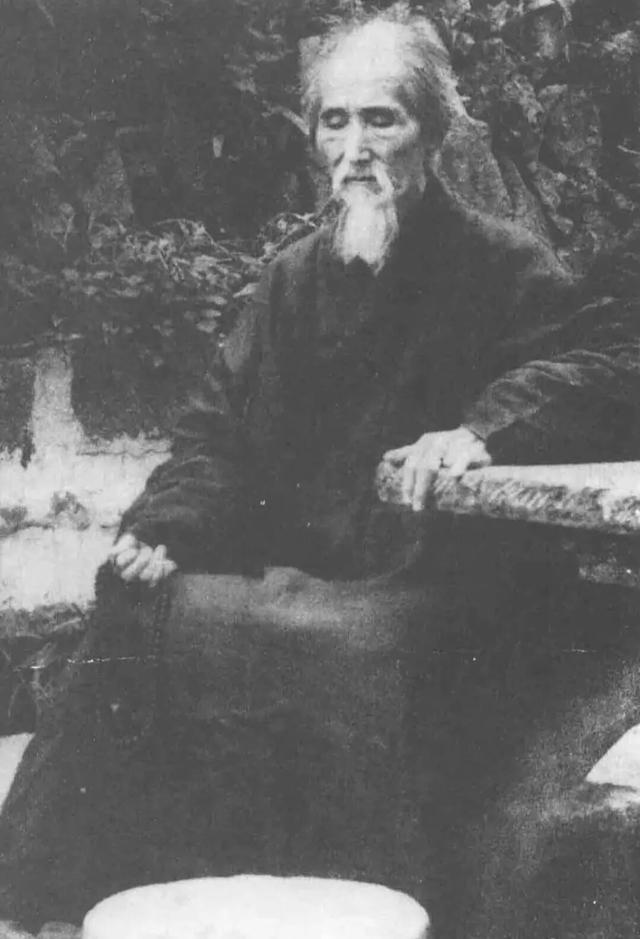
Through one method of cultivation, it is easy to succeed if it is easy, but difficult if it is difficult. When it is easy, as long as you let go, believe firmly, and cultivate a steadfast and long-term heart, you can succeed. When it is difficult, it is what we fear hardship, want to seek pleasure, not knowing that everything in the world is based on cause and effect, and it also takes time to learn.
Therefore, first have a steadfast heart, because those who practice the Dharma will inevitably encounter demons. Demons are the colored sights, sounds, smells, tastes, and touches, and the illusory realm. These are our enemies, so when we hear many lectures and practices, we often cannot stand firm because our hearts are not steadfast.
Secondly, we must cultivate a long-term heart. In this life, we create countless karma. Once we start to practice, how can we think about birth and death? How can we let go of our habits in this lifetime?
The ancient sages, such as the Longqing Zen Master, broke his straw mat seven times; the Zhaozhou Zen Master was eighty years old and still traveled, spending forty years looking at empty characters, without adding any thoughts, and eventually achieved great enlightenment. The Yan and Zhao kings highly respected him and offered him various tributes. Until the Qing Dynasty, Emperor Yongzheng reviewed his sayings and considered him a Buddha, and then he was enshrined as a Buddha.
Now, if you put aside your habits and fix your mind, you are equal to the Buddha. As the *Great Mirror Sutra* says: 'Like clearing muddy water, placing it in a clean vessel, remaining still and not moving, the mud settles, and the clear water appears. This is called the initial guest dust settling. Removing the mud and clear water is called permanently cutting off the root of ignorance.' Our own mental afflictions are like mud clots, so we use words as tools. Words are like clear, which can clarify muddy water (i.e., subdue our afflictions).
If practitioners reach a state of calmness and stillness, where the inner landscape is present, they should be careful not to falter. This is the initial stage of cultivation, and our afflictions and ignorance have not yet been extinguished. This is like clearing muddy water to become clear water, although it looks like it, the mud has not been removed, so we must continue to work.
The ancients said: 'People sitting on a pole a hundred feet high, although they see that it is not real, if they can make the pole progress, the ten realms of the world will appear all around.' If we don't advance, we will become attached to 'Huaicheng', and our afflictions will still arise. If we do this, it will be very difficult for us to attain self-realization. Therefore, we must remove the mud and clear water, so that we can permanently cut off the root of ignorance. This is the way to achieve true Buddhahood.
When we reach the point where our ignorance is permanently cut off, we can appear in any of the ten realms of the world to teach people. For example, the Bodhisattva of Avalokitesvara appeared in thirty-two manifestations to help people. What manifestation should be used to enlighten people? So he appeared according to the manifestation needed. He can appear in brothels, wine shops, stables, and temples in all realms.
Otherwise, if you have a momentary lapse, you will be trapped in the six realms of rebirth. Once, Qin Hui made a lamp for the Bodhisattva of Earth, but because his long-term heart was not firm and his ignorance and afflictions were not extinguished, he was killed by his anger. For example, if you have faith and a long-term heart, you will not be afraid of being an ordinary person and can attain Buddhahood in one lifetime.
In the past, a poor man in Changzhou went to the temple to become a monk, but he didn't know how to cultivate, and he didn't know where to seek guidance. He spent his days doing hard labor, and one day he met a traveling monk. The monk saw him working tirelessly and asked him, 'What is your practice?' The monk said, 'Tell me about the Buddha.' The monk said, 'Recite the *Diamond Sutra.'
So he followed the monk's instructions and recited the *Diamond Sutra* while working. He hid the words in a stone cave and lived on wild vegetables and herbs. At this time, his mother and sister were still alive. Hearing that he was living in a cave and suffering, his sister took a cloth and some food to him. When she arrived at the cave, she saw him sitting in the cave, motionless. She called him, but he didn't respond. His sister was angry and took the things back home. However, he still didn't pay attention to or ignore her, and he continued to sit in the cave for thirteen years. When his sister came to visit him again, she saw the cloth still there, untouched.
Later, a fugitive arrived there, hungry, and saw the monk wearing shabby clothes living in the stone cave, so he approached him for alms. The monk took some stones from the bank of the cave and cooked them in a pot, and shared them with him like potatoes. The man ate them and left, and when he left, he said to the monk, 'Please don't tell others about this!'
After a while, he thought, 'I have been practicing here for many years, and I must have some connections.' So he went to Xiamen and set up a tent to sell tea.
At this time, it was the year of the Wanli Emperor, and the Empress Dowager died. To honor her, they invited a high monk to perform a Buddhist ceremony. First, they wanted to invite a monk in Beijing, so there were no great monks in Beijing at that time. The Empress Dowager dreamed that a high monk was in Changzhou. The emperor then sent people to Changzhou to invite many monks to Beijing to perform Buddhist ceremonies and prayers for the Empress Dowager. These monks all packed their belongings and entered Beijing along the road.
The monks asked, 'Masters, where are we going?' The monks said, 'We are here to fulfill the emperor's orders and perform Buddhist ceremonies to offer prayers to the Empress Dowager.' One monk said, 'Can I go with you?' They said, 'You are too troubled to accompany us.' He said, 'I cannot recite scriptures, I can only help you carry things and look around.' So he followed the monks to carry their luggage into Beijing.
At this time, the emperor knew they were coming, so he ordered people to bury the *Diamond Sutra* under the threshold. The monks didn't know about it and all went to the palace. Only this monk went to the place and knelt down, clasped his hands, and didn't enter. The guards told the emperor, and the emperor was very pleased and respected him, and he followed his instructions to build a shrine.
At this time, the emperor asked, 'Why didn't you enter?' The monk said, 'There is a Diamond Buddha under the ground, so I cannot enter.' The emperor asked, 'Why don't you crawl in?' The monk heard this and immediately knelt down with his hands clasped together and stood on his feet, doing a somersault and entered.
The emperor was very pleased and entertained him in the inner courtyard, asking him to build a shrine and perform Buddhist ceremonies. He said, 'In the fifth hour of the Ming Dynasty, we will build a shrine, only a hanging scroll and offerings of incense, candles, and fruit are needed.' The emperor was displeased, thinking that it was not grand enough, and he feared that the monk had not enough virtue, so he ordered two palace maids to bathe and groom him. After bathing, the lower part of his body was motionless, and the palace maids told the emperor, and the emperor was even more pleased and respected him, and he followed his instructions to build a shrine.
The next morning, he held a ceremony, asked questions, and carried a to the sacred place and said, 'I came here without intention, you are willing to love me. When there is no origin, I transcend the heavens.' After the ceremony, he told the emperor, 'Congratulations to the Empress Dowager, she has been liberated!' The emperor was surprised and knelt down to thank him, and he set up a feast in the inner courtyard.
At this time, the monk saw the emperor wearing loose trousers and didn't turn his eyes. The emperor said, 'Do you like these trousers?' So he took them off and gave them to him. The monk said, 'Thank you!' So the emperor bestowed upon him the title of 'Dragon Trousers Country Master.'
After the ceremony, the emperor took him for a stroll in the Imperial Garden, where there was a pagoda. The monk liked the pagoda, walked around and admired it. The emperor said, 'Do you like this pagoda?' So he ordered people to send it to the monk. The monk said, 'I don't need it.' He said, 'Let's go.' As he said this, he instantly lifted the pagoda and floated away. The emperor was very surprised and admired him.
Only because he had been practicing as a monk for a long time, he didn't have any attachments, and his heart was steadfast. His sister came to visit him and didn't respond, his clothes were ragged, and the cloth had been untouched for thirteen years.