Tao Te Ching: Adventure Isn't Always Courage, It's Often Recklessness
When facing unknown challenges, how much do we encourage ourselves inwardly, 'Be braver, be braver.'
Truly, this courageous challenge of the unknown is often a commendable virtue. However, not all courageous adventures are worthy of praise.

In life, there are indeed courageous but stumbling times. If you happen to be in such a situation, don't complain about bad luck; bad luck won't leave on its own if you just complain about it.
When facing life's unknown difficulties, courage is essential, but often we may not have enough 'capital' to risk another adventure.
Sometimes, taking one wrong step can lead to a sorrow beyond recovery. Therefore, adventure may not always be bravery, but rather recklessness in certain situations.
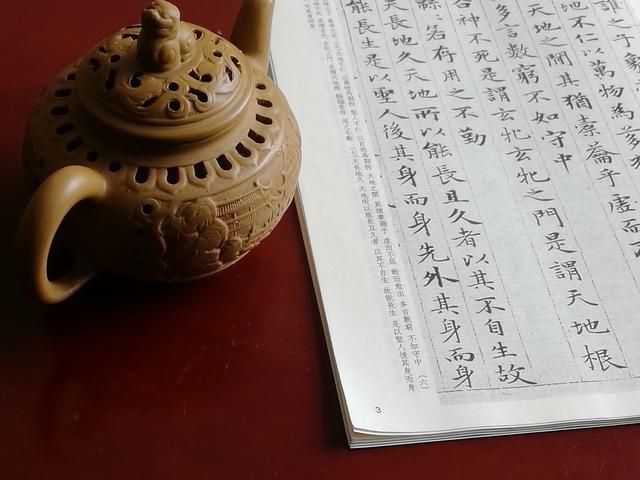
To avoid 'wasting' our precious 'courage,' we need to prepare beforehand. Regarding these preparations, we can find subtle clues in the book *Tao Te Ching*.
'Unknown, deviation, deviation brings misfortune. Knowing the norm brings tolerance, tolerance brings impartiality, impartiality brings the King, the King brings Heaven, Heaven brings the Dao, the Dao brings longevity, without the body, without danger.'

To understand this passage, the key is to understand 'norm.' According to Lao Tzu's logic, 'norm' can represent 'eternity' or eternal existence. What state is 'eternal' and also represents 'eternity'?
We should extract wisdom for dealing with life from this passage. Let's understand 'Dao' as 'law' for now.
After all, within a certain range, 'laws' are verifiable. This, to some extent, is a manifestation of 'eternity' in the range of laws.

When applied to human affairs, Lao Tzu's statement 'Unknown, deviation, deviation brings misfortune' advises us to thoroughly understand things before acting, in order to avoid falling into a quagmire due to impulsiveness.
Actually, Lao Tzu is emphasizing 'objectivity.' Because of emotions, it's often difficult for us to truly be objective in judging a situation. Human beings are inevitably influenced by subjective emotions, especially when facing the unknown. Simply relying on intuition is like gambling with our fate.
However, lucky ones are a minority in this world, and most of us can't even guess correctly. So, when facing the unknown, simply rushing forward with a burst of courage is a foolish approach.
Even when facing the unknown, we should try to understand it and find a way out of the mist, not just rushing forward blindly with passion.
That is to say, rationality and calmness often depend on our understanding of 'law' or 'norm.' Therefore, Lao Tzu's wisdom is profound. This is just a glimpse, a small experiment. As for how deeply to understand Lao Tzu's ideas, it depends on your own effort.