Are Sloped Shoulders Really What You Want?
Many people have the problem of slumped shoulders, with shoulders appearing flat and low, which makes people look lacking in spirit. Also, many people blindly train shoulder exercises like flat presses, resulting in the trapezoid muscles becoming larger and the 'slumped shoulder' appearance worsening.
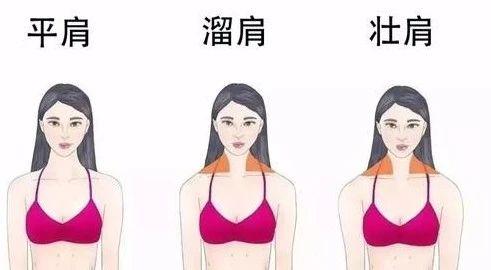
The root of the problem is not properly addressed shoulder blade positioning.
In the fitness circle, there's a saying: 'Beginners train chest, experienced people train back.' This means that experienced fitness enthusiasts understand the importance of the back muscles. Because most human movements are upward and forward, we should focus on training the pectoralis major and biceps.However, we need to consider that because most movements are forward, we need to train our back muscles more effectively. 'It takes a village to raise a child,' – a strong foundation is crucial.When performing exercises like bench presses and overhead presses, if we don't have stable back muscles, we'll make incorrect force activation. The more we train, the more pronounced the errors become. Eventually, this leads to strange postures and difficult-to-heal injuries.
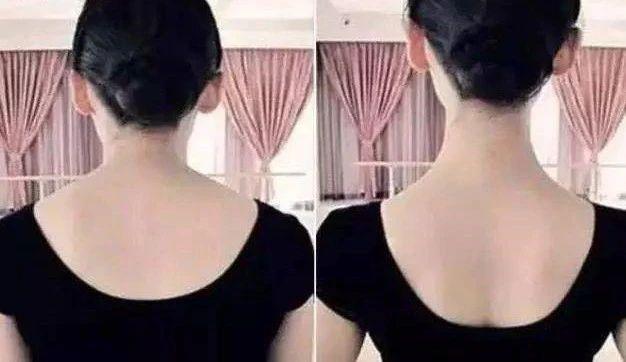
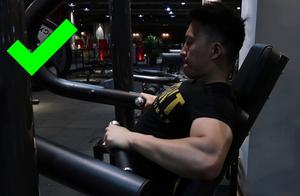
First, whether it's shoulder raises or flat presses, the key focus should be on preventing the shoulder blades from elevating.
There's also a misconception that many people blindly pursue heavy weight training.
Believing that without heavy weight, there's no training effect is a particularly serious and widespread error.Every movement requires the assistance of large muscles and small muscles. Large muscles can handle more weight, but that doesn't mean small muscles can't handle it. Small muscles are responsible for stabilizing the movement and directing force.
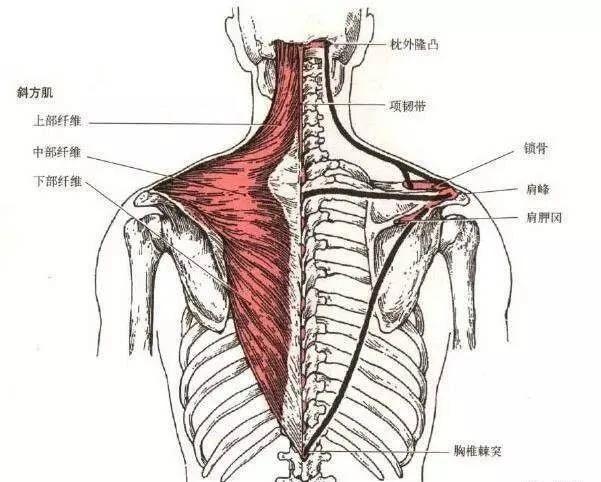
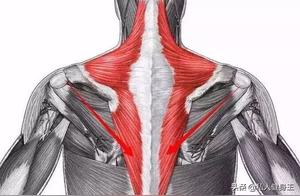
A patient with cervical pain and dizziness found me. His symptoms were neck pain and dizziness. After examination and assessment, he realized that he had been doing a lot of overhead shoulder raises recently. He did appear to have slightly wider shoulders, but his shoulder blades were severely elevated.The trapezoid, upper fibers of the trapezoid, and the rhomboids were abnormally tense, pulling the entire cervical spine into a forward flexion and extension, causing neck pain and dizziness.
During the treatment, I didn't focus excessively on the cervical spine itself, but instead alleviated the tension around the shoulder blades, allowing the shoulder blades to return to their correct position.
After the treatment, the neck pain disappeared, and his sleep was much better that night.
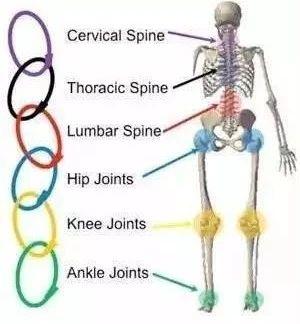
Therefore, blindly using heavy weight and neglecting the accuracy of the movement is a wrong approach.
I encourage everyone to participate in fitness activities, but it must be done scientifically and accurately, not blindly forcing oneself. A particularly bad practice is to think that you've mastered an exercise simply because you've used it, without understanding the underlying principles. This can lead to incorrect movements and injuries. Remember, students, when you truly master a skill that can change the structure of the human body, proceed with caution, because the faster you run down the wrong path, the further you'll go.
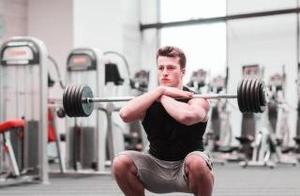
Shoulder raises and flat presses are good exercises for training shoulder width and height.But don't let the use of heavy weight or improper form cause the shoulder blades to elevate as a compensatory movement.

This will only make the trapezoid muscles larger, and the 'slumped shoulder' appearance will become even more severe.