Don't Be Greedy, Tai Chi Chuan Totals Only Three Steps and a Half
Tai Chi Chuan has branches such as Chen, Yang, Wu, Sun, He, and Wu. For example, the Yang style Tai Chi Chuan has eight-five, eighty-eight, one hundred and five, and newly created twenty-four and forty-five and forty-two forms, etc. So, what is the practice method of these Tai Chi Chuan routines? In my opinion, there is no difference at all. At most, they have different focuses, and the core content is the same.
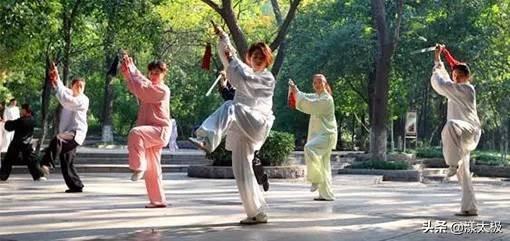
To practice Tai Chi Chuan, one must trace back to the source and find the masters who existed in the past. One can also find it directly from the movements of Tai Chi Chuan. This is a long-term self-practice, carefully searching for the wonderful phenomena in one's own body. Through countless repetitions and recognition, one can find the true meaning of Tai Chi Chuan. This is also a personal cognitive path. Now, I have a personal cognition and I'm willing to share it with everyone.
The human body is a binary body: one aspect is the body's appearance during crawling, with a layout of the body's posture, requiring the body to lead with the empty hand and top with force, with the neck, waist, and legs bending and pulling each other to achieve a three-part division of the body; the other aspect is the body's evolutionary-created posture of using lever-like force. Taking the 'binary human body' theory into account, I have a personal cognition that 'Tai Chi Chuan totals three steps and a half'. Whether it is one hundred and five, eighty-five, twenty-four, or forty-two forms, the total is only three steps and a half.
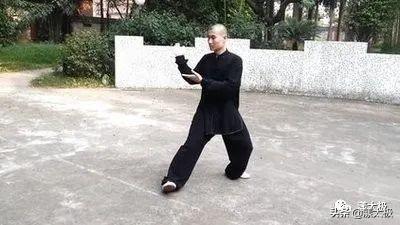
First move, neck spinal column power move
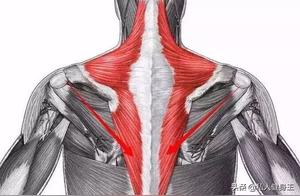
'Neck spinal column power move', it uses the part of the body above the shoulder. The method is: top with the head, call it 'empty hand top with force' or 'head top suspend'. The lower part of the shoulder is empty, only the ankle joint still maintains flexible bending. This move extends the arm forward, not to grasp anything or strike, but just to extend forward into the distance.
In terms of fist fighting, when the arm extends out, it starts from the spinal column of the neck and head, 'force from spine', 'extend with bending', the arm extends with firmness and softness, possessing a psychological and behavioral state of exploration. This state of exploration of humans in the 'crawling era' – when the forelimbs are about to land and the posture is that of an animal hanging in the air, with the forelimbs about to touch the ground – is exactly the same.
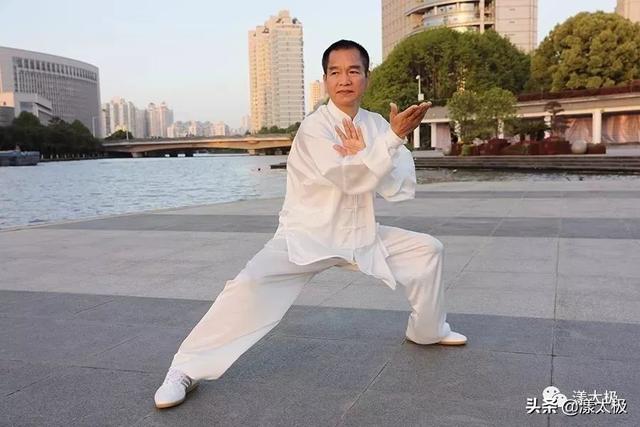
To facilitate description, we use this move where the power source of the arm starts from the neck and head, so we call it 'neck spinal column power move'. This move is prevalent throughout the entire set of forms. Whenever the hand extends forward, it is always this move. The person executing this move focuses his intent on the forehead and the upper neck behind the ears, the shoulders are relaxed, and the ankle joint is flexible, so that the extending hand is realized. At this time, the chest, abdomen, and legs are empty, so the lower part of the shoulder is extremely free. The entire body uses this method to interact with the opponent, and the reaction is particularly sensitive, without worrying about being hit. Because this state is a state of exploration, the mentality is also a state of searching, and there is a large margin for maneuverability.
Persistence of this style is 'empty hand top with force'. When extending the hand, use the thumb to guide forward, so that this posture does not dissipate; the eyes shoot outward, the black eyes upward, which can assist; the voice uses air to call 'he' sound, which can assist.
Second move, waist and leg bending squatting move
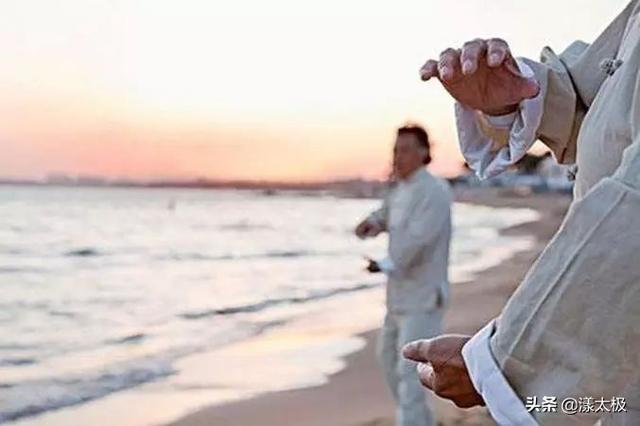
The first move is when the two sides are combined in a push-hand game, when the opponent's force is not moving, and when I cannot move, this is the second move. At this time, I firmly maintain the first move, but the waist and leg parts, from the original empty state, actively bend the hips, knees, and ankles, turning the joints back down and not extending them. The arm is not loosened, not resisted, but the waist and legs are not extended and they turn down, which is a little difficult. If you add the left and right concepts, it is not difficult at all. So the right hand sticks, the left hand clamps, so the waist, legs bend, the arm remains firm, so the entire body's height decreases, the waist, legs and arms become a clamp that is being clamped, which constitutes a pair of upper and lower clamps.
The first move uses 'neck spinal column power move', the second move uses 'waist and leg bending squatting move', the two are controlled by two different nervous systems. The nervous system controlling the neck and head is the cervical spine vertebral nerve movement system, and the nervous system controlling the waist and legs is the waist and sacral vertebrae movement system. The two can be clearly distinguished. After I have undergone this transformation, it is a disaster for the opponent. Because I have changed my method, position and direction with him, if he cannot respond at this time, it will be a dead end. If he does not respond, I will not be able to maintain balance.
I first use a straight line forward, and the opponent must also use a straight line to confront me. However, in the second move, I changed the method and direction, and became an 'up and down clamp' move. If the opponent cannot change (if he can change, he must use the following 'half move'), I can get out of this situation. The simple way to say it is 'break the arm'. In the Tai Chi Chuan circle, this method is called 'transformation', which is a strategy of retreating in attack.
Specifically, discard the arm that is being clamped, and the rest of the body remains 'up and down to hold, three-part division'. No matter how strong or weak the opponent's force is, I do not let my head, shoulders and upper body tilt. In the 'up top down sink' between, maintain 'standing in the middle and straight'. (If you add left and right concepts, it is easier to do so.) Breaking the arm seems to be retreating, but except for the arm that is broken, the rest of the body is in a positive aggressive posture. If the opponent used 'second move', and I cannot 'break the arm' in time, then it is a dead end. No matter how strong the force is, it has no use.
The third move, sudden change of yin and yang is used
I use the second move to clamp the upper and lower sides, if the opponent does not use 'half move' to break the arm, then my third move is really used on the opponent. No matter how much force the opponent uses, because the ankle joint bends forward, the arm becomes more concentrated, can exert a huge power (one hand stretches forward to maintain balance), plus the waist and leg bending sinking clamp method (the other hand operates), at this time, I focus my intention on the opponent's center point, but the method, position and direction have changed instantly. The opponent will be locked and unable to move.
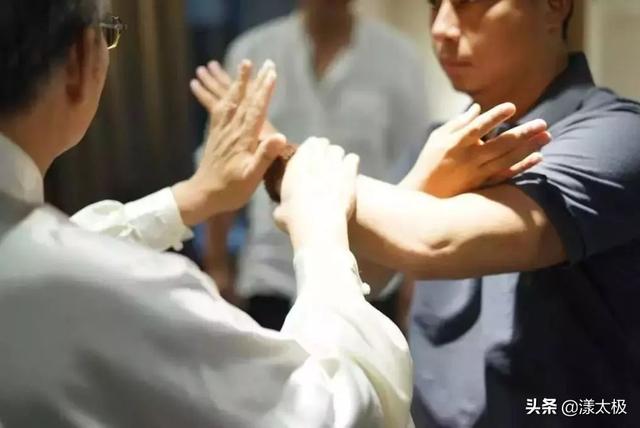
Because my clamp method is in a state of balance in the middle of the body, it can be 'with it to move', so even if the opponent uses a large or small force, I will not let my head, shoulders and upper body tilt. In the 'up top down sink' between, maintain 'standing in the middle and straight'. (If you add left and right concepts, it is easier to do so.) Breaking the arm seems to be retreating, but except for the arm that is broken, the rest of the body is in a positive aggressive posture. If the opponent used 'second move', and I cannot 'break the arm' in time, then it is a dead end. No matter how strong the force is, it has no use.
At this time, I use my front palm to strike, and my other hand clamps the upper and lower sides to lock the opponent. When holding the opponent, I use the front palm to strike, and the other hand clamps the upper and lower sides to lock the opponent. At this time, I use the gaze to shoot downward and the black eyes are at the center, and I make a sound with 'ha' to assist.
Half move, defense and countermeasure move
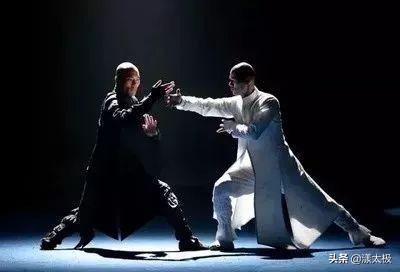
This move is not an offensive move but a defense and countermeasure move, so it is called 'half move'. Suppose the opponent uses the second move 'up and down clamp', I can use this 'half move' to get out of it. The simple way to say it is 'break the arm'. In the Tai Chi Chuan circle, this method is called 'transformation', which is a strategy of retreating in attack.
Specifically, discard the arm that is being clamped, and the rest of the body remains 'up and down to hold, three-part division'. No matter how strong or weak the opponent's force is, I do not let my head, shoulders and upper body tilt. In the 'up top down sink' between, maintain 'standing in the middle and straight'. (If you add left and right concepts, it is easier to do so.) Breaking the arm seems to be retreating, but except for the arm that is broken, the rest of the body is in a positive aggressive posture. If the opponent used 'second move', and I cannot 'break the arm' in time, then it is a dead end. No matter how strong the force is, it has no use.
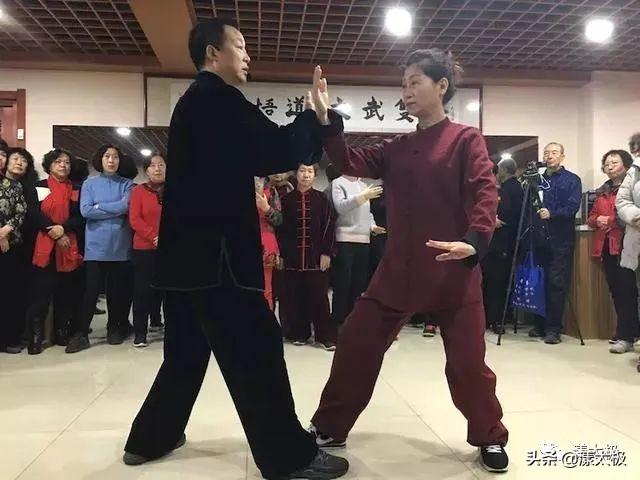
The third move is used when the opponent uses confiscated force.
The third move, sudden change of yin and yang is used
Finally, I combine the Yin and Yang techniques, so that the movements of Yin and Yang are combined, which is the same as the final result.