From 0 to 1: Learn How to Do Proper Deep Squats
Entering the gym and arriving at the strength area, you'll often see people performing squats, with a 20kg barbell hanging on each side with 4-5 plates, each weighing 20kg, totaling 180-220kg, equivalent to the weight of 3 adult men. After each set of squats, they'll reap envious glances from those around them. Over time, heavy squats have become a habit. But have we noticed that some people squat with their hips lower than their knees (full-range squats)? If we observe carefully, no more than 1 in 10 people will do it. So, full-range squats versus partial-range squats – which is better for muscle training?
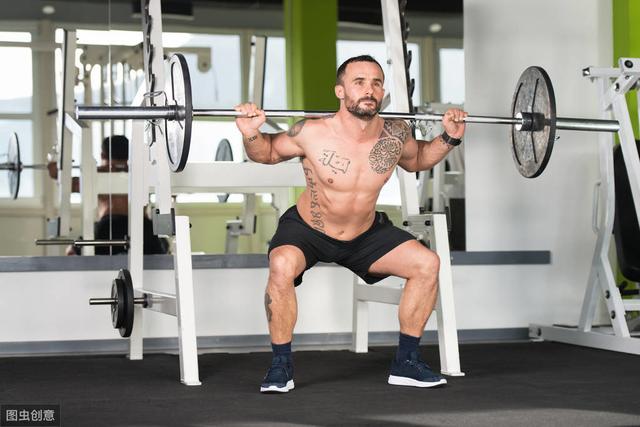
Partial squats
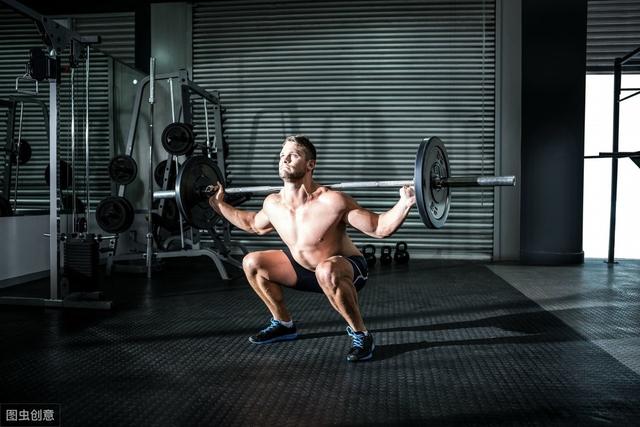
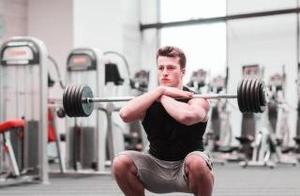
Full-range squats
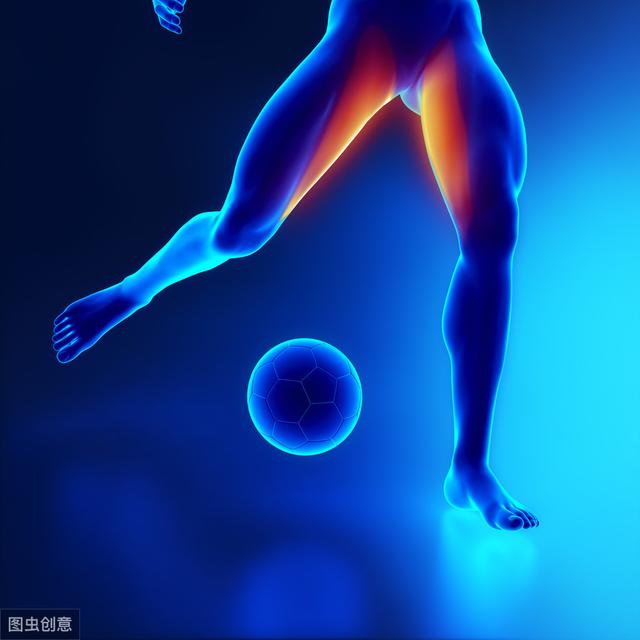
In all human weightlifting exercises, squats are the only one that can directly train 'hip engagement' – a compound movement pattern. In this movement pattern, the posterior chain muscles actively contract. The posterior chain refers to the muscles that produce hip extension – such as kicking the leg back, which is the posterior chain muscle contraction. These muscles are important for jumping, pushing, pulling, and all movements involving the lower body, so we need these muscles to be strong.And partial squats cannot effectively train the posterior chain muscles.
What problems would occur if these muscles were weak?
During a rapid ball-carrying process in footballBig leg strains on the back of the thigh, or anterior cruciate ligament tearsThese are the consequences of weak muscles.
How to do full-range squats? 2 steps completed
1. Solve the bottom posture
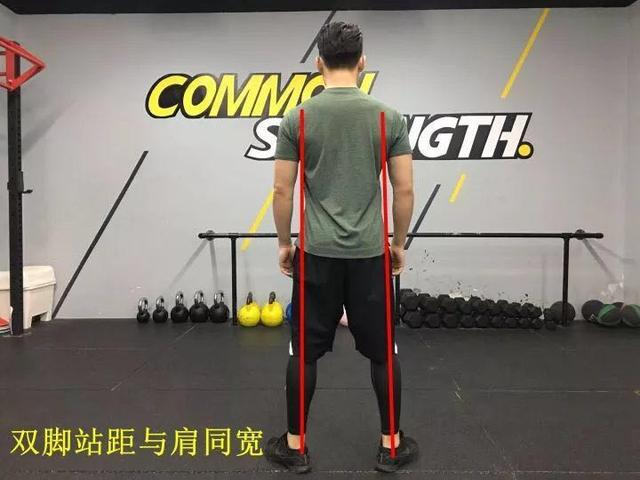
Standing posture:Feet are separated, with the distance between the heels equal to the width of the shoulders, and the toes are outward 30 degrees.
Squat posture:Lower down to the bottom, with the elbows leaning against the knee joints, with hands clasped together, making the knee joints outward by the same degree as the toes of the second foot, hold for 10 seconds, the feet are flat on the ground, the hips are reclined, the back is straight, leaning forward by about 45 degrees, eyes look down at the foot ahead 30cm
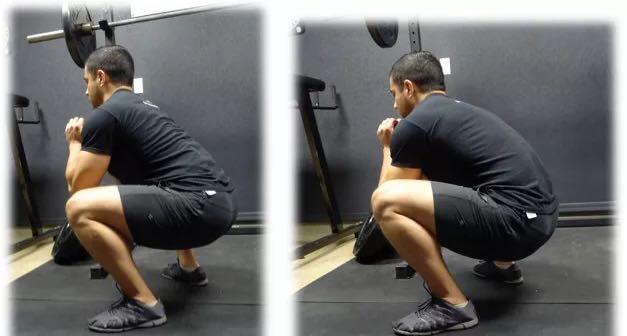
Correct (left picture) Incorrect (right picture)
Squat up:Drive the hips upwards to leave the bottom posture.UpwardsInstead of pushing your body upwards, first lift your upper body, and then drive your hips upwards from the bottom posture. Imagine a hook with an end attached to your hip, pulling you up from the bottom position. Don't think about straightening your knees, don't think about pushing with your feet, and don't even think about your legs. Just drive your hips upwards to leave the bottom position.
Negative load
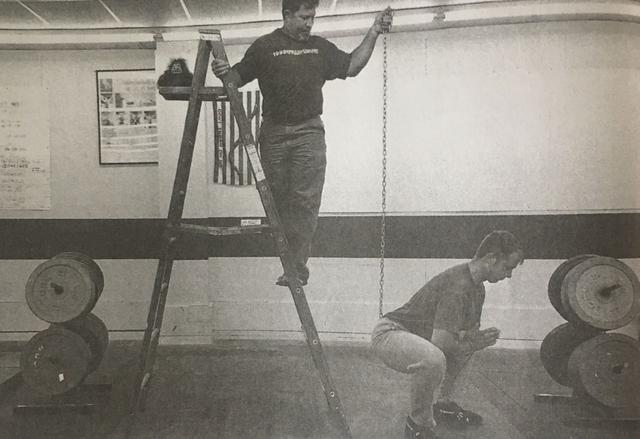
Barbell height:
At the same height as the chest midpoint.Hand position:
Half-grip the barbell, meaning the thumb is above the barbell. Note that when lifting the hands, you must maintain the hand and elbow on the same line. Correct (left picture) Incorrect (right picture)Grip:
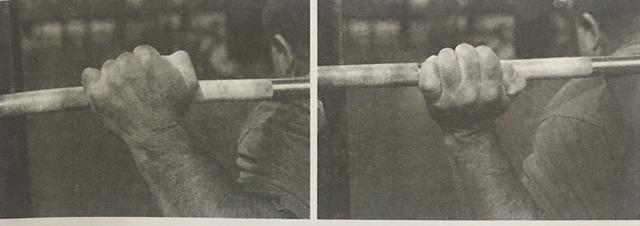
No fixed grip width, depending on individual flexibility, a narrower grip is more beneficial for shoulder muscle contraction.
Barbell position on the back:The barbell is placed below the shoulder blade, just above the bone at the top of the shoulder blade. The feeling of placing the barbell is such that the barbell is placed on the 'support' formed by the lower part of the trapezoid muscle and the top of the rear deltoid muscle. The feeling of fixing the barbell should be such that the barbell is placed on this 'support'.
Weight:Start with an empty bar, and after mastering the correct posture, increase by 10kg each time.
What are the common problems with full-range depth squats and how to improve them?1. The depth of the squat is not enough
Not looking down, not extending the knees outwards, too narrow or too wide feet, not fully committed.
2. The legs are contracting, not feeling the hips.
The barbell is placed too high on the back, or the rack is too high to place the barbell at a lower position, which affects hip activation.
2.