Standard Squats Cause Lower Back and Knee Pain? Don't Let Misconceptions Hurt You
Introduction
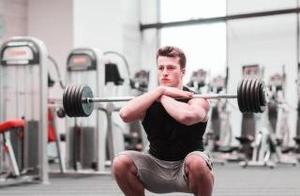
As fitness culture becomes more popular, more and more athletes are paying attention to leg training, and many people also consider squats as one of the essential exercises. It is undeniable that the training effect of squats is better than any leg training exercise, but it is also the most difficult exercise to master. This is because it involves multiple joints and multiple muscle groups, not only requiring strength, but also certain flexibility, agility and coordination. Of these, excessive forward leaning is one of the most common errors.
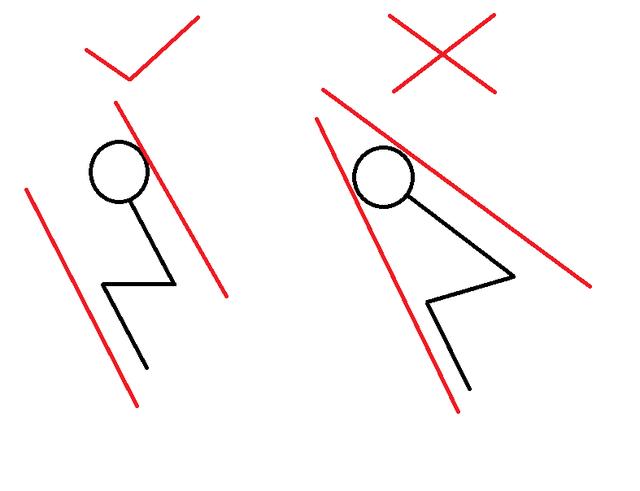
Dangers of Excessive Forward Leaning
1. Shift of center of gravity forward. During the squat, the movement trajectory of the barbell should be vertical to the ground, while excessive forward leaning will cause the trajectory to become curved, and the center of gravity of the barbell will shift away from the center of gravity of the body at the lowest point. This will generate a horizontal force towards the front, making the knees and ankles bear unnecessary pressure, and also easily lose balance.
2. Waist and back discomfort. During the squatting process, excessive forward leaning will cause unnecessary pressure on the lower back and waist. Theoretically, the quadriceps muscles should bear the pressure; during the lifting phase, in order to restore balance when the body stands upright, the waist will lift up, and the lower back will also exert force. This will cause discomfort in both stages, and in the long run, it will cause waist pain and back pain.
3. Neck strain. As mentioned above, excessive forward leaning will generate a horizontal force, and the barbell directly contacts the neck, which will inevitably be compressed.
4. Poor training effect. Normally, the angle of inclination of the calf should be consistent with the upper body, at this time, it can achieve a full squat, that is, the bend of the calf and the bend of the thigh are sharp angles; when excessive forward leaning occurs, the upper body will approach horizontal, at this time, only a half squat can be achieved, that is, the thigh approaches horizontal, and the hip is tilted back. The full squat action is more complete, and the training effect is obviously better than the half squat.
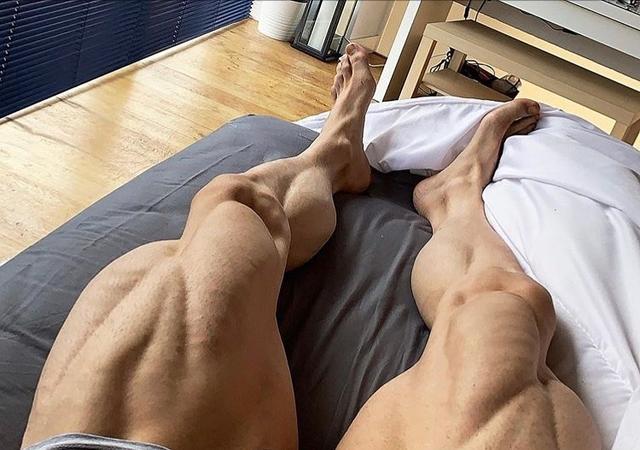
Many factors contribute to excessive forward leaning, including poor flexibility, insufficient strength of some muscle groups, and poor posture. Different athletes need to find the problem and make corresponding adjustments.
Causes of Excessive Forward Leaning
The initial posture of any exercise is very important. If you can't do it correctly at the beginning, the subsequent training will be wrong.In the initial stage, two reasons lead to excessive forward leaning.

1. Incorrect elbow direction
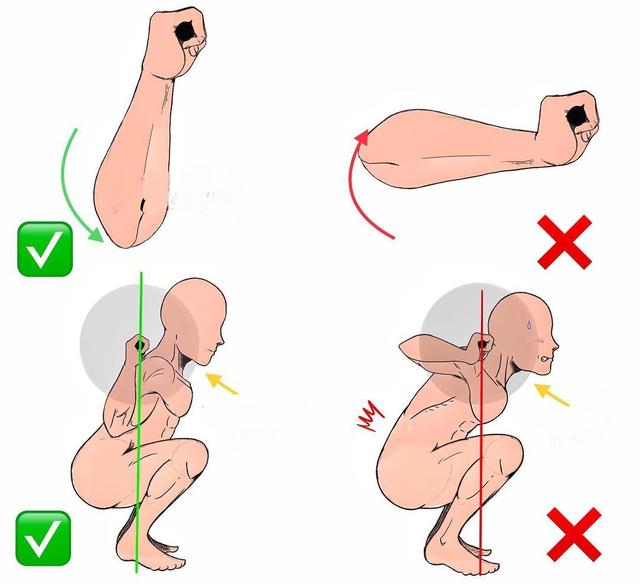
During the squat, although the arms are not the main force muscles, their role in balancing the barbell cannot be ignored. Maintaining left and right balance is simple, just adjust the grip position in the mirror; maintaining forward and backward balance is influenced by the range of shoulder movement. Many athletes' elbows will curl back, the forearm is inclined or even horizontal, so they will artificially add a horizontal force, causing them to hunch over and bend their backs.
Solution:
- Warm up fully before starting, stretch the muscles of the triangle, back muscles and other joints to improve joint activity.
- Use a high barbell position, the grip width should be 1-1.5 times the shoulder width, and adjust it according to the personal shoulder activity range.
- Try to make the elbows point to the ground, that is, the forearm maintains vertical or near vertical. Hands relax, hold the barbell, if the forearm exerts force and tightly grips the barbell, it is more likely to cause the elbows to curl back.
- Strengthen the training of the shoulder muscles, such as pressing shoulders, turning shoulders, etc.
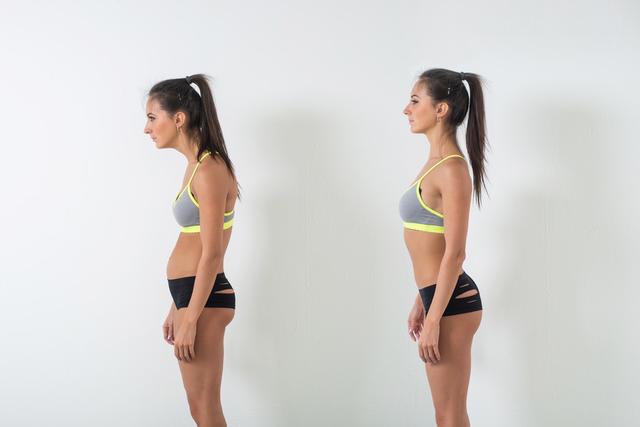
2. Poor posture
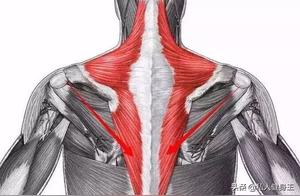
Poor posture is a common problem for most athletes, and the round shoulder hunchback is the largest. Many people have not realized this problem, and even maintain this posture during training. This will cause the center of gravity of the barbell to shift away from the midline, and will cause force moments to the back and waist, and pain will follow.
Solution:
When holding the barbell, don't straighten your back, because at this time, your waist is exerting force, you cannot ensure that your upper body is completely straight, especially when the weight is large. You need to use the gluteal muscles to make a forward hip movement to lift the barbell.
- When holding the barbell, adjust your posture, straighten your chest and head, contract your shoulder blades, and try to squeeze them back.
- Strengthen the training of the back muscles and the posterior bundle of the triangle, to improve the round shoulder hunchback.
There are three reasons for excessive forward leaning during the squatting process.
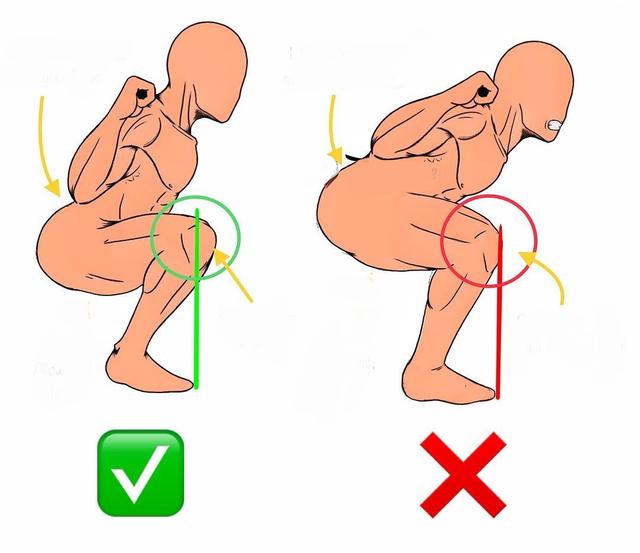
1. Intentionally maintain the position of the knee above the toe
Regarding the position of the knee in the squat, many people say to keep the knee above the toe, but this is not correct. One of the main reasons is that it is easy to cause excessive forward leaning: when squatting, to maintain the center of gravity of the barbell always on the same line as the center of gravity of the body, the knee joint will move forward, the quadriceps muscles are stretched, and if you intentionally keep the knee above the toe, then the gluteal muscles will move backward, then generate a center of gravity shift, and so on.
Solution:
- The knee can be slightly above the toe, ensure that the waist and back are upright, the barbell trajectory is vertical to the ground, and adjust it by comparing with the mirror. After familiarizing yourself with the whole process with a small weight, then conduct a large weight training.
2. Limited ankle joint activity
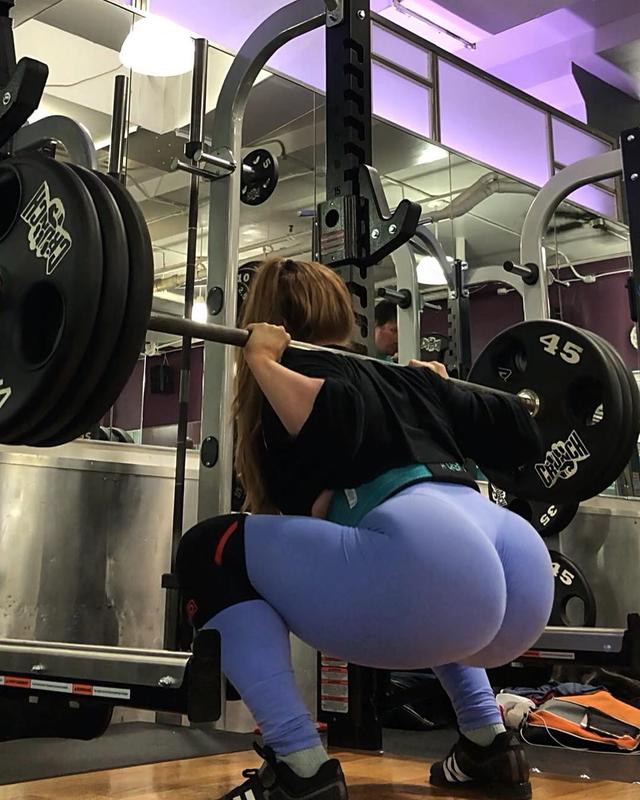
As everyone knows, westerners can't squat like Asians, one of the reasons is that they have been using sitting toilets, which leads to limited ankle joint activity and poor leg flexibility. In fact, to some extent, squatting is similar to Asian squatting, many athletes can only half squat or full squat, and they must raise their feet or full squat, tilt their upper body forward, which is due to limited ankle joint activity.
From a deeper perspective, whether the tibia can move forward relative to the ankle joint determines everything. When the tibia cannot move forward relative to the ankle joint, it will cause a compensatory forward tilting of the torso, and the calf muscles will be stretched, but the change in its relative length is small, and it cannot fundamentally solve the torso forward tilting.
Solution:
- Strengthen the leg and ankle joint flexibility training, such as pressing legs, bending toes, etc.
- Wear special squat training shoes, that is, the heel part of the sole is thicker or raise the heel.
3. Insufficient hamstring tension
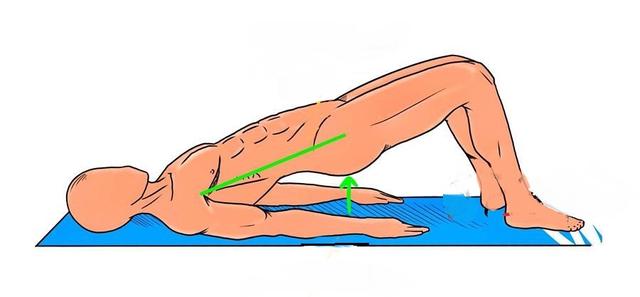
Hamstrings refer to the muscles that stretch in extension, that is, the gluteal muscles, hamstrings and spinal muscles. The gluteal muscles are responsible for the extension of the hip joint, and during the eccentric contraction of the squat, they contract to extend the hip joint. As the squat depth increases, if the strength of the gluteal muscles is insufficient, the body will generate a compensatory forward tilt.
Solution:
- Strengthen the posterior chain muscle group training, such as mountain climbing, buttock strike, etc.
- First do self-weight training, activate the gluteal muscles fully.
Conclusion
The training effect of squats is good, but it requires the cooperation of the whole muscle group and joint, so it is necessary to pay attention to the details, otherwise it will cause a series of compensatory movements. In addition, strengthening the joint flexibility and joint flexibility can also indirectly improve the squatting effect. It is not necessary to blindly imitate, if there are joints or waist pain, stop adjusting the action.