Why Does Practicing Tai Chi Cause Sweating Without Breathlessness?
Many people experience shortness of breath, heavy sweating, and labored breathing while running and climbing, but Tai Chi is different. Even with heavy sweating, one doesn't feel breathless. Why is this the case?
Firstly, it contains rich yin-yang interaction. Tai Chi's set movements include many yin-yang interactions. In the second movement of the simplified 24 Tai Chi forms, 'Wild Horse Knees,' the right palm facing down represents yin, and the left palm facing up represents yang; 'Bow Step Break Hands' , where two palms alternately move apart, demonstrates yin-yang interaction. This principle applies to many movements in Tai Chi. The combination of 'stillness in movement,' 'movement in stillness,' and 'interplay of emptiness and fullness' are all manifestations of this yin-yang concept. Yin-yang theory is also crucial for the human body. Traditional Chinese medicine views it this way: when yang predominates, 'fire' increases, causing fever; when yin predominates, the body becomes deficient, leading to excessive sweating. Tai Chi, through regular self-regulation, maintains a balance of yin and yang, even though it involves a significant amount of movement, it does not cause shortness of breath.
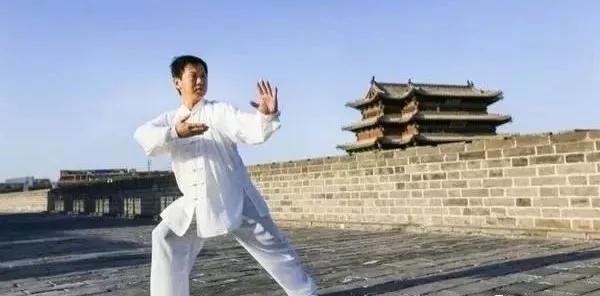
Secondly, channeling and activating the meridians is another key feature of Tai Chi. Meridians are the channels through which qi and blood circulate in the human body, connecting organs and limbs, nourishing the body, and extending throughout the entire body. Tai Chi's 'move with drawing a thread,' 'step like a cat,' curved and spiral extension and contraction movements, and 'linked steps,' 'every movement causes the whole body to move without stagnation,' and 'mind as the imperial officer, body as the minister' all represent skillful use of meridian theory. Because of its slow pace, people often feel invigorated throughout their bodies after practicing for several sets.
Some experts used modern meridian measurement instruments to test practitioners, proving that during Tai Chi, the human body's microcirculation gradually accelerates, and that physiological improvement is significantly different from micro-movement. In international competitive sports, a world-class athlete suddenly died on the court due to excessive strain. This caused a heavy burden on internal organs and resulted in injury. Tai Chi emphasizes 'relaxation,' 'stillness,' 'opening channels,' and 'using intention to guide qi, using qi to move the body.' It organically combines 'cultivating intention,' 'cultivating qi,' and 'cultivating the body.' Through the coordinated combination of movement and breathing, and strengthening internal organs, it enhances the body's strength from within, providing significant health benefits. Therefore, unlike other sports forms, many people feel they don't get short of breath when practicing Tai Chi.
Precisely because Tai Chi has many irreplaceable advantages compared to other sports forms, it developed the latest in China's traditional martial arts, and developed most rapidly. Not only Chinese people practice it, but many foreign friends also practice it. More and more people recognize it as a 'passport' to health.