Protecting Your Knees: Running Knowledge You Need to Know
Running is a popular fitness activity, but when running, it can put a certain amount of impact on the knees, which may lead to knee injuries. To avoid knee injuries caused by running, it is necessary to improve muscle and bone strength, reduce friction and impact.
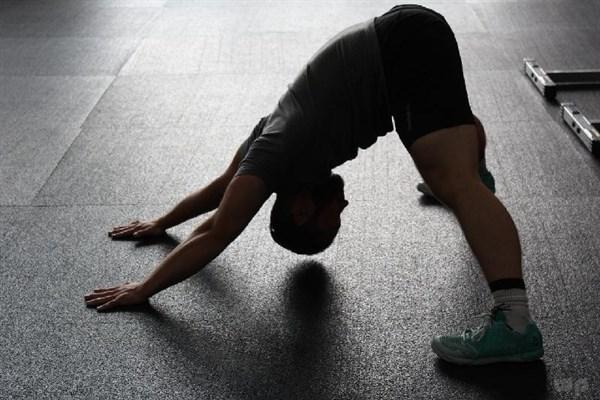
How much do you know about knee protection running knowledge

Strengthen muscle training
Strong leg muscles, especially the large muscles of the thighs, can provide corresponding protection for the knee joint. Especially the front thigh muscles and the expanded fascia muscle. Strong front thigh muscles can reduce the impact on the patella and the meniscus. Many knee pain on the front is caused by this. And the expanded fascia muscle is related to the iliotibial band. Many knee pain on the outer side of the knee is a problem with the iliotibial band.
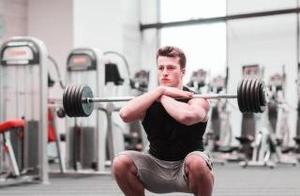
Practicing leg muscles has many ways, such as the split step, squat, climbing stairs, and leaning against the wall to squat. And leaning against the wall to squat, because it is a static action, the knee joint has no expansion and contraction, the impact is small. Therefore, it is one of the important parts of leg muscle training for runners. But in the training process, do not start to pursue the squat time and strength at the beginning. Pay attention to the standard posture, such as do not bend down, to maintain the stability of the hip bones, to keep the knees above the ankles, etc. To ensure that the entire leg is arranged correctly. Only in this way can you avoid additional pressure on the knee during training.
Reduce running speed
Higher speed running may bring greater impact on the knees, and the legs will be too upright when landing, the knee joint will bend less, the muscle cushioning effect will be reduced, and the knee will directly bear the impact. Therefore, people may have knee injuries even if they run for a short distance every day, because the speed is too fast.
Pay attention to running posture
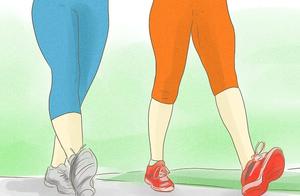
When running, try to make the position of the ankles below the knee or a little behind, so that when the knee bends, it can play a good cushioning effect. In addition, try to land with the front of the foot, the center of gravity is between the big toe and the second toe. If it deviates from this load-bearing point, it will increase the impact on the knee. Finally, you must maintain balance, do not sway left and right, do not overextend forward, or swing the arms too much. The front of the knee can bear the most pressure, and too much swaying will change the center of gravity and cause the knee to bear more impact.
Control the running volume
There are different opinions on the increasing volume of running, such as no more than 10% or 5% per week. But each person's individual differences are also very large, and the running volume base is also different. Simply using the percentage to control is not very reasonable. Therefore, the feeling during each run is very important. This feeling is the fatigue of muscle and body.
For experienced runners, in the pre-training period of increasing volume, first perceive whether running is easier than last week's running volume. If so, stop when you can't control the running posture at any point in the over-increased running volume. If it doesn't feel easier than last week, don't choose to increase the volume. After 3-4 weeks of continuous increasing volume or high-intensity training, design a 1-week interval week to reduce the volume to about 70% of the peak, and carry out sufficient recovery and rest. After that, you can continue to increase the volume and training intensity.
For beginners, it is more reasonable to increase the running volume by two weeks at a time. Equivalent to increasing by one week and consolidating the results for one week. It is not necessary to limit the intentional proportion when increasing the volume. Pay attention to the body, run until you feel that the landing is heavier, or the knee feels pressure, stop immediately.
Reduce speed training
When the same running volume, a higher speed means a greater impact, which may cause more damage to the knees. At the same time, a higher speed will deform the running posture, in order to increase the pace, increase the speed. Unconsciously, the legs will not bend when landing, lose the muscle cushioning ability through joint bending, and directly transmit the impact to the knee. This is also the reason why many novice runners have injuries in the first 2-3 months when the running volume is small and they run with all their might, and the muscles are not yet strong enough to damage the knee with a huge impact. For long-distance and endurance running, even experienced runners, the amount of speed training will generally not exceed 10% of the total training volume. And there is only one interval speed training per week. Novice runners don't need to arrange speed training. Even joking that marathon runners with a score of 3 hours 30 minutes have no need to do speed training. As long as you accumulate training volume and arrange rest, the score will improve steadily.
These factors interact with each other and cannot say that one is a decisive factor. The protective effect of the muscles and the impact on the knee are in a state of mutual neutralization. Improving the running volume and speed must be cautious, and it is necessary to fully understand your own ability and determine the limit that your body can bear before increasing the volume. As the level improves, the mileage increases and the running speed increases. You must improve running posture and strengthen the leg muscles.
There is also a very controversial topic
Barefoot shoes or protective shoes. Barefoot shoes cannot protect the knees and cannot strengthen the muscles. But because there is no protection mechanism, it can stimulate the body more strongly, and in the same running volume or at the same speed, it can quickly strengthen the muscles. But the premise is that the impact must be greater than the load, and if the impact is too strong, it will still cause injury. Barefoot shoes can affect the running posture of a person, making people use the front of the foot more, which is a running posture that is more consistent with reducing knee impact. But correct running posture is not only one point of landing the front foot, so wearing barefoot shoes cannot completely correct the running posture.
Copyright statement: Picture and text are independent, the article is passed on for conveying more information. If the source is incorrectly marked or infringes on your legal rights, please contact the author with proof of ownership, and we will promptly correct, delete, thank you.