Sacral Pain Rehabilitation: Understanding the Multi-Faciated Muscle
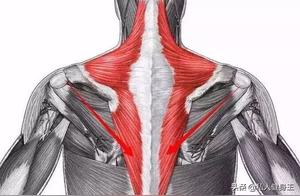
The multifidus muscle is a crucial core muscle group on the back side of the human body, extending from the iliac bone upwards to the cervical vertebrae. Each unit extends 2-4 segments of the spine connected to the spinous processes. It's an important spinal stabilizing muscle group.
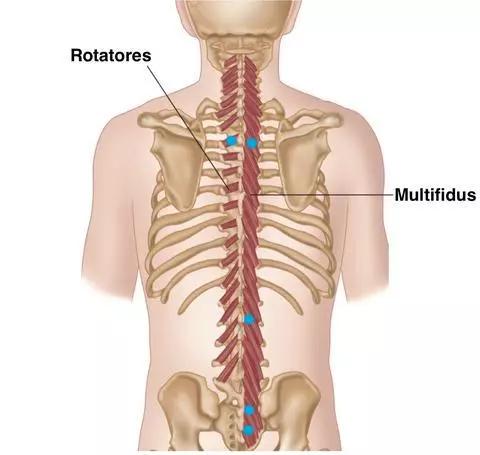
Numerous studies show that in patients with chronic lower back pain, dysfunction of the multifidus muscle is often observed, and imaging also reveals a clear fat replacement and atrophy of the multifidus muscle in the lumbar region.
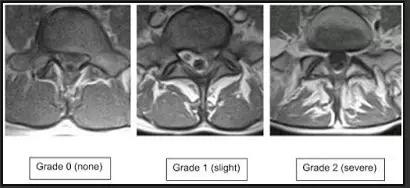
Why is the multifidus muscle so important?
First, we can understand what functions this muscle can produce?
Planar trunk movements
Sagittal plane extension facing backwards
Coronal plane unilateral lateral bending
Frontal plane contralateral rotation
Furthermore, the multifidus muscle has a very large number of proprioceptors on it, which can provide us with knowledge of the accurate position of the body.
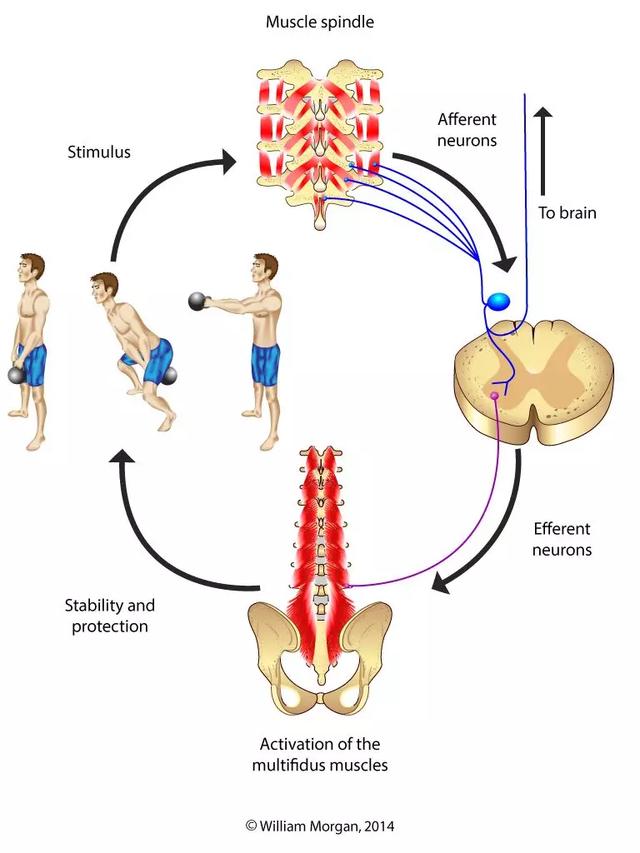
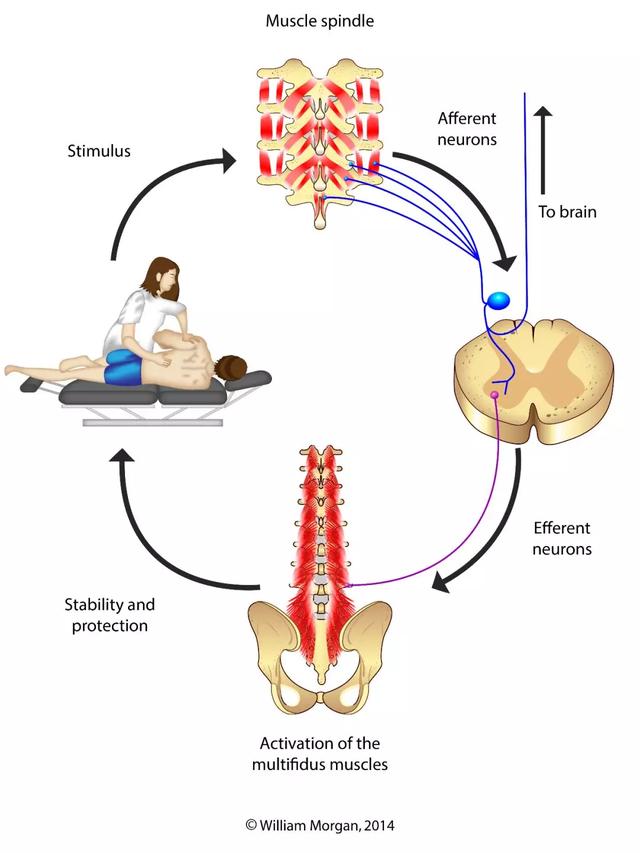
The image above shows the normal protective reaction of the multifidus muscle: when a potentially harmful movement occurs, the muscle spindles in the spinal small muscles are stimulated, and afferent impulses are transmitted to the spinal cord. The efferent impulses transmitted from the spinal cord then cause the multifidus muscle to contract, creating stability and protection for that movement.
However, the multifidus muscle is located in the deepest layer and is almost impossible to control autonomously. Therefore, it's often a difficult problem to determine whether the multifidus muscle is dysfunctional and how to train the multifidus muscle.
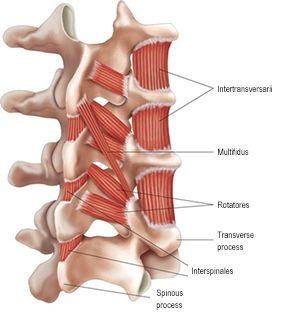
Palpation of the Multifidus Muscle
To feel this muscle, you can feel it at the position of the fourth and fifth lumbar vertebrae. More accurately, it's between the transverse processes and spinous processes of the lumbar vertebrae.
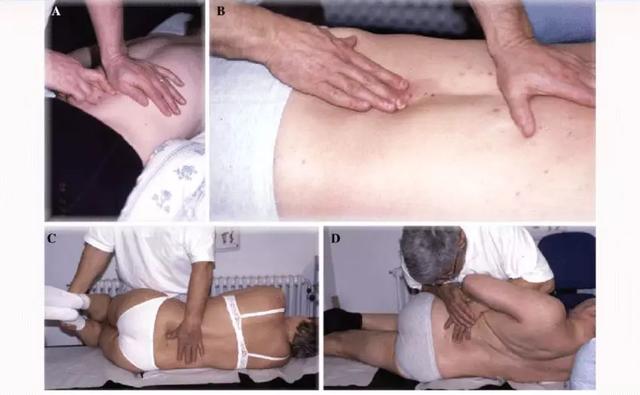
Tests of the Multifidus Muscle
Clinically, there are two suitable actions for assessing the multifidus muscle: the multifidus muscle elevation test and the flexion test.
The elevation test is generally performed in a quadruped position, and the subject first maintains spinal neutrality, then raises the feet or hands. If the lumbar spine cannot maintain the posture, it indicates that the multifidus muscle is functioning properly. Abdominal lowering or inability to maintain the neutral spine is considered a positive result.
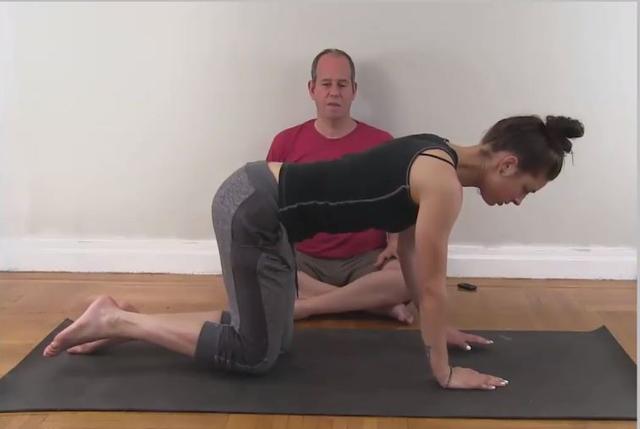
How to initiate the Multifidus Muscle
The patient lies on their side, imagining that there is a line connecting your hip joint and the back, shortening this line and raising the lumbar vertebrae slightly upwards. The operator applies a gentle forward pushing force from the position of the buttocks, and the other hand can feel whether the multifidus muscle contracts or over-activates.
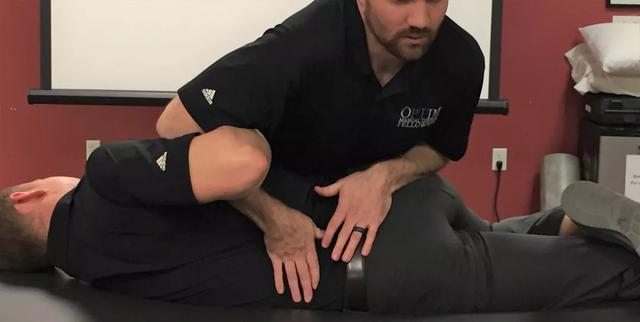
Multifidus Muscle Movements
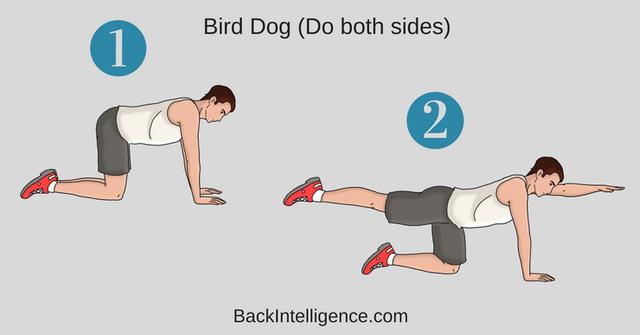
The 'bird dog' is a commonly used exercise. If this exercise is executed correctly, it recommends the next advanced action.

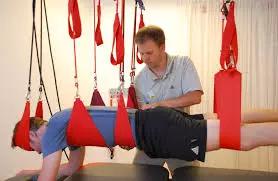
Combining upper limb movements to stimulate different stages of the multifidus muscle. Using hanging sets is also very good training method.