Reflections on Participating in the Eighth Chinese Wushu Lecture – Why Does Tai Chi Require Slow Practice?
--------Theoretical Training Class Learning
(This article was published in Zhonghua Wushu in 2017, 1st and 2nd issues)

Deng Yilin
III. Why does Tai Chi require slow practice?
This is to perceive the first rule of Tai Chi – gradual change, namely the zero-change rule. In our conscious minds after tomorrow, some are integer concepts, such as 1, 2, 3, 4, 5, 6, 7, 8, 9, but Tai Chi requires zero-change variations.
Do you recognize zero-change variations in walking and fighting? 0.001, 0.0001, 1.001, 1.0001, etc. Tai Chi first teaches you to master your own skills. Only through slow practice can you cultivate zero-change variations, not integer variations, so that you can well perceive the subtle changes in every point of your body.
What level you reach will determine what you can achieve in the future. The first form of Tai Chi's six basic postures is to practice the rule of gradual change.
IV. Why is 'Relaxation' the first principle of practicing Tai Chi?
Tai Chi is a traditional internal martial art, not a modern competitive sport. Modern sports competition focuses on higher, faster, and stronger, which strengthens muscles, bones, and skin. Tai Chi aims to cultivate Qi and spirit, making the circulation of internal energy more smooth. Traditional Chinese medicine says that pain indicates blockage; when there is blockage, there is pain. The theory of Traditional Chinese Medicine is to make the meridians unobstructed, thus without disease interference. Only by relaxing and practicing can the meridians open, resulting in smooth blood circulation. Imagine you go to the hospital for an injection. If you are tense and stiff, will the needle be easy to enter?
V. How to master the proportions of body movements in Tai Chi?
Mr. Kang asks us to extend our arms to the maximum extent without effort. Why?
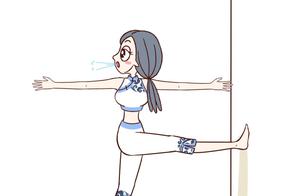
Various Tai Chi forms require extending arms to the maximum extent along the specified lines. This is because Tai Chi cultivates internal energy. In a relaxed state, we try to open our muscles and bones to allow Qi to gradually fill the gaps between the bones and muscles, over a long period of time, so that all parts of the body are permeated by Qi, and Tai Chi may succeed!