Pickled Vegetables and Me: An Addiction
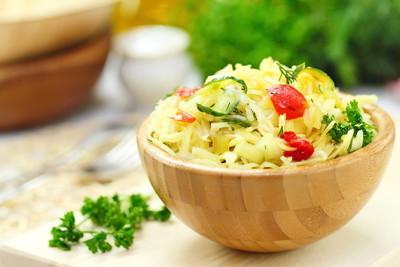
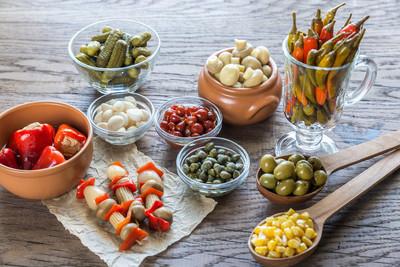
Pickled vegetables are a simple 'dish'. It has no 'international fame' like Korean kimchi, nor 'commercial recognition' like pickles sold in China. But it is the 'winter vegetable' for northern rural people. I grew up in northern rural areas, and I've always loved eating pickled vegetables.
As soon as winter comes, whether it's eating congee or cornmeal soup, without pickled vegetables, it just tastes bland. If there's a handful of pickled vegetables on the bowl, my taste buds will 'excite' immediately, and my appetite will be fully opened. The originally planned meal amount needs to be recalculated; at least I can eat one more bowl of rice. Haha! I'm a person who loves pickled vegetables like life – especially in winter, I simply 'can't live without pickled vegetables'!
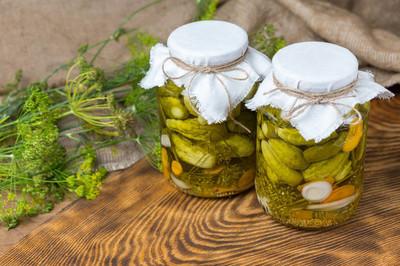
As for pickled vegetables, I have a deep connection with them.
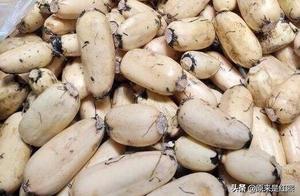
After the frost fall, we started preparing winter vegetables – the best time to make pickled vegetables. I followed my mother, who was pushing a wheelbarrow, to our fields. There was a large area of white radish, which was our 'harvest zone' for winter vegetables. In the adjacent plot, there were sometimes 'white radish balls' (the local name for lotus root), or some green onions.
The radishes were already breaking through the ground by about twenty or thirty centimeters high, with fresh green radish leaves and jagged edges. They supported the radishes, and the radish leaves formed a canopy in the late autumn, stubbornly displaying their will to live. In the adjacent plot, the 'white radish balls' rolled into a large ball, lying on the ground with their leaves spread out. The green onions stood on the ridge, waiting for my mother and me to harvest and bring them back.
I and my mother went into the field, we first pulled the radishes. Each radish my mother pulled up with her hand; if it didn't come up, she would dig a little first, then pull out the radish root. As for me, I learned from my mother, but because of my lack of experience, I always pulled one radish and left it behind. Usually, I would pull out some radishes, but I couldn't pull out others. Sometimes I pulled the radish leaves to pull, because I used too much force, the radish didn't come up initially, but pulled out my butt. My mother laughed and said, 'Be careful, son!'
After we harvested the radishes, we also harvested the 'white radish balls' and green onions. My mother and I harvested all the radishes, 'white radish balls', and green onions, and then put them on the wheelbarrow. Radishes usually took up the most space, followed by 'white radish balls'. After the cart was loaded, my mother pushed the cart, and I pulled it. The radishes and green onions were bumpy on the uneven road. Although the road was not well-paved, my mother and I felt happy because we had a pickled vegetable to bring home for winter.
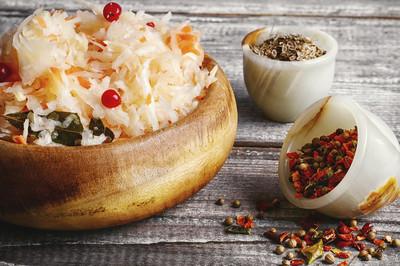
In winter, pickled vegetables were a staple food for farmers. At that time, the rural economy was not developed, and the family's winter vegetables were mainly pickled vegetables.
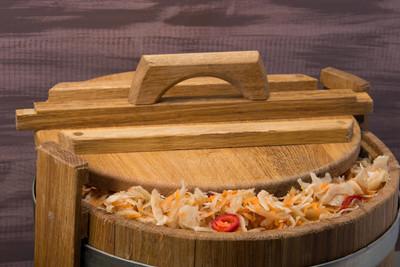
My mother washed the radishes, 'white radish balls', carrots, and green onions, and then cut the radishes and carrots into shreds, cut the 'white radish balls' into irregular shapes, and cut the green onions into very small segments. If there were green peppers at home, they were also added. After all the cut vegetables were prepared, they were put into a large, about a bucket-sized, coarse earthenware jar. After all the preparations were finished, we found a large stone and put it in. Then we found a wooden board to cover the jar tightly. The pickled vegetable work was complete. We waited for a week before eating pickled vegetables.
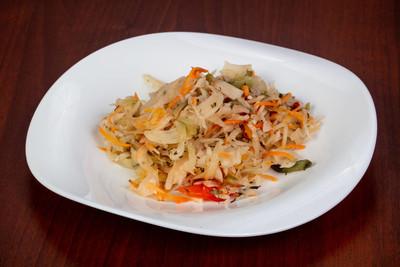
In order to eat the first batch of pickled vegetables as soon as possible in early winter, I eagerly looked forward to the arrival of the seventh day. Finally, after seven days, I quickly opened the wooden board covering the jar and quickly pinched a handful of pickled vegetables into my mouth. The crispness of the radish, the 'white radish ball' like jade, the sourness all stimulated my appetite. I didn't notice the ice shards in the pickled vegetables, and I kept eating, which always provoked my mother to scold me for being a naughty child.
No matter what, pickled vegetables allowed our family to have a vegetable to eat in winter, smoothly continuing from the late winter to early spring. Pickled vegetables were a 'universal food' in my family – a staple during my childhood.
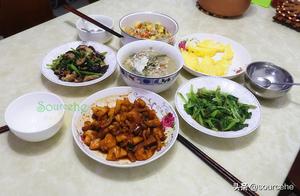
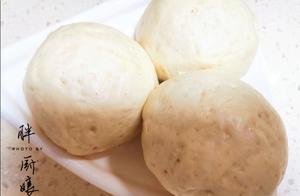
When I drank cornmeal soup, I'd add a serving of pickled vegetables, mixed with chili oil, and my family would gather around the clay stove, placing a handful of pickled vegetables in a bowl, and using a steamed bun to soak in the congee bowl. After a few mouthfuls of congee and steamed buns, they were all gone. In the afternoon, whether it was steamed flower dough or fine ribbon dough, adding pickled vegetables and eating with the dish, lunchtime was finished. In the evening, we added two or three scoops of water to the pot, placed some steamed buns on the clay stove, and poured a bowl of pickled vegetables. The evening meal was complete. In winter, pickled vegetables were like this in my family – 'universal food'.
During my childhood, it was our family's 'universal food' for winter. At university, whenever I came to winter, it was the 'friendship food' I brought to school and shared with my classmates. Later, after working overseas for a long time, when I went home occasionally, eating a pickled vegetable would be my 'nostalgia food'. Now, after starting a family and building a career, eating a pickled vegetable reminds me of my 'memory food'.