Japanese Ramen Was Actually Invented in China?
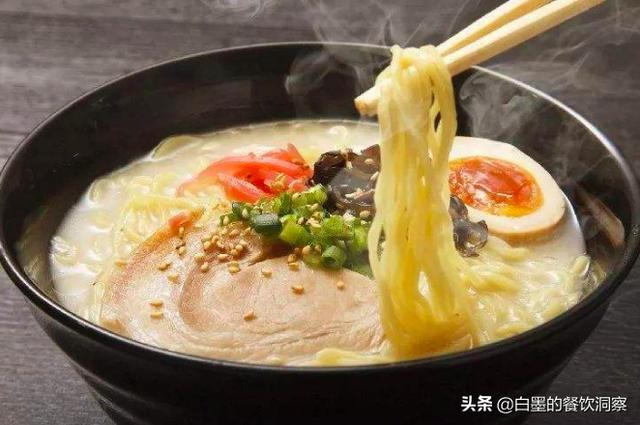
According to my understanding, how Japanese noodles originated is as follows: If you tell me that Japanese noodles were invented by the Chinese, I would be astonished. There is much more to it. Our frequently eaten Lanzhou noodles were not created by Lanzhou people, but by people from Qinghai. Nationwide, most Lanzhou noodle stores are operated by people from Qinghai. However, despite this, most people still believe that Japanese noodles were invented by Japanese people, and Lanzhou noodles are from Lanzhou or Gansu.
Don't Japanese noodles naturally originate from Japan?
There are many Japanese noodle restaurants in China, and many Chinese people naturally think Japanese noodles are Japanese cuisine, and are a product of Japan's creation.
In fact, Japanese noodles originated from China.In Japan, there was no concept of ‘Japanese noodles’; it was called ‘Chinese noodles’.
The earliest Japanese records about Chinese noodles are as follows: During the Ming Dynasty, a Chinese exiled official, Zhu Shunshui, fled to Japan and used noodles to entertain the Edo period shogun, Tokugawa Guangjue (guo). Tokugawa Guangjue became his disciple after knowing Zhu Shunshui. Tokugawa Guangjue was a famous cultural figure in the early Edo period, and his main achievement was to promote Chinese culture in Japan.
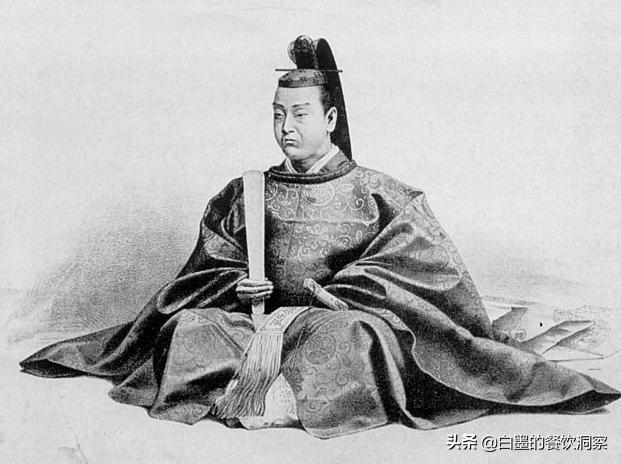
Tokugawa Guangjue
Therefore, in 1900, Chinese people from Shanghai and Guangdong began to sell sliced noodles in Japan, paired with simple broth and seasonings. During the Showa era, ramen began to become popular in Japan. In fact, among the three Japanese noodles – udon, ramen, and soba, only soba can be considered a traditional Japanese noodle, while the ramen that is familiar to people today originated from Chinese noodles.
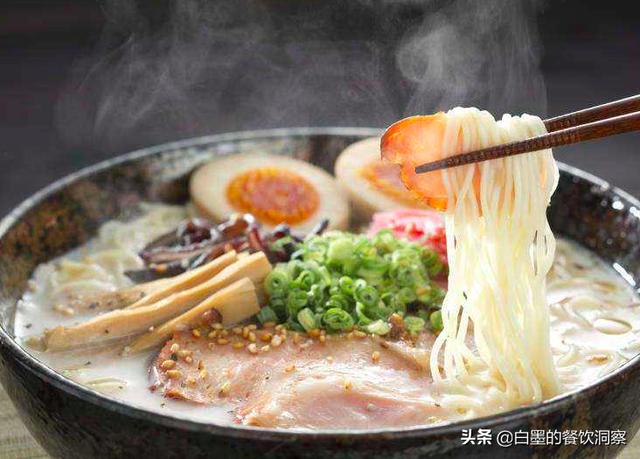
Due to the “Japan-China Friendly Treaty” signed in 1905 between Japan and the Qing Dynasty, a large number of Chinese overseas relocated and settled in the three major ports – Yokohama, Kobe, and Nagasaki. Therefore, the concentration of Chinese people led to the formation of ‘China Town’, and the technology of ramen was thus disseminated from these areas. Ramen became a common food in Yokohama China Town.
Of course, in 1912, there was no concept of 'ramen' at that time. Japanese people at the time called ramen ‘Dragon Noodles’. And in those ramen shops, the shop owners and staff wore Chinese-style uniforms as their uniforms.
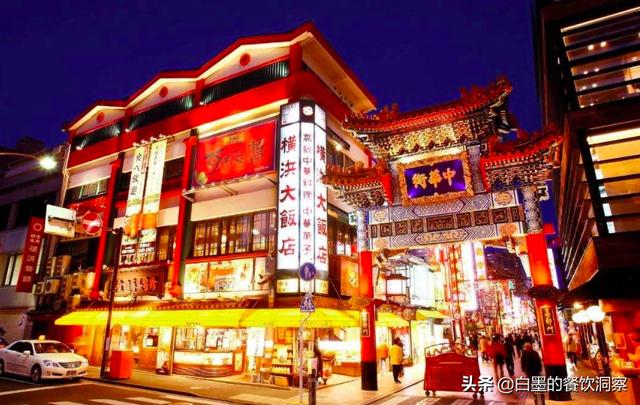
Yokohama China Town
About a hundred years ago, Japan had ramen, and after a hundred years, China developed many ‘Japanese-style ramen’. However, there’s a problem: a Japanese-style ramen restaurant in China cannot be branded as ‘Japanese’ because, in the minds of customers, Japanese ramen is simply Japanese cuisine. If it’s called ‘Chinese ramen’, it probably wouldn’t have such a strong influence.
This is actually...The phenomenon of ‘cognition greater than fact’Cognition greater than fact is widely found in all aspects of our lives. More and more brands and organizations are paying attention to this phenomenon. For example, the second and third issues of ‘Time Friends’ hosted by Luo Zhixin mentioned the word ‘cognition’. In these two events, the founder Luo Zhixin elaborated two important viewpoints about cognition: (1) Cognition is constantly iterating, and cognition will be greater than fact; (2) Cognition warfare can surpass the comparison advantage of price war, allowing brands to be recognized first by customers.
These two viewpoints are interrelated. Because cognition is greater than fact, brands no longer delve into the facts, but rather believe in their own cognitive judgments, so brands need to establish cognition in the minds of customers and escape the mud pit of price wars.
Why does cognition outweigh fact?
I summarized 5 reasons.
1. People always have emotional changes before choosing a product, and practical implementation follows.
People always have emotional changes before choosing a product, and practical implementation follows. Nowadays, we have little time to verify the truth of things because the cost of verifying the truth is too high, so most people don’t want to bear this cost. All free trading behavior originated before action, people made judgments based on emotion.
So how can we try a restaurant without seeing the dishes? First, we learn about the restaurant from other people’s experience and conversations. Second, we consider whether it meets our interests. Third, we try it, and most people stop after the first and second stages. At this time, the catering brand is just in the blind spot of customer cognition. To activate this area, the brand needs to express its own brand characteristics. Building a good brand cognitive system can reduce the cost for customers to obtain the truth.
4. Once a cognition is established, it is difficult to change.
Some restaurant's food is good or bad? Can we invite our girlfriend? Is it embarrassing to go? Customers need to spend a high cost to understand the characteristics of the restaurant. Therefore, the catering brand should express its own brand characteristics to avoid customers misunderstanding and not choosing the brand.
We want to go to a restaurant to eat, without looking at the overwhelming menu, but the waiter will directly serve us the dishes. We can trust the brand.
5. Once a cognition is disseminated, people no longer care about the facts.
Luo Zhixin’s book ‘Dining Brand Shaping’ mentioned the concept of ‘cognition greater than fact’ in the second and third ‘Time Friends’ events. Luo Zhixin elaborated two important viewpoints about cognition. These two viewpoints are interrelated. Because cognition is greater than fact, brands no longer delve into the facts, but rather believe in their own cognitive judgments, so brands need to establish cognition in the minds of customers and escape the mud pit of price wars.
In the past, we could choose what we liked. Now the cost of choosing is too high. When we were young, our parents would give us what we wanted. This is the algorithm of parental love. Our fathers generally don’t guess our intentions, so they simply give us what we need.
Book title: Dining Brand Shaping by White Ink, a bestselling author of 'Dining Brand Shaping', “White Ink”, a popular catering brand shaping expert, Beijing White Ink Brand Consulting founder, with ten years of catering brand consulting experience, has upgraded more than 300 catering brands, creating more than 10,000 stores, serving multiple billion-level catering companies. New book recommendations by Yang Guofeng, Xigede and Bao Nuo Pot Head.
()“()()()()()”2001999“”
3.
……
SLOGAN
4.

2010201520
5.
“”“”“”
300+10000+10