Making Bread: Understanding Fermentation, Avoiding Failed Results
Guided ReadingIn the current era, bread making is now commonplace for families, but many people don't really understand some advanced knowledge of bread making. Today, let's take you to understand the important common sense of bread making: the first and second fermentation of bread, and explain the causes of alcohol flavor. Let's no longer blindly make bread, enhance our confidence in making bread, and improve success rate.
Recently, several articles about bread making have been published, and the feedback has been a lot, and some typical questions have also surfaced, such as the alcohol taste of bread is heavy, bread is soft and not soft, and the problem of bread's first and second fermentation is the most concerned. Everyone has a heated discussion: some say that bread made with one fermentation is easy to make, saves time; others say that bread made with two fermentations is softer and more delicious; and some say they have never made good bread, and the bread tastes of alcohol and can't taste sweetness. In fact, whether it's one fermentation method or two fermentation method, there are advantages and disadvantages, and bread enthusiasts at different stages of baking need to choose the method that suits them based on the differences between these two methods. Regarding the problem of alcohol flavor in bread, we will also explain it in detail for you, so that after you understand it, you can say goodbye to failed bread making.
First, let's explain the causes of alcohol flavor in bread. Many people's bread has a strong alcohol flavor, and although they put in enough sugar, the sweetness is almost unnoticeable.
Too much yeast is added: Many people think that adding more yeast can accelerate the fermentation speed of the dough, but a little more is not a problem, but if it's too much, after the bread ferments well, some yeast will not completely volatilize, and in a suitable temperature, it will continue to ferment ethanol, producing alcohol flavor.
Next, let's introduce some baking newbies to understand the degree and time of bread fermentation. Bread made with one fermentation: refers to the bread dough after being made, without waiting for the dough to ferment, directly shape the bread to the size to be baked, and then bake it directly.
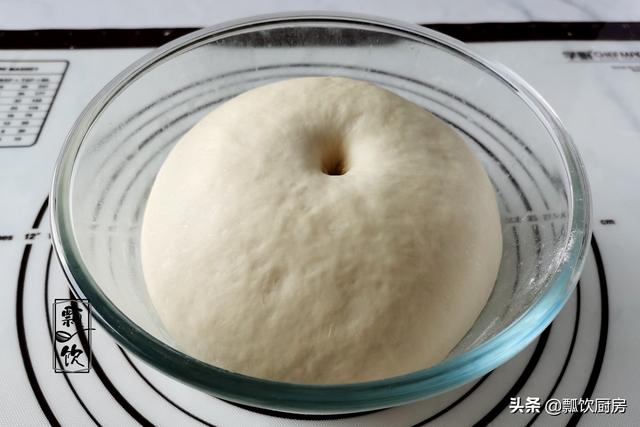
Bread made with two fermentations: refers to after making the dough, carrying out one fermentation, waiting for the dough to ferment to 2-3 times the size, then deflate it, shape it, and then make it into bread shape, and then carry out the second fermentation until it is baked.
What are the differences between one-fermentation bread and two-fermentation bread?
Two-fermentation bread is relatively softer than one-fermentation bread, and the aroma is more intense. The aging speed is also slower.
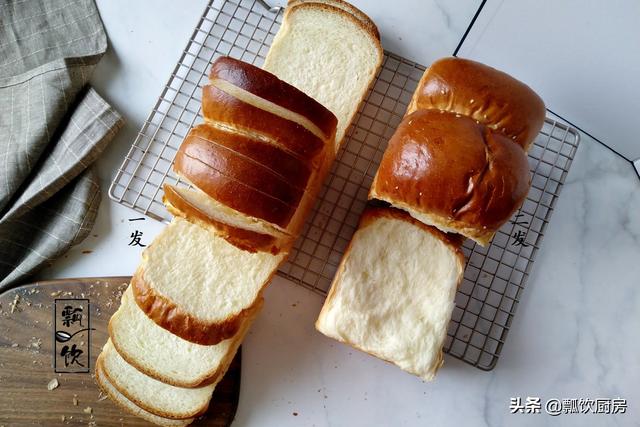
One-fermentation bread is more time-saving than two-fermentation bread, and can save about 30 minutes.
Should we use one fermentation or two fermentation to make bread?
For newbie friends or friends who make alcohol-flavored bread, you still can't master the degree and time of bread fermentation, so I suggest you use one fermentation method to make bread. After you have fully mastered one fermentation method, try two fermentation method.
If you can easily master the degree and time of fermentation, and want to eat softer bread, then use two fermentation method to make bread, but you need to prepare more time than one-fermentation bread.
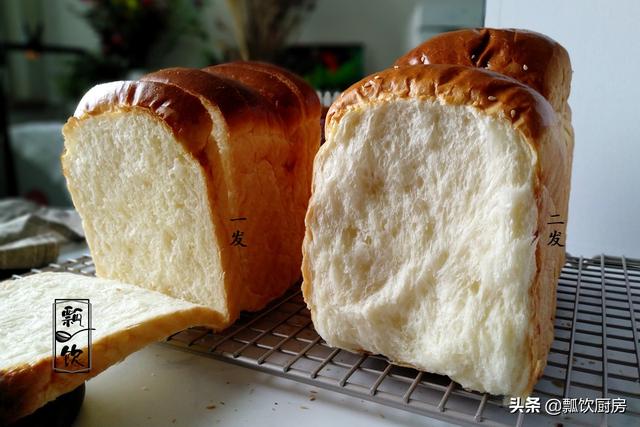
After analyzing these, I believe that many baking enthusiasts will have a better understanding of the first and second fermentation of bread and more knowledge of making bread. Let's take a look at the differences between one fermentation and two fermentation methods in terms of the outer and inner appearance of the bread. You can see the differences at a glance.
IngredientsBread flour 560g, high-sugar yeast 6g, fine sugar 50g, salt 6g; 1 egg, 100g milk, 200g water; 50g butter. Brush the surface of the bread with a little egg liquid (2 whole cakes of 450g mountain toast, use half the amount for 1 cake. 25g of beaten whole egg liquid for 1 cake).
Method
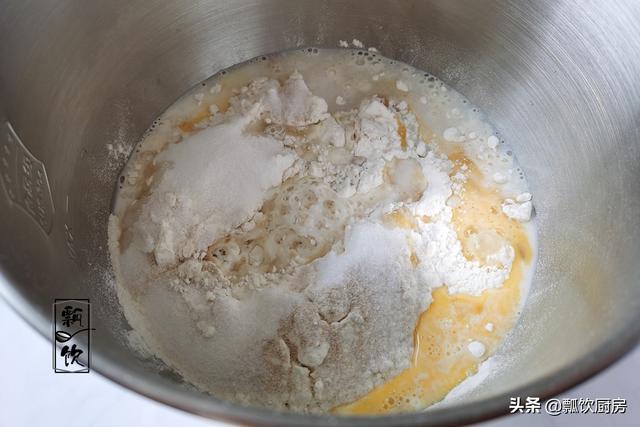
1Put all the ingredients except the butter into a bowl and stir and mix the dough.
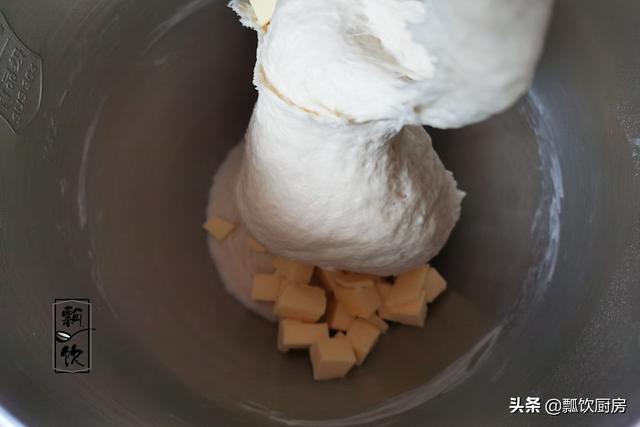
2When the dough is formed and has, add the small diced butter and continue to mix the dough.
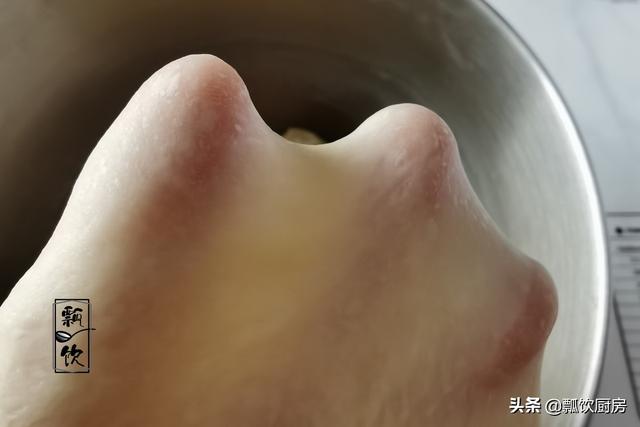
3Continue to mix the dough until the dough can be stretched into a film, like a glove-like glove film, and the dough is ready when you put your hand into the thin dough film and can see the dough through it.
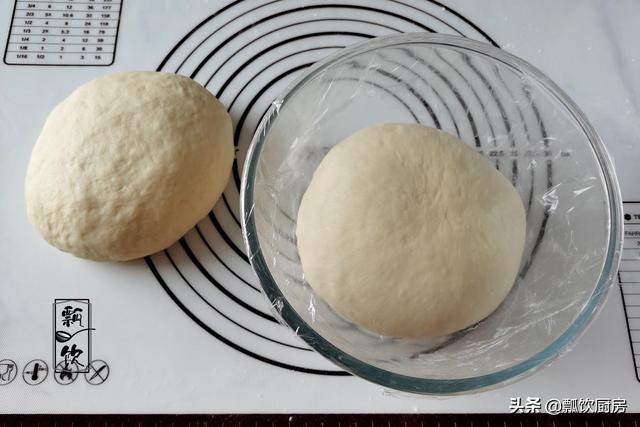
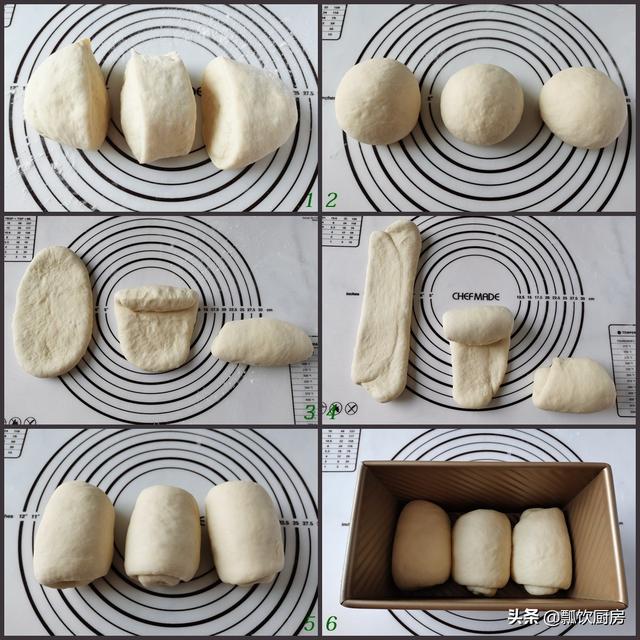
4Because the weather is getting hotter, after the dough is made, it will start to ferment. Divide the dough into two equal parts. Divide one part into three equal parts and knead them into rounds, then flatten them, roll them up, and place them in toast boxes. Put the other part into a toast box and send it into the fermentation box.
5After the second fermentation bread ferments to 2-3 times the size, deflate it, shape it, and put it into the toast box and send it into the oven.
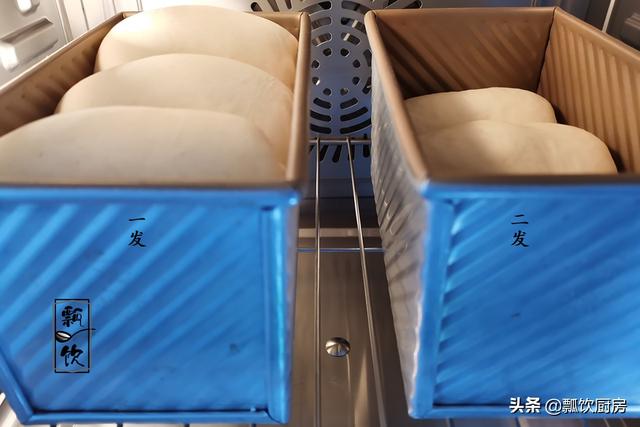
6In the fermentation box, the one-fermented toast bread is on the left, and the second fermentation bread embryo on the right. In terms of time, the one-fermented bread will save 30 minutes more than the two-fermented bread.
If there is no fermentation box or the oven does not have a fermentation function, put two bowls of hot water in the oven, close the oven door, create a humid and hot environment for bread fermentation, and make the bread ferment within the effective fermentation time, so as not to make the bread produce alcohol flavor due to low temperature and prolonged fermentation time.
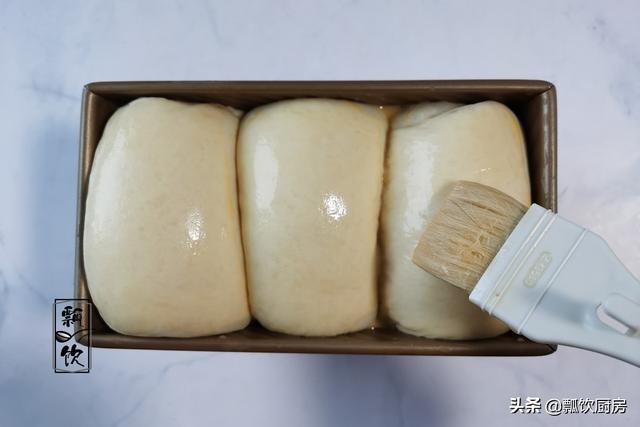
8After the bread is fermented, brush it with whole egg liquid.
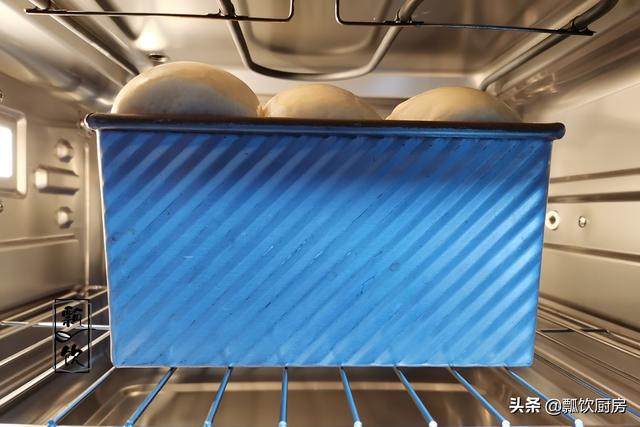
9Send the toast bread into the preheated oven. Preheat the oven for 5-10 minutes before sending it in. The upper and lower heat is 180 degrees, put the bottom layer of the oven, bake for 30 minutes. When the bread is baked for 10 minutes, cover the surface of the bread with a layer of aluminum foil to prevent it from being baked. When the bread is baked out of the oven, shake it on the table two times and immediately take it out.
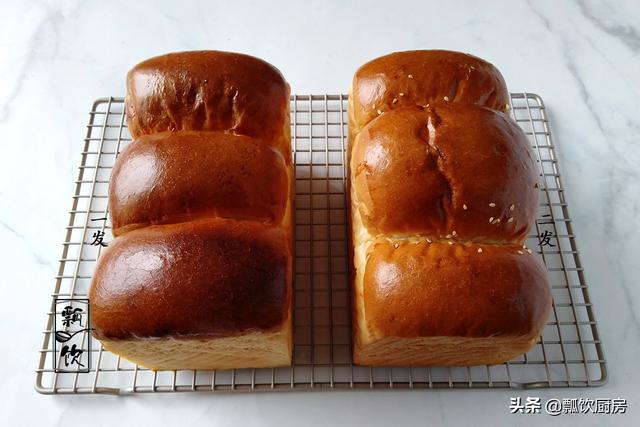
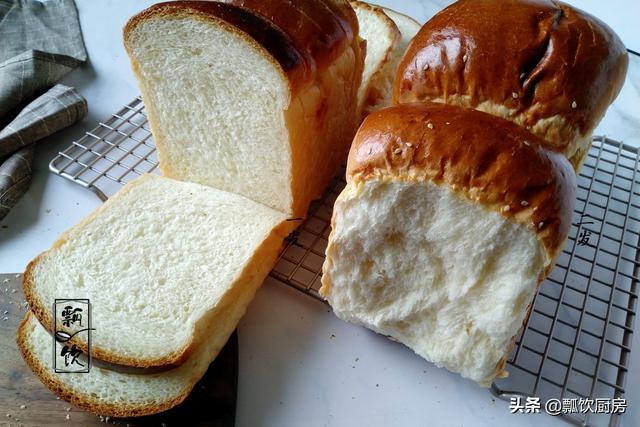
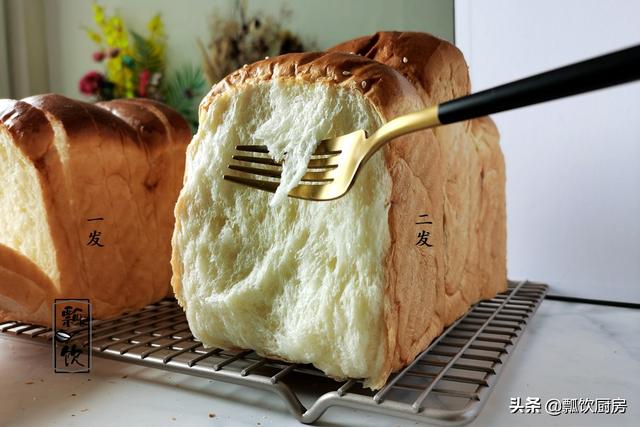
One-fermented bread and two-fermentation bread are the same from the outside, and the bread baked out is basically the same in color and size. However, when you touch it, the two-fermented bread is relatively softer than the one-fermented bread.
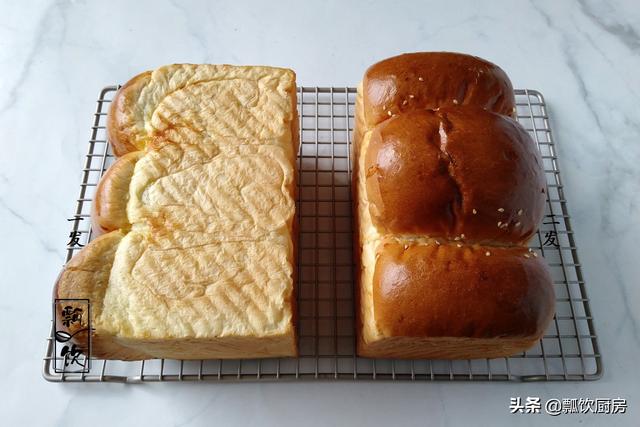
The inner part of one-fermented bread and two-fermented bread are obviously different. The inner part of one-fermented bread is slightly coarse, while the inner part of two-fermented bread is more tender.
Today's sharing is over. Your 'one comment, one praise' is the greatest support to me. If you find it useful, please share it. I also admire the delicious food and love it. If you are willing to invest love, you will make better food than me. Welcome to pay attention!
95-101803010
“”“”