Orbital Frontal Cortex and Emotional Regulation
From the center of the sun, to the sun sinking and turning yellow, Guro and his five companions had been ambushing a lost deer. Guro's anger subsided, and he precisely hurled his sharp stone spear into the deer's belly.
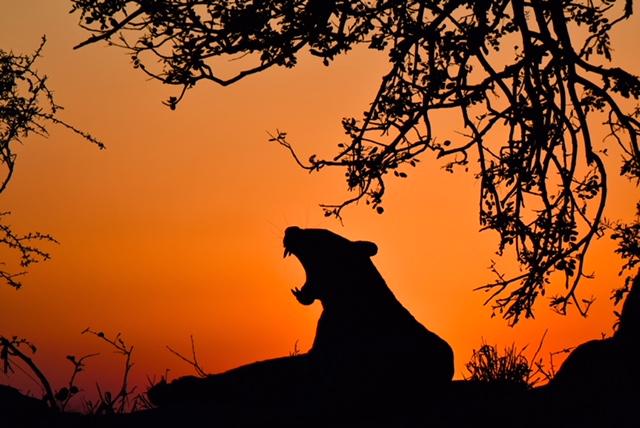
The deer could no longer run, the crimson liquid oozed out from the crack opened by the spear, accompanied by hot steam. The blood smell attracted a leopard with mottled fur. The leopard collapsed its belly and slowly approached the breathing deer, biting its neck. The leopard's dinner began.
Guro stopped.
Under the shadow of the setting sun, one was a prey, the other a predator. One was a hefty reward, the other a deadly threat.
After countless billions of sunsets, Guro's descendants brought this scene into the lab.
Facing threat emotional regulation experiment
Monkeys are born fearing snakes, even if they have never seen one, they will recoil. This is a deep-seated memory encoded in the genes of primates. Scientists need to measure the monkeys' emotional reactions and adaptability when facing threats. To do this, they placed a tempting food next to a rubber snake.
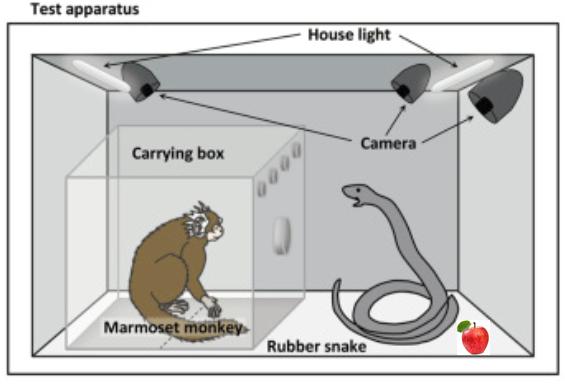
Experimental apparatus
Monkeys will freeze with fear, not moving or daring to move (freezing), their bodies are tense, they back away from the fake snake, their heads turn away and they don't look at the fake snake, their bodies will twitch suddenly, etc. This is a defensive behavior of the monkey when facing threat
After a period of time, if the monkey doesn't find the fake snake poses a real threat, he will cautiously approach and touch the food next to it, and finally grab and stuff it into his mouth. This is the process of the defensive behavior fading away
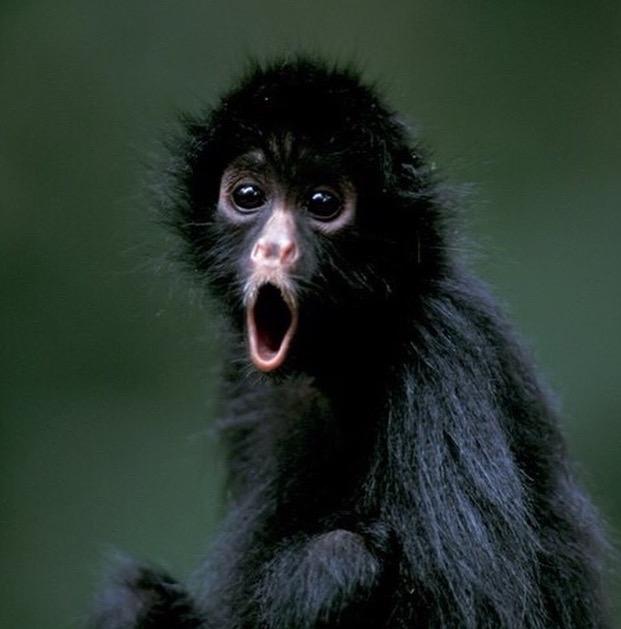
This process reflects the monkey's adaptability to threats, which can be measured by the delay in the monkey's time to grab food. The longer the time delay, the more excited the monkey is in response to the danger, the worse its adaptability to the threat is. This will lead to wild animals unable to go out to forage; conversely, the shorter the time delay, the bolder the monkey is, and the stronger its adaptive ability is. This is also bad, because it will lead the monkey to be white-chewed into the mouth of a predator
Therefore, a moderate level of threat reaction and adaptability is extremely important for the survival of animals. This ability depends on many brain regions, such as the amygdala, hippocampus, transverse temporal grey matter, and orbital frontal cortex. Murray professor at the National Institutes of Health discovered that when facing danger, the orbital frontal cortex can inhibit the defensive behavior of the monkey. This research was published in the 2019 issue of the *Journal of Neuroscience*
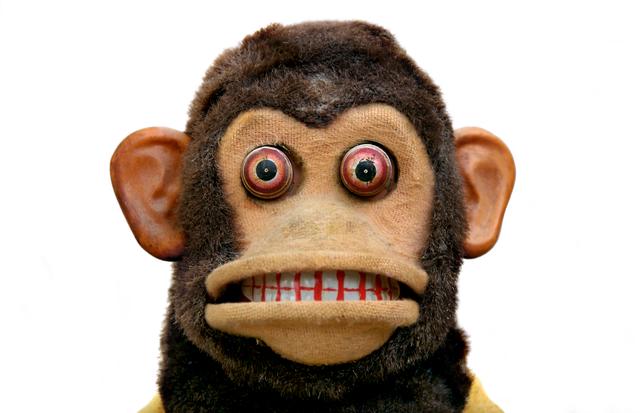
Orbital frontal cortex downplays threat defensive reactions
Scientists injected botulinic acid into the medial or lateral orbital frontal cortex of the monkeys, and the neurons in that area were killed, and the corresponding brain region was damaged.
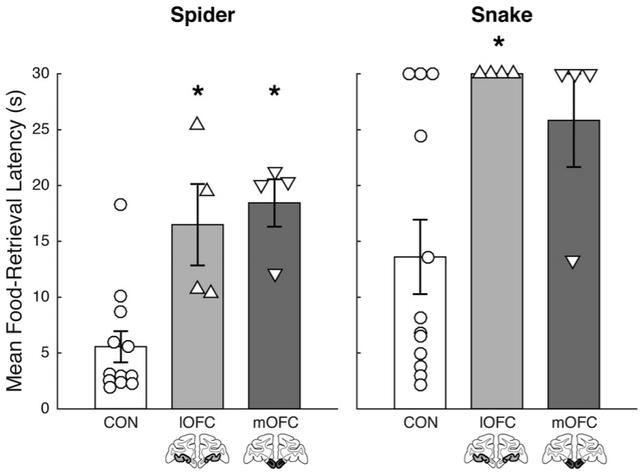
Whether the lateral orbital frontal cortex was damaged or the medial orbital frontal cortex was damaged, the monkeys faced the fake snake or fake spider with excessive stress reactions. Specifically, the monkeys made more defensive and threatening behaviors, and fewer behaviors to approach the food.
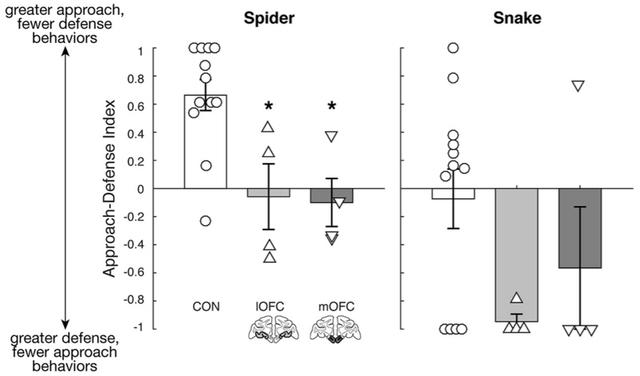
When facing threat, the medial and lateral orbital frontal cortex (grey) damage will make monkeys react excessively and cannot adapt well to the threat. The medial orbital frontal cortex can't overcome the emotion of fear even after moving away from the threat
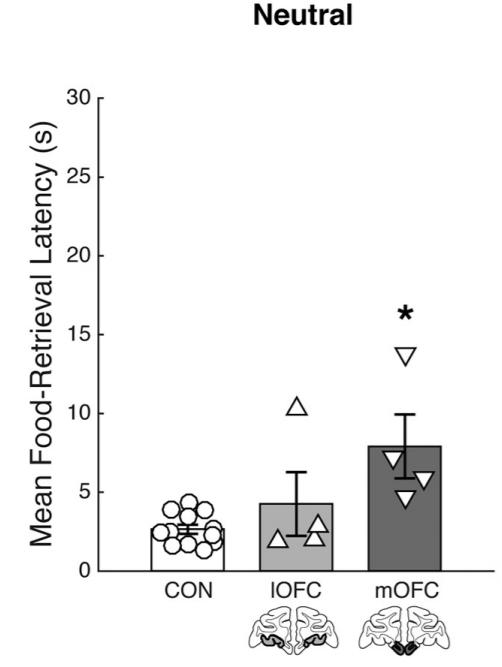
There is also a control experiment in which the food is next to a non-threatening fake snake, without triggering any emotions in the monkeys. Scientists found that compared with normal monkeys, the medial orbital frontal cortex damaged monkeys also had a longer delay in grabbing food. At the same time, they also had defensive behaviors
The medial orbital frontal cortex damaged monkeys had a longer delay in grabbing food
And the lateral orbital frontal cortex damaged monkeys showed the same performance as the control group when there was no threat stimulus
In summary, the medial and lateral orbital frontal cortex damage makes monkeys react excessively when facing threats, and cannot adapt well to the threat. The medial orbital frontal cortex can't overcome the emotion of fear even after moving away from the threat
In fact, emotions are not produced in the orbital frontal cortex or other frontal lobe areas, but their roots lie in deeper brain structures, such as the amygdala. The orbital frontal cortex, along with other frontal lobe areas, has long been considered to inhibit the underlying impulse and emotion
When people react excessively to crises and cannot adjust their mood, anxiety disorder comes knocking. Therefore, the abnormality of the orbital frontal cortex may be related to anxiety disorder.