The Largest Animals Today Actually Live in the Oceans
Nature is magical, giving rise to many forms and patterns, with huge differences in size. In terms of size, some creatures are so small that they can only be observed with instruments, while others are incredibly huge, such as the following creatures, whose stature when standing upright could exceed a building.
Blue Whale
The blue whale is considered the largest animal known to have ever lived on Earth, reaching lengths of up to 33 meters and weighing up to 181 tons. Its weight is equivalent to that of 25 or more African elephants, or the combined weight of 2000-3000 people. Fortunately, due to the effect of buoyancy in the ocean, it does not need to exert as much effort as terrestrial animals to support its weight. Its large body also helps it maintain a constant body temperature. Despite its huge size and slow movements, the blue whale can float and move freely in the water, with a forward speed of up to 28 kilometers per hour.
Fin Whale
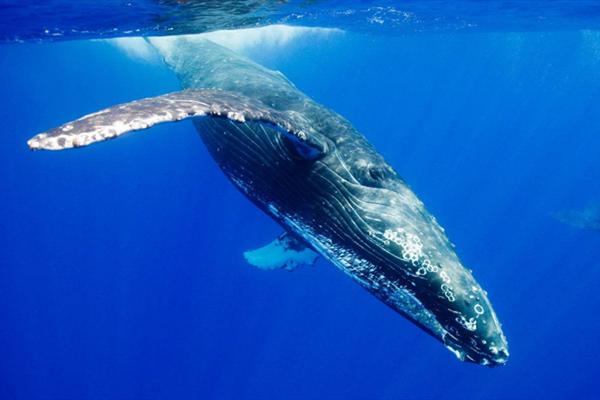
The fin whale is the second largest whale in the world and the second largest animal currently alive, second only to the blue whale. They are spindle-shaped, measuring about 25 meters long and weighing about 70 tons, often moving alone or in groups of 2-3, migrating to cold sea areas to feed in the summer and to warm sea areas to breed in the winter. Fin whales are one of the fastest swimming whales, with a speed of up to 37 kilometers per hour, and a record speed of 40 kilometers per hour, earning them the nickname 'Deep Sea Grey Hunter',
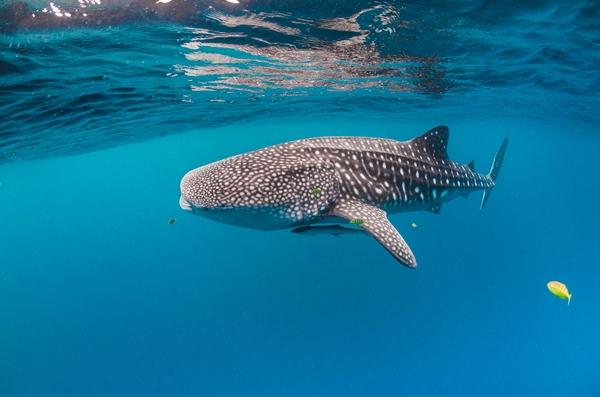
Whale Shark
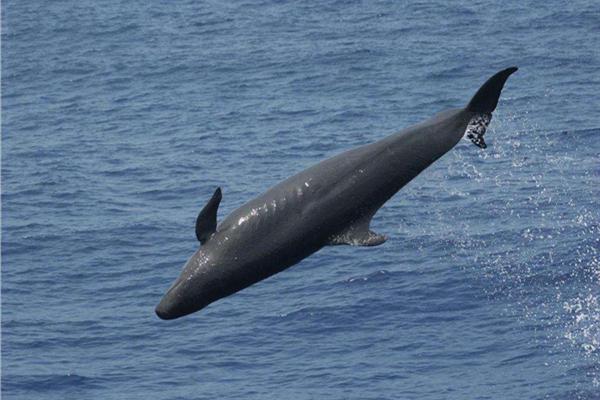
Whale sharks are large in size, typically with a body length of 9-12 meters, and one of the largest fish species. Their bodies are covered in pale spots and crisscrossing pale bands, like a chessboard, and each whale shark's spots are unique. Whale sharks are quite docile marine animals and do not pose a major threat to humans, and they enjoy playing with divers. Sometimes, they will remain stationary, turning their bodies over to allow divers to clean parasites from their bellies.