Heartbreaking! 8-Month-Old Panda Dies from Suffocation Due to Feeding Rope Entanglement
At 2:00 AM on April 10th, the official Weibo account of the China Giant Panda Breeding Research Center released a message. 'Lucky Baby' (born August 10, 2019), a female panda at the Shenshiping Base, died on September 9th due to strangulation caused by entanglement of a feeding rope. It was discovered 7 hours later by the keepers.
According to Nanhu Daily reporters, at the time of the incident, the panda base was live-streaming, and many netizens paid attention to 'Lucky Baby's' abnormality in the live broadcast page. Currently, the toys with long ropes in the base have disappeared from the live broadcast. In order to provide the pandas with vitality and improve their breeding ability, the base specially prepared various toys.
Regarding this incident, the China Giant Panda Breeding Research Center stated that it would learn from the experience, investigate safety hazards, and strengthen night patrols.
'Giant Panda' strangled to death by toys, discovered after 7 hours,
The China Giant Panda Breeding Research Center's official notification states that on April 9, 2020, 'Lucky Baby' of the Shenshiping Base of the Giant Panda Breeding Research Center died due to strangulation caused by entanglement of a feeding rope.
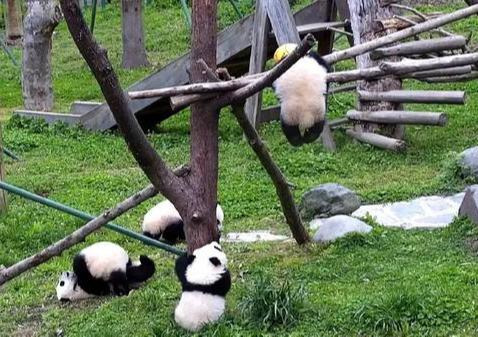
The notification states that at around 9:00 PM on September 9th, 'Lucky Baby' climbed to a wooden rack with feeding toys outside the kindergarten in Shenshiping Base alone, then the baby wrapped the rope of the feeding toy around its neck and started to struggle. After a few minutes, the baby stopped struggling and died. Due to the late night and the difficulty in distinguishing the baby's entanglement posture from the rest posture on the wooden rack, the night patrol personnel failed to find the abnormality.
The keeper discovered 'Lucky Baby''s neck and limbs were wrapped with ropes of feeding toys at 9 pm, contacted the veterinarian, and confirmed that the baby had died. Samples were collected for examination.
It is understood that the Shenshiping Base of the Giant Panda Breeding Research Center conducts live broadcasts via the 'Panda Channel' App. Many users watched the live broadcast in the three live broadcast rooms, with a maximum of 469,000 viewers. Nanhu Daily reporters noticed that in each live broadcast room's screen, there were several pandas, either lying on wooden racks or climbing on trees. The feeding toys with long ropes in the live broadcast were no longer visible.
The baby was 8 months old at the time of death, separated from its mother and moved to the kindergarten after weaning,
According to the notification, 'Lucky Baby' was a female panda born on August 10, 2019. It died on the wooden rack in the outdoor activity field of the Shenshiping Base Kindergarten. It was 8 months old.
According to Xinhua News Agency reports, on January 17th of this year, a batch of newly born '2019 Level' giant panda cubs of the China Giant Panda Breeding Research Center held a press conference at the panda kindergarten in Shenshiping Base.
According to the report of the China Giant Panda Breeding Research Center, there were 17 male pandas and 15 female pandas born in 2019 in the panda breeding project at the Shenshiping Base. One pair of pandas were twins. The panda cubs were healthy and lively, and their growth and development indicators were good.
'Lucky Baby' is one of them.
According to the China Giant Panda Breeding Research Center's website introduction, under captive conditions, after weaning, giant pandas will be separated from their mothers according to the factors such as whether the mother participates in the next year's breeding plan, the mother's body and lactation status, and the development of the baby. The separation time is generally around half a year to one and a half years old.
After weaning, the giant panda cubs will be raised by 'panda nannies' and 'panda dads', usually concentrated in the panda kindergarten with other panda cubs of the same age. The cubs will continue to be fed artificial milk until about half a year old.
The official stated that it would learn from the experience and had established a monitoring and control system in March.
Regarding 'Lucky Baby''s death, the China Giant Panda Breeding Research Center stated in its notification on April 10th that it would further strengthen the safety inspection and evaluation of items provided to giant panda cubs, completely eliminate the safety hazards in the park; at the same time, it will strengthen night patrols and prevent such incidents from happening.
For the toys appearing in the base, the head of the management department of Shenshiping Base, Mr. Zhang Guiquan, in an article published on September 27, 2019, on the China Giant Panda Breeding Research Center's website, said that giant pandas with insufficient body weight and insufficient activity would affect their breeding work. In order to solve the problem of insufficient activity of the pandas, the base was the first to study and apply environmental enrichment technology, creating a diverse living environment for the pandas. The small enclosure was expanded into both indoor and outdoor spaces, and various 'toys' were equipped with the outdoor enclosure to allow pandas to play.
In an article published by the China Giant Panda Breeding Research Center on January 17, 2019, it can be seen that the Shenshiping Base contains multiple toys hanging with long ropes.
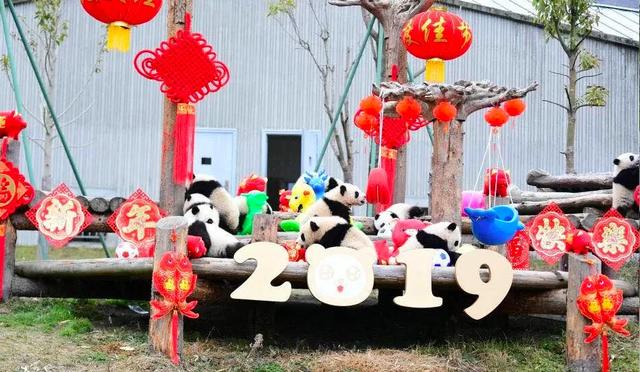
Nanhu Daily reporters learned from the China Giant Panda Breeding Research Center that the Shenshiping Base of the Giant Panda Breeding Research Center, built in 2008 after the '5.12' earthquake, is located in the Wolong National Nature Reserve Administration in Gansu Province, Shengtu Town, Wulong, with an area of 150 hectares.
The China Giant Panda Breeding Research Center was established in Shenshiping Base. The base opened to tourists in 2016. In 2017, the Shenshiping Base officially took on the breeding function of the Research Center. 19 pandas were born there.
At the 2019 National Giant Panda Breeding Technology Conference held at the end of 2019, it was announced that there were 600 captive giant pandas worldwide. The giant panda breeding population of the China Giant Panda Breeding Research Center accounted for more than 50% of the total number of captive giant pandas in the world, which is the largest and most healthy captive giant panda population with the most abundant genetic structure.
On March 20th of this year, the China Giant Panda Breeding Research Center published an article stating 'Gathering strength to fight against epidemic prevention and protect national treasures'. The article mentioned that there were 182 giant pandas being raised in the bases of Ya'an Bifengxia, Chengdu Qingchengshan, Wolong Peach Tree and other 4 bases. Regarding the management of the bases, the article stated that a comprehensive inspection and monitoring system would be established by monitoring and controlling the pandas and their accompanying animals.
Source: Southern Metropolis News