The Three Most Perfect Ancient Carnivores Through Evolving Evolution
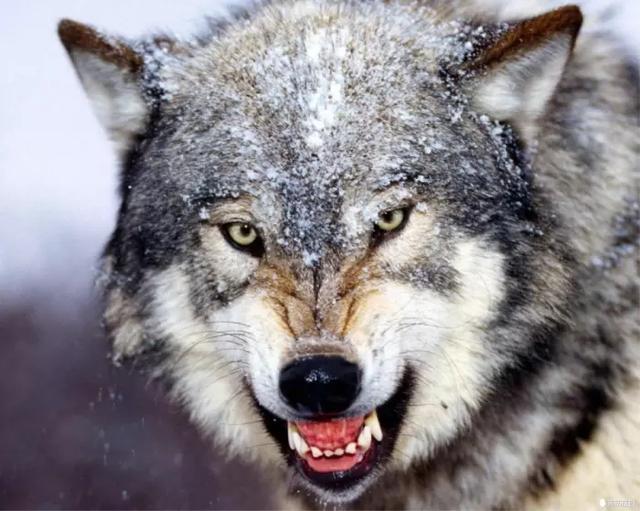
OneWolf
Wolves originated on Earth approximately 5 million years ago, with dogs and wolves sharing 39 pairs of chromosomes, or 78 in total. The black-backed, side-striped wolf has a reduced chromosome pair. Over a long evolutionary process, many animals with stronger abilities have gone extinct, but wolves have survived because they are capable of collective mobilization for survival, group hunting, and forming a large social structure. Perhaps as Darwin said, 'survival of the fittest'.
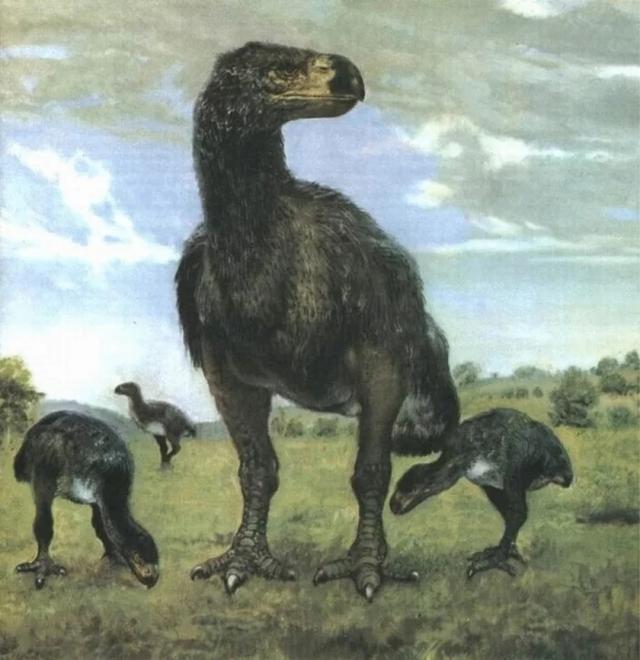
TwoTitan bird
According to the theory of evolution, birds are descendants of theropod dinosaurs from the Middle Jurassic period, and Titan birds are similar to their 'relative' Tyrannosaurus Rex, relying primarily on their huge killing power of head and mouth for hunting, with strong hind legs suitable for ambushing attacks, and greatly reduced forelimbs (wings) to maintain balance while supporting heavier heads. For about 50 million years, South America has been separated from other continents, thus preserving many ancient species. Titan bird's ancestor, the banded bird, is one of them. About 2 million years ago, the Panama Isthmus connected North and South America, and many South American animals were driven to extinction by more competitive North American animals. The banded bird still survived, and one branch even ventured into North America, represented by the Titan bird.
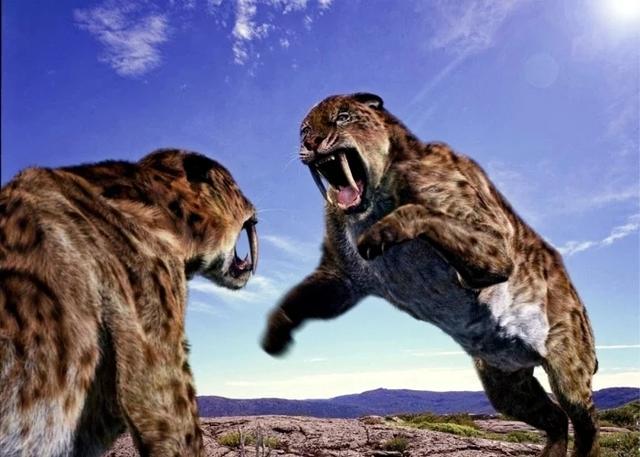
ThreeSaber-toothed cat
Saber-toothed cats refer to several different species, which are a side branch in the evolution of large feline animals, living in the Middle and Late Miocene-Pliocene periods. They are classified within the feline subfamily, the Machairodontinae, and the Felidae, and also include two families within the marsupial order. They lived in different periods of the Neogene, evolving to have saber-like canine teeth. Their upper canine teeth can reach up to 120mm in length. Saber-toothed cats are generally thicker than modern felines, like bears. Most members of the Machairodontinae subfamily hunted large herbivores. After the extinction of the saber-toothed cats in the early Pliocene, they evolved into Homotherium. The La Brea farm in Los Angeles, California, is one of the most unusual fossil sites in the world, where over 2,000 fossil specimens of Homotherium were discovered, providing a deeper understanding of the Felidae family.