Huihe National Nature Reserve Welcomes First Batch of Migratory Birds Returning
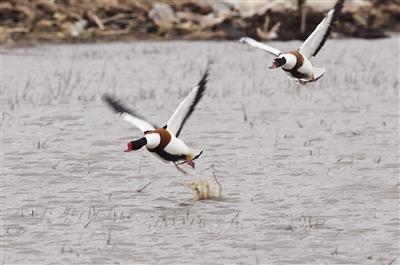
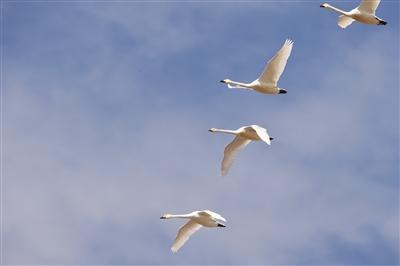
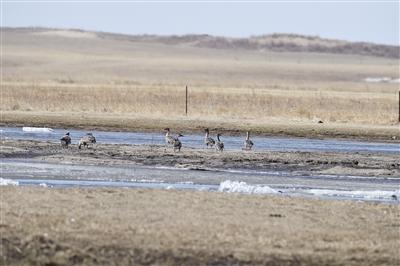
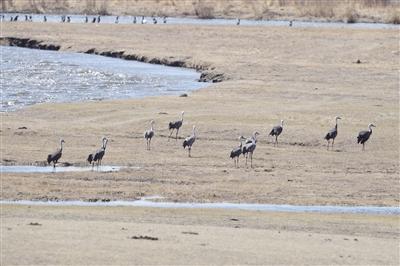
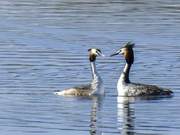
The newspaper reported that the weather turned warmer and the ice and snow melted. Recently, the Huihe National Nature Reserve welcomed the first batch of migratory birds returning. Grey Herons and Little Swans, among other migratory birds, soared and played freely in the lake, bringing abundant vitality to the early spring protection area.
In recent years, the Huihe National Nature Reserve has continuously strengthened wetland protection and management, increased publicity efforts to protect wild animals, and reduced human disturbance. Migratory birds began to arrive at the Huihe, with the ice still not completely melted, and to dance and rest.
The Huihe National Nature Reserve is one of the important breeding grounds for endangered birds such as Imperial Cranes and White-necked Cranes, as well as a migratory channel and an important stopover for migratory birds. In recent years, the reserve has increased the intensity of patrol and supervision, formed a networked daily protection management system, with small patrols seen every day and large patrols every week. Five observation and management stations and a rescue and breeding center are interconnected to jointly carry out special enforcement actions to combat illegal poaching, fishing, trafficking of wild animals, and the collection of bird eggs.
Huoqiang, Vice-Director of the Science and Propaganda Section of the Huihe National Nature Reserve Management Office, said: ‘When I was the station leader of the Xibo Observation and Management Station, it was just established. The environment at that time was particularly harsh. A simple Mongolian tent was our studio. We used river water for washing and had to go 1.5 kilometers away to get water. We used cow dung to burn the fire. At that time, the entire area was still experiencing illegal fishing and hunting, and we needed to supervise the entire area. Because the supervision range was very large and there were no cars, we rode motorcycles for a whole day.’
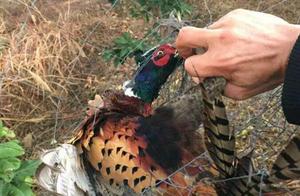
To increase patrol strength, protection area staff members implemented focused patrols in key areas and areas prone to illegal behavior. More than 10,000 meters of old nets were cleared, and during patrols, 5 lost young Canadian Geese were recovered and handed over to the Bird Rescue and Breeding Center.
At the same time, the reserve established coordination mechanisms with thewenk Flags Public Security Bureau and other departments, regularly holding joint meetings to combat protection area gun and explosive criminal activities, to communicate work progress, to share information, and to work closely together to form a force and improve the reaction speed of handling reported cases, and strengthen enforcement and crackdown efforts. After a series of effective enforcement actions, it produced a deterrent effect on behaviors that damaged the protection area’s resources, and achieved obvious results.
The reserve is also fully committed to rescuing sick and injured wild animals. Any sick, injured, lost, or animals delivered by the public are given full support for rescue, and healthy animals are released into suitable habitats; injured or weak animals are taken to the rescue center for treatment. In 2019, 15 national secondary protected wild animals and birds were rescued.
The staff of the Rescue and Breeding Center said: ‘The fate of wild animals depends on our human recognition and actions today. As a wild animal protection department, we will do everything possible and continue to carry out wild animal protection, development, and reasonable utilization work, firmly crack down on the sale of prohibited wild animals, and let wild animals always add beauty to human survival environments.’
Currently, the Huihe National Nature Reserve has 56 genera and 316 species of birds, including 10 national first-class protected birds such as Imperial Cranes and Great Bustards, and 45 national second-class protected birds such as Tundra Swans and White Spoonbills.
(Fan Hua )