Shandong Twin Wonders – Shuangqi of Chuanquanzhen
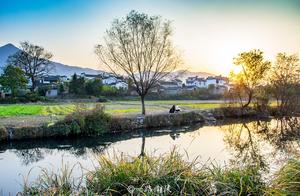
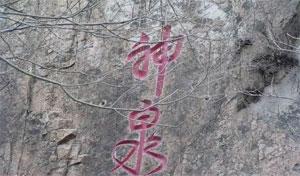
Approximately 800 years ago, the famous ancient town of Hui'an was a small island surrounded by water on four sides, not like today's and connected to the mainland. However, there was a spring eye discovered on the seaside beach, allowing the tide to rise and fall, and the brine to soak, still sweet and remarkable, becoming a great wonder and benefiting the fishermen of the area. In 1553, this place originally called 'Shenqian' was officially named 'Shenquan', which literally means 'City named after a Spring'.
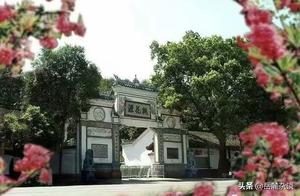
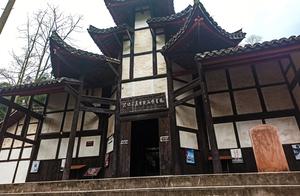
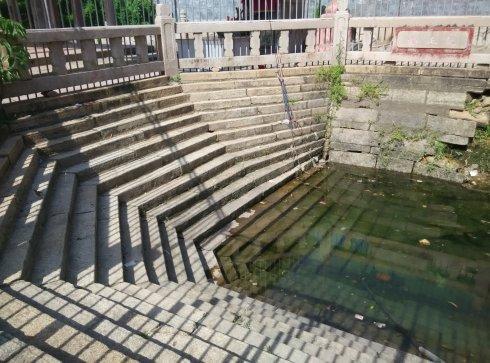
You can enter and see this spring eye, known for its sweet water, still shows no signs of exhaustion. The spring wall is built with stone, and a railing surrounds a pool of the 'Life Spring' that Hui'an once relied on. The human cultural heritage of 600 years makes this place particularly charming. There is a pavilion next to the spring, called Ganquan Pavilion, originally built during the Qing Dynasty's 17th year of the Qianlong reign, and was destroyed by a typhoon in 1979. The Ganquan Pavilion you see today was built in 1980. On one of the pavilion pillars, you can find a sight that is worth pondering – a single-legged couple: Quickly take with you and not exhausted, allow brine to steam flat, distinct and plain. The people accompanying me introduced that it is said that this upper couple was written by Hui'an's famous prodigy Su Fu. Because of the unique combination of '' (zép píng – the placement of characters in the couplet) and its clever connection to the spring's wonder, the emotion and realm it expresses is quite profound. Therefore, it has been difficult to find a complementary couplet for hundreds of years, making it a flawless single-legged couplet. Local rumors say that when Mr. Guo Mo (referring to Mao Zedong) came to this place, he also pondered it for a long time. The accompanying people introduced that Mr. Guo Mo (referring to Mao Zedong)'s experience made this single-legged couplet with a fairly authoritative annotation.
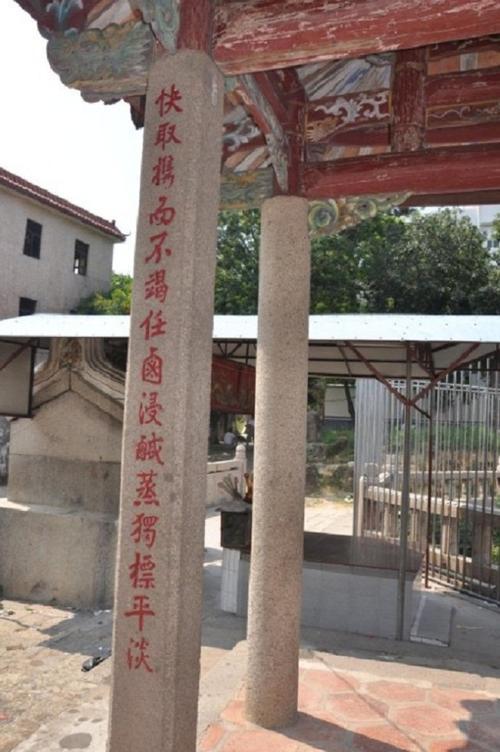
There is a stone monument in the pavilion, and if you look closely, it's 'Shenquan Pavilion Taobei' (Taobei – a stone tablet inscribed with a record). The well, couplet, tablet, and pavilion are linked together. Records say that 'When visiting Hui'an, you must visit Shenquan; When visiting Shenquan, you must view the spring; When viewing the spring, you must appreciate the couplet'.
Li Wenqing told us that Su Fu was a native of Shenquan, born in the fourth year of the Hongwu reign of the Ming Dynasty. In the spring of the year Su Fu was 13 years old, the local magistrates and governors recommended him as a candidate to serve as a soldier, and he was sent to Nanjing by boat to see Zhu Yuanzhang. Zhu Yuanzhang felt that he was too young and it was not feasible for him to study in the capital, so he gave him gold and food and sent him back, asking him to grow up and serve the court. Su Fu returned to Hui'an. The local people have many legends about his journey. The most coherent one is that when Su Fu was passing through the Yapu station in Zhejiang's Puizhou, there was an outbreak of dysentery and plague, and Su Fu just happened to have a remedy for dysentery, so he stayed behind to treat the people, and he was very effective. However, he fell ill due to overwork and died in a foreign land. Zhu Yuanzhang heard about Su Fu's death and mourned deeply, issuing an edict to honor him. The Hui'an County Magistrate built an honor tomb for Su Fu on the Ma Dongshan mountain in Hui'an, and it still exists today.
The local government plans to build a road specifically to connect Su Fu's honor tomb and Shenquan's Su Fu Memorial Hall, and to collect various legends and stories about Su Fu that were preserved in the island fishing village, compile them into a script, and shoot a television series, so that this young man who died prematurely will be resurrected on the screen and become a role model for contemporary young people.