Why Do People in Nanjing Speak Jianghu Mandarin Instead of Wu Dialect?
If you travel, live and work in Jiangsu, you will find that from south to north, from east to west, Jiangsu people have different dialects. For example, Xu Zhou and Lianyungang speak Central Mandarin, Nanjing and Zhen Zhou speak Jianghu Mandarin, and most areas in Southern and Su Zhou and Chang speak Wu dialect. This is one of the reasons for what is known as 'Disassembled Jiangsu',
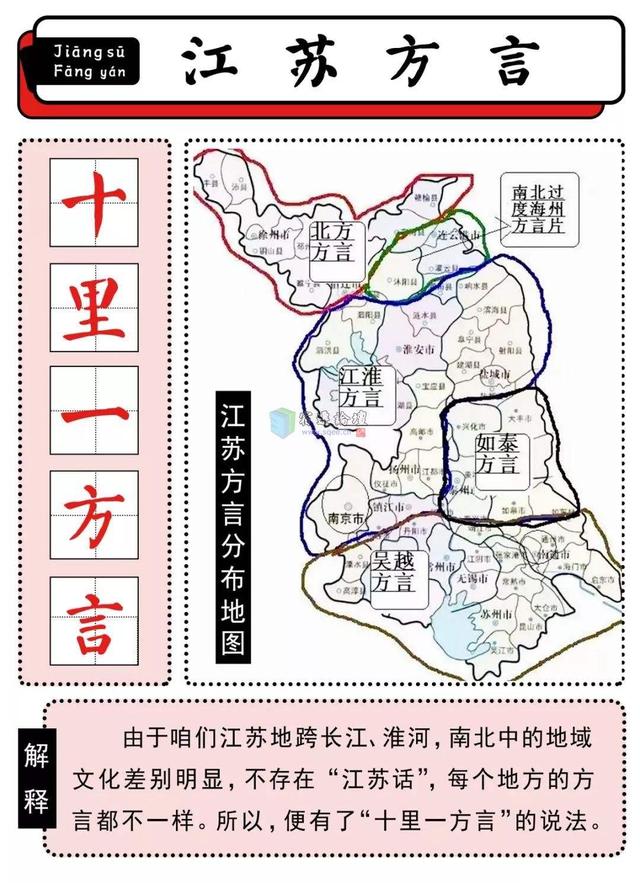
Ten Miles of Different Tongues,
As is well known, basically Nanjing and Zhen Zhou belong to south of the Yangtze River, but shouldn't they be speaking Wu dialect? Why Jianghu dialect prevails and becomes the daily language of people. This is actually rooted in a deep historical origin,

Nanjing,
Historically, Nanjing belonged to Wu Region. In 495 BC, Wu King Fucha established Ji Cheng (a military casting city) on the hillside behind the Tian Gong in Nanjing, for casting weapons. It was repeatedly rebuilt until 229 AD when Sun Quan, the ruler of Eastern Wu, established Nanjing as its capital. During this period, the native language of Nanjing was an early-transformed Wu dialect, and people spoke authentic Wu dialect,
However, after the Jin Dynasty, especially starting with the Yongjia Rebellion and the Five Barbarians' Chaos, everything changed,
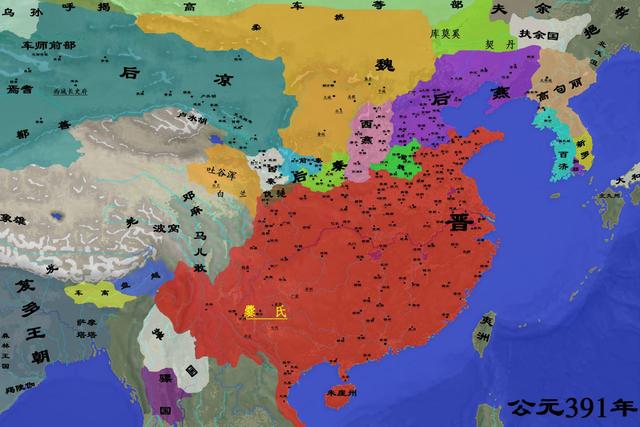
Eastern Jin,
After the Five Barbarians' Chaos, originally Central Han people, Western Jin Han ethnic aristocratic officials and loyalists all migrated south, Sima Rui established Eastern Jin in Nanjing (then called Jiankang), known as 'Aristocratic Migration.' In ancient times, aristocratic clothing was a symbol of civilization, 'Aristocratic Migration' refers to the migration of Central Culture, which includes not only clothing but also language. After the establishment of Eastern Jin, the Central Aristocrats brought Luoyang Elegant Speech, and Nanjing area's Wu dialect rapidly declined, thus combining Luoyang Elegant Speech and Golden Speech (Nanjing Elegant Speech) began to form, and Nanjing gradually detached from Wu dialect,
From the Eastern Jin to the Sui Dynasty, Nanjing Elegant Speech entered a prosperous period. The Southern dynasties of Song, Qi, Liang, and Chen dynasties inherited Nanjing Elegant Speech and highly respected it politically and culturally. At that time, Nanjing Elegant Speech was closer to mainstream Chinese culture. After the Sui Dynasty unified China, Emperor Yang Jian of Sui wrote the Official Rhyme Book, which integrated the pronunciation of Luoyang and Jiankang (Nanjing). From the Tang Dynasty to the Yuan Dynasty, Nanjing's political status was unstable and its influence lagged behind, but after adjustment, Nanjing Elegant Speech remained China's official language.
However, in the Ming Dynasty, Nanjing Elegant Speech underwent significant changes. After Zhu Yuanzhang established Nanjing as his capital, 200,000 people from the Huai region were settled in Nanjing, bringing fresh blood to Nanjing's language. Later, the Ming government successively migrated a large number of people to supplement Nanjing. During the Yongle period, almost half of the 400,000 residents of Nanjing were foreigners,
During this process, Nanjing dialect, which evolved from Nanjing Elegant Speech, gradually merged with some Jianghu dialects. The Ming government used the then-existing Nanjing sound as a blueprint to establish a common official language, which is what continued until modern times. After the Qing Dynasty's late-stage adjustments and the Republic's revival, Nanjing dialect gradually formed what we hear today,
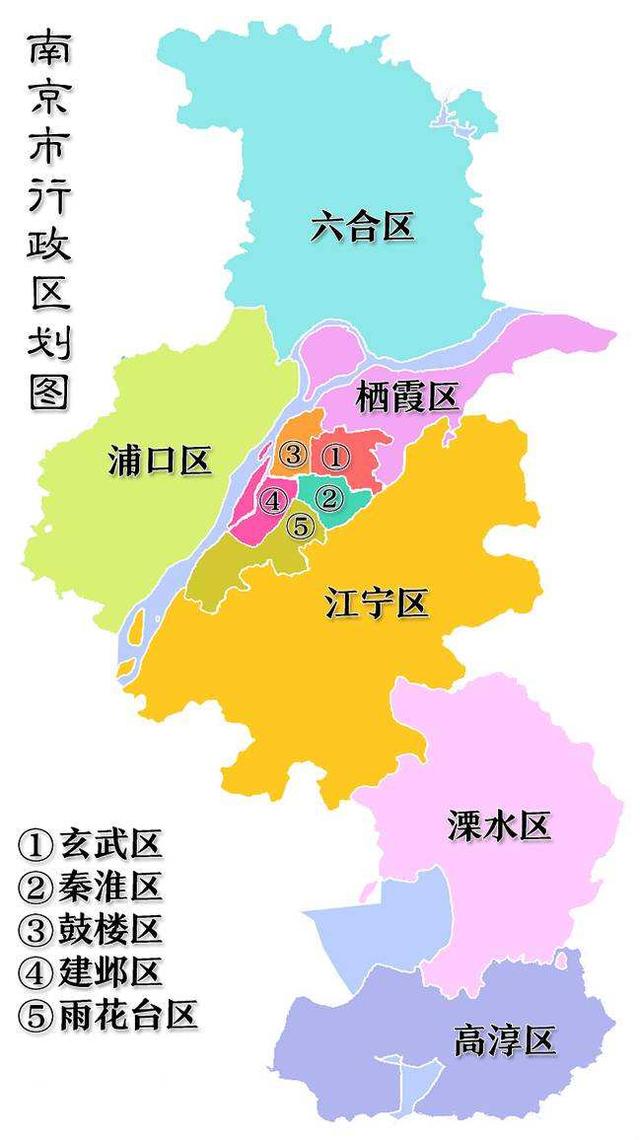
It's worth noting that the boundaries of dialect divisions are not very clear. In Jiangsu, Jianghu Mandarin and Wu dialect are generally divided by the Yangtze River, but not entirely dependent on it. Moreover, it is not entirely correct to say that Nanjing people speak Jianghu Mandarin. For example, the northern area of Nanjing's Gao Chun district and Lishui's partial area speak Wu dialect. Dialects have no superiority or inferiority, language development reflects the shadow of ethnic fusion, and it's a long and profound history,