Cloud Barale Village – Always Evoking Past Stories
Written by Hong Yaohui
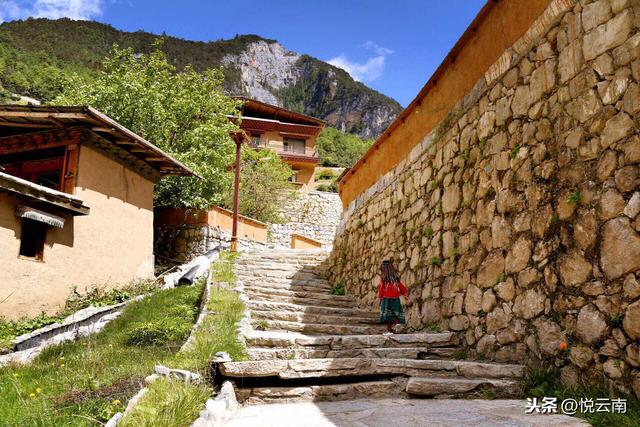
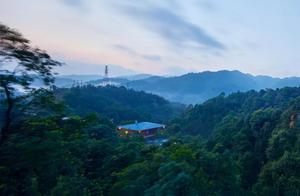
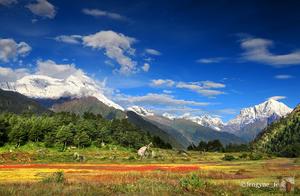
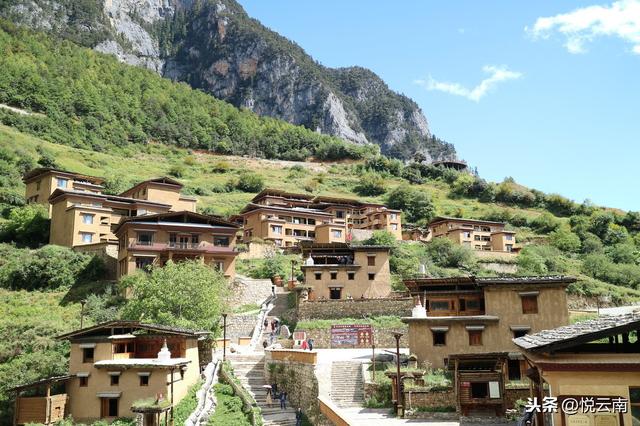
Barale Zong, who has been traversing through a thousand years of time, always has only one village – Barale Village, which is located on the ridge of a cloud-shrouded gorge, with varying sizes of Tibetan houses scattered across this land. Barale is the Tibetan transliteration of Parla, meaning ‘from Parla’ (Potala).
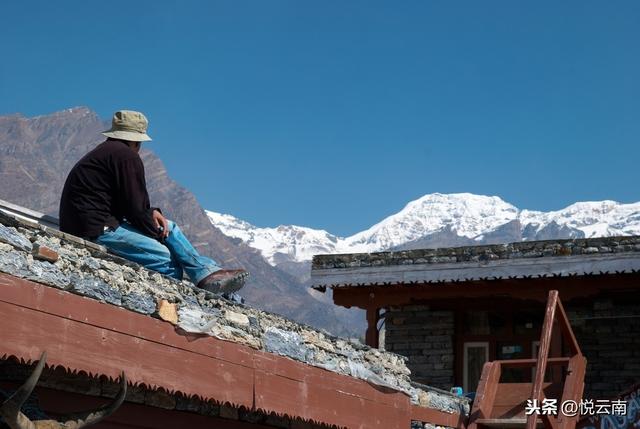
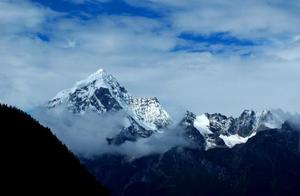
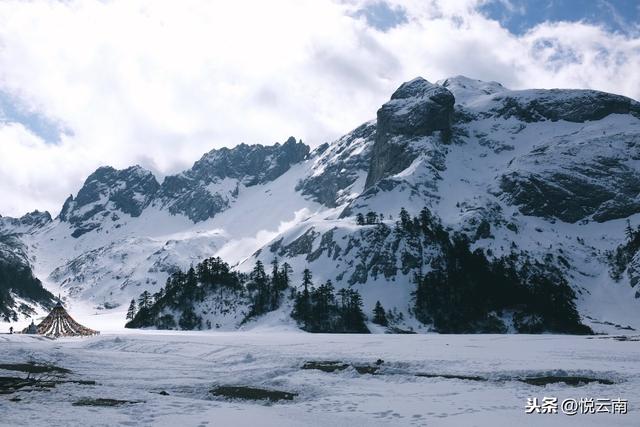
Legend has it that long ago, a senior general of Gertzangwang was tired of the constant warfare. After undergoing various hardships, they found this mountain-ringed, world-isolating place with water by the mountainside, and settled here. Since the general’s family came from Parla, they named this place Barale Village, and the snow mountain behind it was called Barale Gzong Mountain.
Barale Village originally had over 60 households, but due to various reasons, the current residents are only over 10 households, totaling 90 plus people, all Tibetan. Since the ancestors of Barale came from the Tibetan town of Parla, the Tibetan language of Barale Village is different from the surrounding Tibetan dialects, closer to the Tibetan dialect of the Parla region, using Tibetan script.
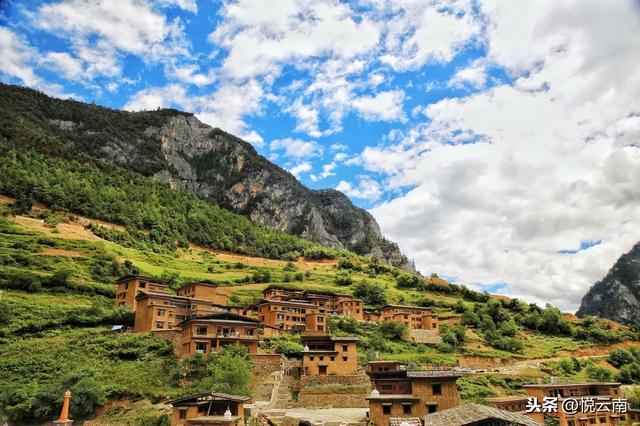
The houses in Barale Village are typical Tibetan-style mud-brick houses with reinforced concrete, usually three stories high, with distinctive architectural styles, the lower floor for livestock, the second floor for family rooms, dormitories, and warehouses, and the third floor for the hall and guest rooms, with prayer flags inserted on the roofs.
The Barale people have lived here for generations, and every trace they left behind echoes with the sound of history. The ancient mud walls, the weathered Mani piles, the dilapidated ancient temple ruins, the majestic and magnificent mountains, and the extremely steep and beautiful canyons all tell stories of moving legends and stories.
Barale Village also has a peculiar custom – villagers don’t raise dogs.
Legend has it that hundreds of years ago, Barale Village was mainly based on hunting, with households raising dogs. Even if the villagers worked from sunrise to sunset, they still couldn’t fill their stomachs, and their lives were extremely poor.
There lived a family of three brothers. One day, the three brothers went hunting through the canyon and found a tin of shining silver in the canyon bottom. After thanking the mountain god, the eldest and second brothers respectively bought temple monk positions and began to study Buddhism. After years of hard study by the eldest brother, he eventually became the Kamba (abbot) of Songzanlin Temple. After years of Buddhist studies, he found the root of the poverty in Barale Village. Villagers spent too much time hunting, neglecting farmland, and the only way to change the situation was to change their way of survival, turning farming into the main livelihood source, and also responded to the Buddhist doctrine of non-killing.
Therefore, one day he returned to Barale Village and convened all the villagers to discuss it. The villagers had always agreed and made a solemn oath, and after that, every household no longer hunted and did not raise dogs.
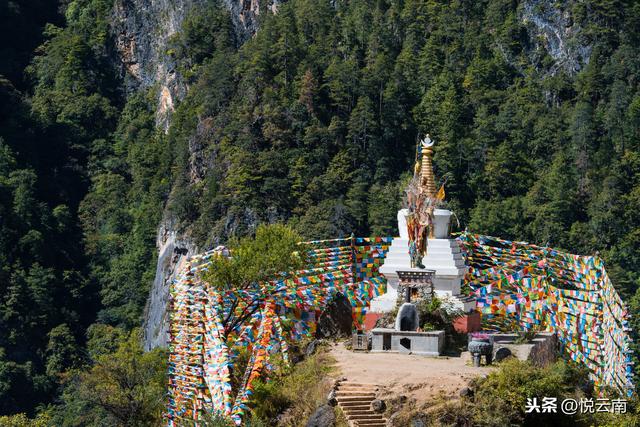
The incense burner in Barale Village, named ‘Sim Kang’ (meaning ‘wish fulfilled’), is also known as ‘Zhao An Tai’. It was relocated from a distance of several miles from Barale to this place, in order to make the surrounding god mountain auspicious and protect Barale, every festival, the villagers would hold a solemn burning ceremony and pray to the ancestors and gods.
The weathered Mani piles are faintly visible with mottled Tibetan script, it is said that it is different from the modern writing. From the high-altitude blue sky, a bird’s-eye view, eight god mountains look like eight blooming lotus flowers, Barale Village peacefully sits in the center, year after year, devoutly praying to the smoke of incense going to the world of gods.
The distance from Zhuanggu Village to Barale is less than 20 kilometers, which took several days and nights in the past, the artificially excavated ‘person and horse ladder’ on the steep cliffs often made people feel scared to look at it. Old people told stories that horsemen were not allowed to go out alone, often encountering wild boars and leopards in the mountains. If children were taken to the village, they had to be tied with a rope in their waist, the other end tied to the horse’s neck, tightly holding the horse’s mane to walk slowly, to prevent the children from accidentally falling off the cliff. From the mountain outside, a bag of about 100 kilograms of rice was carried, and once it reached the foot of the mountain, it was divided into three parts, and each part was wrapped in three bags to prevent scratching and abrasion during the journey.
Every summer rain season, when reaching the foot of the mountain, they often encountered river floods, exhausted and difficult to descend, and had to endure hardship to climb to the village; experienced adults would say that if horsemen transported goods to the opposite bank of the river, it was best to cross the river immediately, while you were drinking tea and burning incense, the sudden flood would isolate you on the opposite bank for several days and nights…
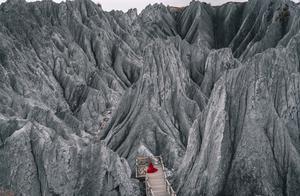
Standing at the entrance of the modern Shangri-La Grand Canyon, looking up at the ‘Ya Zan’ bottom of the canyon, only felt that the thousands of ravines were like giant meteorites in the sky, swaying and rotating with the drifting clouds, many people would lose their courage and will to stand.
This straight cliff has been the only entrance and exit for the villagers of Barale to the outside world for centuries, the cramped and steep spiral staircase was imprinted with the footprints of ancient horsemen and the fingerprints of villagers. I thought ‘Since Hua Shan has one road’, to describe the state of mind at this time, it was just right!
Ten years ago, when the Barale Gzong Scenic Area was developed, people were afraid to look at ‘Ya Zan’ ladder, one after another failed. At this time, a young man from Kongba who was committed to changing the poverty of his hometown – Sanda Zhidu, overrode public opinion, made a solemn oath: ‘I will build a road to Barale Village!’ As soon as he said this, everyone was surprised. The elderly told him: ‘If the road is built, you are our living bodhisattva!’
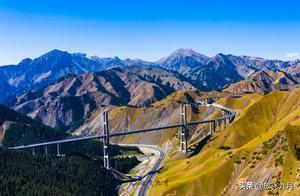
Today, a ten-kilometer-long road, back and forth through 40-odd bends, is like a rainbow of seven colors and is built to Barale Village, the distance between the world and the world has been close, the cloud-top Barale is no longer remote, it is no longer silent! This is a miraculous miracle, a miracle that wants to compete with heaven and man!
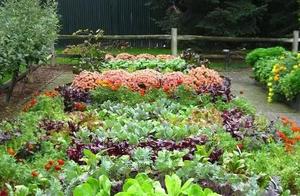
Now the young people are working in the scenic area, and the road maintenance is done by the villagers. In the past, the land was small, relying on heaven and earth to eat, now the land has been leased to companies, the grain and vegetables grown are taken by tourists to collect, allowing visitors to experience the rural life, and the next step is to build a traditional ecological hotel and resort, the heavens and humans have changed their faces, 'drunk' the heart of the sun and moon, to bring about the happiness and blessings of the distant mountains.
It is said: ‘Now from the beginning, riding a horse, riding a horse, singing ancient and ethereal songs, reminiscing about the past’ At a glance, Barale sat high in the clouds, making passers-by’s dormant memories awaken.
Editor: Wei Xi Xiao