Lugyang Lake: Water Town Revival
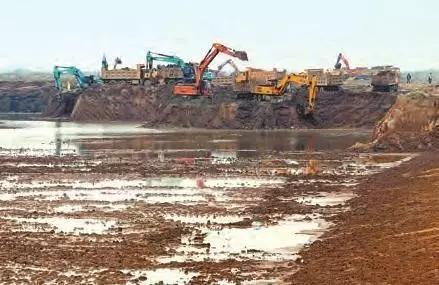
The Second Phase of Lugyang Lake Project is being promoted in earnest.
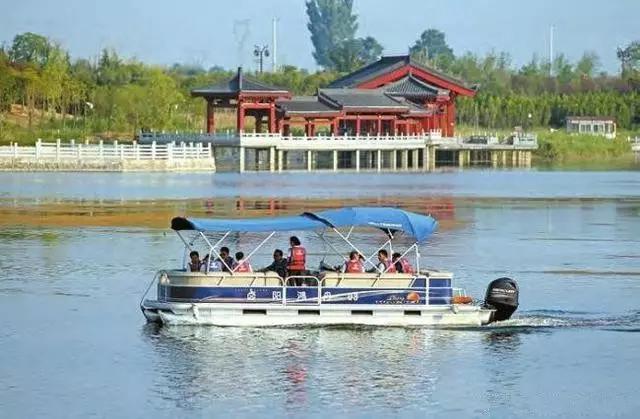
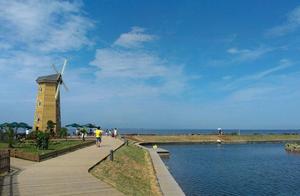
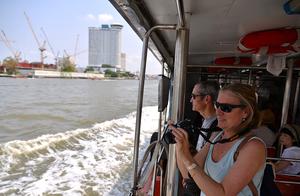
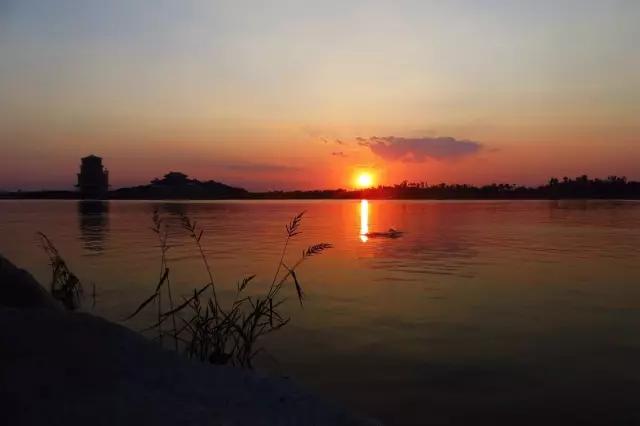
Boat tours allow visitors to feel like they are in a Jiangnan water town (photographed on August 15).
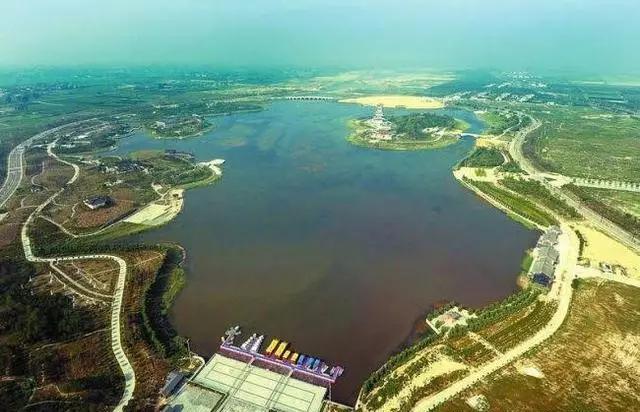
Lugyang Lake Phase One Tianjiao Lake Aerial View (photographed on August 16).

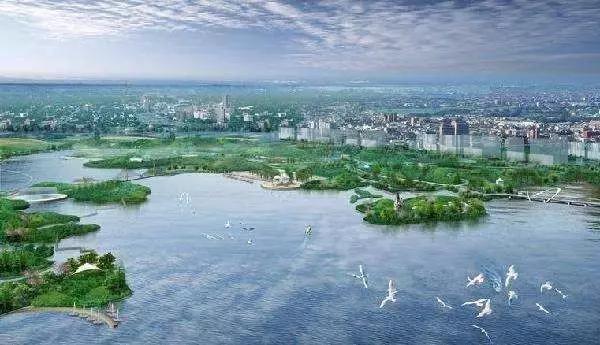
‘A hundred miles of lake scenery and a hundred miles of boating’ – a clear expanse of water, with boats passing by busily. This is how Lugyang Lake was in the past.
Originally named Lugpo Beach, Lugyang Lake is the site of the Three Gates Lake Ruins, located in Pucheng County and Fuping County, Weinan City. Due to the influence of nature and human activities, it gradually deteriorated into a tidal flat area by the end of the Ming Dynasty. The area has a low, closed terrain and the soil is severely saline and alkaline, frequently plagued by natural disasters such as rain, floods, droughts and floods. The State has implemented many water conservancy projects to improve the surrounding farmers’ production and life, but due to low design standards and insufficient flood diversion capacity, in recent years, the drainage ditches have been seriously silted up, and saline-alkali and waterlogging disasters have aggravated. Ecological restoration of the water system is urgently needed.
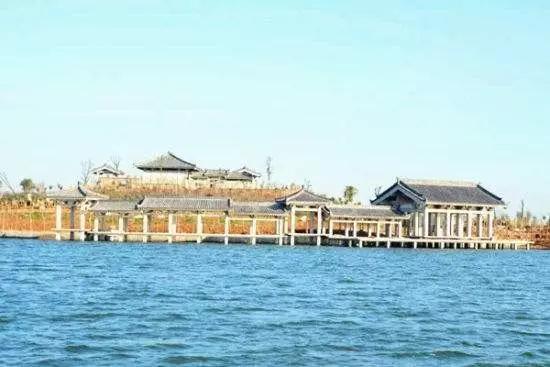
The Lugyang Lake Water System Ecological Restoration Project has a total planning area of 47.68 square kilometers. It focuses on constructing water communication engineering as a key element, with the goal of restoring and rebuilding the water system function and maintaining the health of the lake ecosystem. Through implementing wetland and water surface, river and lake, reservoir and canal connectivity, water diversion and regulation, ecological restoration and ecological environmental monitoring, the renovation of the East Lei Drainage Yellow, Luo Hui Canal, Jiekou Drainage Wei Irrigation District discharge facilities, the construction of ‘Four Rivers and Two Reservoirs and Six Lakes’ (‘Four Rivers’: Jing River, Shiqian River, Luo River, Wei River; ‘Two Reservoirs’: Dong Zhuang Reservoir, Chongquan Reservoir; ‘Six Lakes’: Tianjiao Lake, Tianlu Lake, Tianzi Lake, Tianyang Lake, Tianchao Lake, Tianyin Lake) ecological water system pattern, ultimately forming 23,000 mu of water surface, 18,000 mu of wetland protection area, and 30,000 mu of ecological construction area, with a total area of 71,000 mu, extending 30 kilometers east to west, and forming a water, beach and forest mutually supporting ecological corridor.
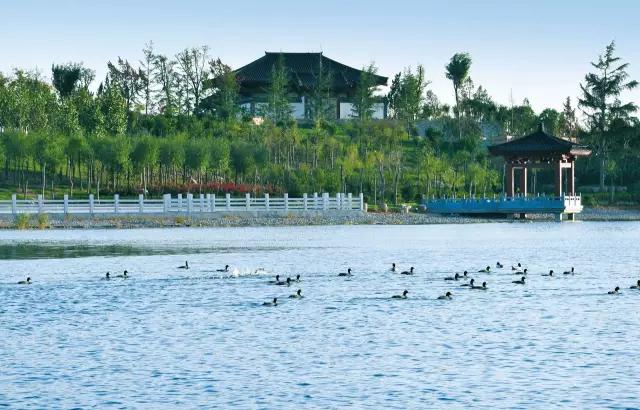
The Lugyang Lake National Wetland Park Development Zone will integrate the entire Lugyang Lake water system into two sections: East Lake and West Lake. East Lake, formerly known as ‘Inner Palace Beach’, has a lake area of 6720 mu, located in the eastern part of the Lugyang Lake Development Zone, connected and expanded by Tianjiao, Tianlu, and Tianzi lakes. West Lake, formerly known as ‘Lugpo Beach’, is located in the western part of the development zone, connected and expanded by Tianyang, Tianchao, and Tianyin lakes, with a lake area that will reach 13280 mu. At that time, Lugyang Lake will form a pattern of two large lakes, east and west, and to maintain biodiversity and provide habitats for birds, a nitrate pool and shallow wetland of about 3000 mu will be constructed.
Currently, the Lugyang Lake Water System Ecological Restoration Project has a total investment of nearly 10 billion yuan. The East Lake Phase One (Tianjiao Lake), with an investment of 8.26 billion yuan, has been basically completed. East Lake Phase Two (Tianlu Lake) has completed an investment of more than 94 million yuan, accounting for about 95% of the overall project completion. East Lake Phase One and Phase Two (Tianjiao Lake, Tianlu Lake) connection excavation engineering has completed an investment of more than 43 million yuan, accounting for 85% of the project completion.
The restoration of Lugyang Lake’s water ecology has basically achieved the goals of in-situ water source replenishment, water quality safety, biodiversity protection, environmental improvement, and it has effectively boosted the regional economy and promoted harmonious coexistence between man and nature, realizing the goals of economic and social sustainable development.