Hidden Ancient Town in the World, Authentic 'Peach Blossom Source' - Discovering the Real Paradise

I had read a television series named 'Fulong Town' a long time ago. When I was young, I thought it was just the name of a television series. I didn't realize until I grew up that there was actually a Fulong Town in China. Moreover, Fulong Town has a history of two thousand years and is known as 'Hanging on the Waterfall' Millennium Ancient Town. It was once called a real-life 'Paradise Lost'.
Fulong Town is located in (Xiangxi), originally named Wang Village. It's connected to (Guizhou) to the south and Dongting Lake to the north, hence the name 'Chu Shu Tong Jin' (Through Guizhou and Hunan to the Yangtze River). With rapid development in recent years, tourists are constantly increasing, which has greatly promoted its development. While retaining the original rustic village flavor, it has become a famous 4A-level tourist attraction.
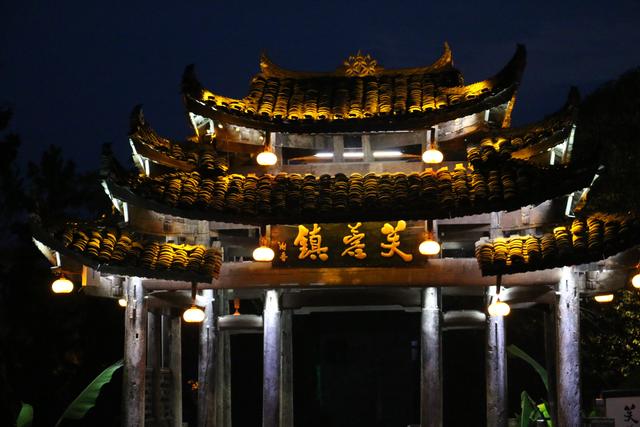
The author went to Fulong Town in early April, just after Qingming Festival, which was the best time of the year for spring. He went there with his friend. He bought a train ticket to Changsha first, then transferred to (Xiangxi) by several hours of bus journey.
I didn't expect there would be so many tourists during non-holiday time. The (Xiangxi) in spring was quite pleasant, with suitable temperature, neither cold nor hot. Children were still going to school, so Fulong Town was relatively quiet.
The area of the scenic area is not large, and the entrance fee is relatively cheap, only 100 yuan per person. Few people actually live in the town, but everyone is familiar with the constant stream of tourists, and they don't show any surprise at our arrival. It's still home to predominantly minority ethnic groups, with many locals wearing distinctive ethnic costumes and speaking local dialects.
We hired a local tour guide girl who accompanied us throughout the trip, explaining the attractions to us. Fulong Town is divided into three famous scenic areas: Fulong Town Waterfall, the Tuishi Palace (Seat of the Tuishi), and the Tuinan Ju He Site (Five-Mile Stone Slab Street).
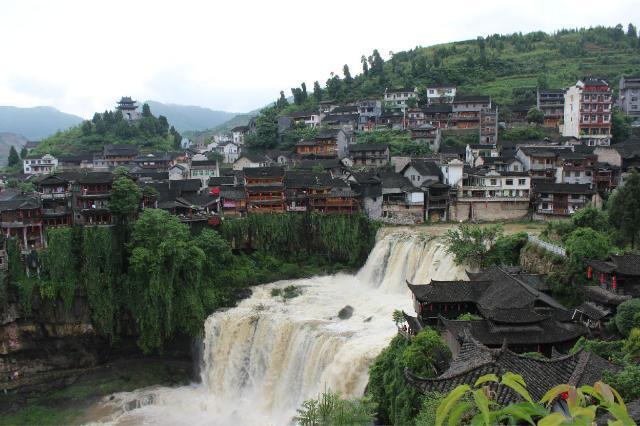
As for the Fulong Town waterfall, it is one of the most invigorating waterfalls I have ever seen during my travels. Anyone who comes to Fulong Town will be attracted by it. The clear water cascades down, making a resounding sound. It is said to be able to hear it clearly for several hundred miles. In addition, the waterfall has several areas, and on the upper part is the unique hanging-leg-room style of the Tujia people. The tour guide told us that people used to work from this waterfall every day and return home from the back in the evening. It's a daily routine.
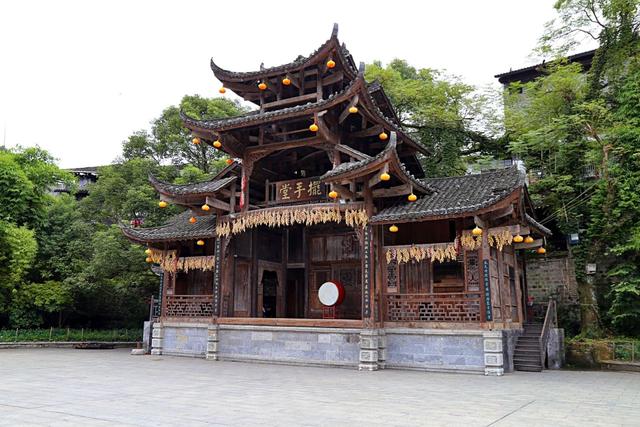
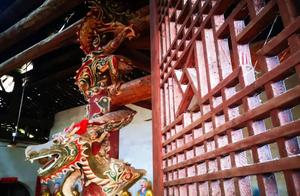
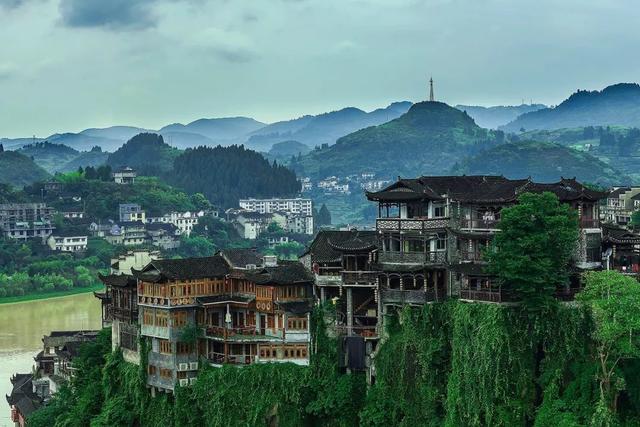
Speaking of the Tuishi Palace, it is also known as the group of hanging-leg-rooms. Because the land was limited in the past, the clever Tujia people built houses under the buildings to increase the living area. During the Tuishi's rule, it was the barracks for soldiers. Because of its unique shape and long history and culture, the hanging-leg-rooms have been preserved to this day, and many locals have converted their houses into guesthouses, attracting a lot of tourists.
We booked a guesthouse, which was also located in a hanging-leg-room. Looking out from the hanging-leg-room window, it looked like it was hanging in the air, and friends with fear of heights probably wouldn't dare to look out.
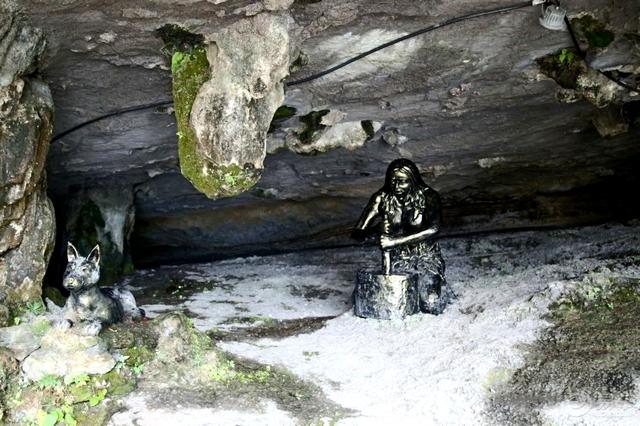
According to legend, a group of people fled to this stone cave during the Qin Dynasty to avoid war. After a long and arduous journey, they finally arrived here and found that there were many people with long hair, bare feet, and wearing beast skins, making bird-like sounds. These were the early Tujia ancestors. This cave was later preserved as a site, and is now one of the most visited attractions. However, the author didn't find any particularly striking places. What's more special is the history behind it – it's a relic.
Five-Mile Stone Slab Street is simply a stone slab street similar to a city's pedestrian street. When it gets dark in the evening, the street is illuminated, and tourists, local people, and children all stroll and browse leisurely. As one of the five hundred and sixty ethnic groups of China, the Tujia people have many exotic trinkets. The merchants' prices are not expensive, so it's very popular.
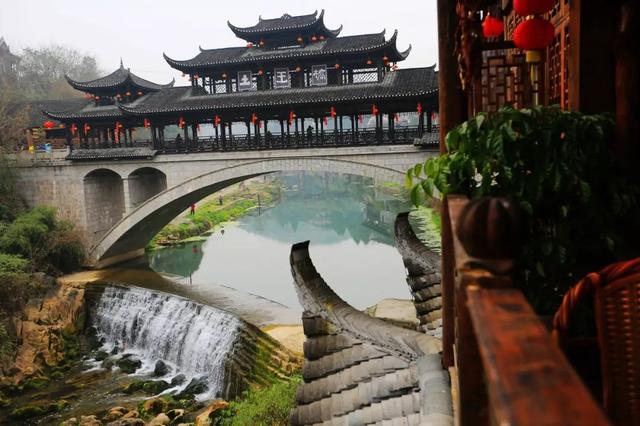
The tour guide girl accompanied us until evening and took the opportunity to take us to the best restaurant for a meal. (Xiang Cuisine) is considered no worse than (Sichuan Cuisine) in people's eyes. The most famous in Fulong Town is their '' (Rice Tofu).
It's a local snack that mixes oil, salt, soy sauce, and chili. More importantly, the rice tofu that appeared in the movie 'Fulong Town' is at the entrance of the archway.

Besides rice tofu, (Snail Meat) is also famous in Fulong Town. As a person who is unwilling to eat any seafood, I didn't want to eat snail meat at first. I didn't expect it to be quite good after trying it once. It's not smelly because of the spiciness, and it's sour and spicy when eaten, so I can't stop eating it.

This trip to Fulong Town lasted only one day, with few attractions, but the air is fresh and the scenery is pleasant. There are many tourists, but fortunately, it's preserved relatively well, without giving a too commercial feeling.
Traveling is always about finding peace in one's inner self. If you haven't been to Fulong Town, I encourage you to go if you have the opportunity. If there really exists a 'Paradise Lost' in this world, it must be like Fulong Town.