Su Maoshu: The Miserable Hue of My Life - People Pretend to Be Independent, But...
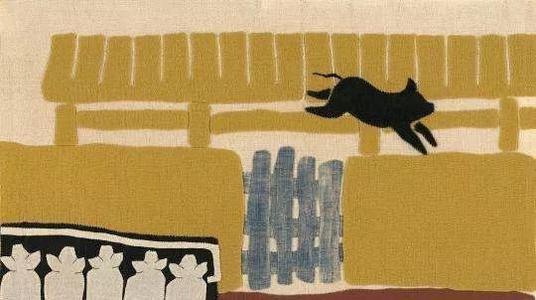
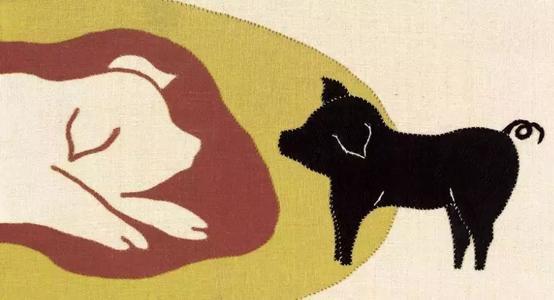
Wang Xiaobo wrote a story about a pig in 'A Pig Walking Alone':
After eating, it jumped onto the roof to bask in the sun, or imitated various sounds. It learned to imitate cars and tractors, and did a very good job; sometimes it disappeared without a trace, I estimated it went to nearby villages to find sows.
This pig was independent and different from other pigs. It seemed to simply eat and sleep, just lying on a board once in a while, and lived a meaningless life. This pig was free, and this was the key. It not only learned to imitate car sounds but also escaped from the pigpen to flirt with other sows.
All these things are individuals trying to label themselves from the masses. 'Walking alone' has a specific meaning in a particular era, and it's easy to understand why such behavior is important to individuals at that time.
But once 'Walking Alone' is performed, it becomes a contrived attempt to be innovative. Tattoos, haircuts, and rebellious behavior are the spiritual pursuits of contemporary young people. In essence, these behaviors may not be driven by genuine liking, but rather used as tools to individualize and label themselves in order to distinguish themselves from the masses.
China has a famous 'threefold theory':
Look at the mountain as a mountain, and water as water; look at the mountain not as a mountain, and water not as water; the mountain remains a mountain, and water remains water.
Observing people who brandish 'Walking Alone' reveals the value of their behavior: a confrontation with mainstream behavior, which has a heroic quality. However, heroes often have tragic endings. 'Walking Alone' has a specific purpose at a specific moment.
But if you consider it as a life creed and spiritual pursuit, consciously positioning yourself in conflict with the masses, proclaiming rebellion against the masses through innovative behavior, people would think he stubbornly insisted on that, then it would not only fail to demonstrate the value of the conflict, but also turn into a disgruntled rebel constantly contradicting everything.
'Walking Alone' in its final stage. If you cannot return to the original point of 'Looking at the mountain as a mountain, and water as water', then you will undoubtedly become a disliked figure like the noisy and rebellious teenagers in their youth.
Suman Shu was a strange man during the Republic of China period, which was determined by his dual identity as 'Formulaic Judge'. But strictly speaking, he hadn't even taken half a step into the Buddhist gate. Although he had a Dharma name, Man Shu, it was merely a sham.
South Wai Jin, a Confucian scholar, pointed out the origin of this person in 'A Brief History of the Development of Buddhism in China':
In a Buddhist temple in Guangzhou, you happened to come across a dead monk's decree, and you changed your name to a monk. From then on, you frequented the circles of writers and scholars, and became famous. Those with good intentions gave him the name of 'Master', which further enhanced his reputation, making it difficult for anyone to discern between truth and falsehood. People mistakenly thought he was like Taishih and Hongyi, and often compared him, which was a peculiar phenomenon in the history of Chinese Buddhism in the Republic of China period.
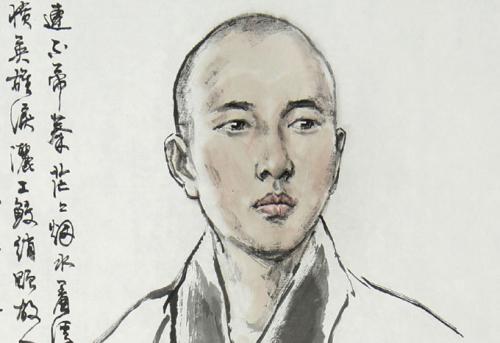
If you don't know Suman Shu well, you might be misled by fragments of information in the information age and be seen as a 'Walking Alone' guru by many uninformed teenagers, or he himself intentionally used the image of a monk and a secular person in that era, proclaiming a rebellion against the times?
This is merely a baseless speculation. In the fake era of the Republic of China, it's undeniable that many master-level figures emerged, but there were also many fake ones mixed in. Those who still harbored nostalgia for the glory of the past saw that era as the 'Golden Age', and indeed, it was a time for 'people'—but not culture.
Suman Shu was undoubtedly influenced by that era, he was proficient in Sanskrit, English, Japanese, German, and French, and was naturally talented, and wrote some novels, but they weren't very famous, at least now, aside from literary and historical researchers, few people remember him. For writers, this is a tragedy of talent.
He was one of the representatives of the 'Duck and Butterfly School', and this school focused on writing love stories between talented young men and beautiful women, such as the most famous work of Zhang Hen Shui, 'Golden House', high-brow literary critics defined them as popular literature, and dismissed it disdainfully.
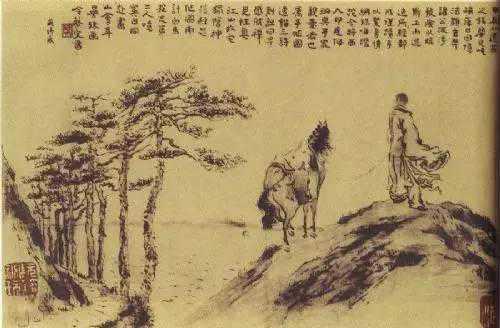
So even though Zhang Hen Shui was popular among the public, he was always ignored by the literary world. Suman Shu was also talented, he was skilled in poetry, calligraphy, painting, and novels, simply describing his talent as 'remarkable talent and multiple art skills' is like rain watering the earth, sprouting all kinds of flowers, more and more is a regret, without a systematic work exists.
It was destined to be forgotten regret. Rather than focusing on his literary talent and artistry, people were more willing to pay attention to his flamboyant private life. And it is precisely this that makes him a representative of 'Walking Alone'.
Gauceau created the character of Mercier in 'The Outsider', and Suman Shu is a perfect representative. Although he never considered 'non-existence' to be a slogan, his behavior itself demonstrated a confrontation with the mainstream, which has a heroic quality. However, heroes often have tragic endings.
In real life, he is often forgotten, but he has outstanding talent and talent, and he walks step by step, it's not something to be proud of.
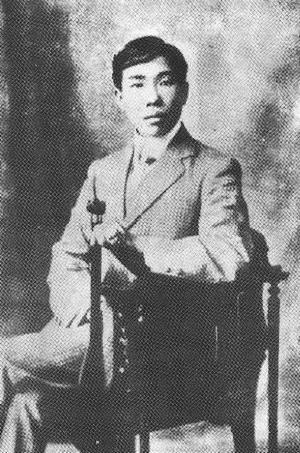
He wrote: 'The deceased are never asked, the wandering clouds and flowing water are just a solitary monk. There are no reason to laugh or cry, and if you have a happy heart, it's like ice.'
If you have a happy heart, it's like ice. In the end, Suman Shu did not intend to show off 'Walking Alone', but rather revealed his past pain. For a truly 'Walking Alone' person, every step is a testament to hardship, and it's not a boastable thing.
“”“”
“”“”
“”“”