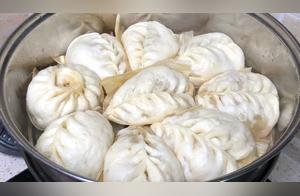
How Did Meat Fillings Disappear from Mantou? Behind It Lies a Heartbreaking Story

The wisdom of the ancients, the origin of mantou
Mantou is now a staple food for many Chinese people, especially in northern families who love to eat noodles. Mantou is made simply and conveniently. First, the flour is mixed with water, and after fermentation, it is kneaded into a dough, then put into a steamer to cook. The fragrant mantou is ready to come out.
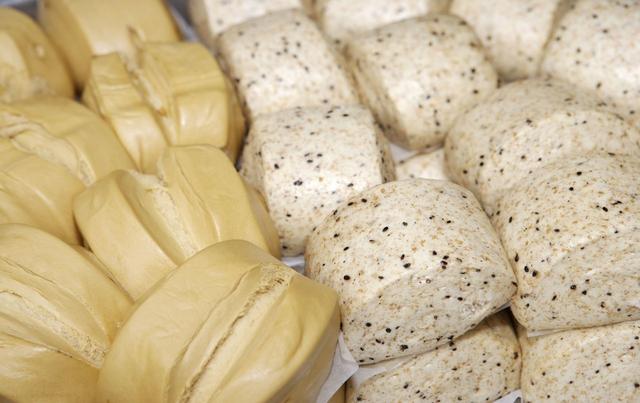
It is simple to the extreme, and the method of making mantou fully embodies the wisdom of Chinese ancients. Compared to the West, which directly bakes bread with a fire stove, we learn to use steam from pottery to serve as a cooking medium, avoiding burning the food while at the same time obtaining a fluffy texture. This is undoubtedly a major progress in the history of cooking. There is a very interesting story about the origin of mantou.
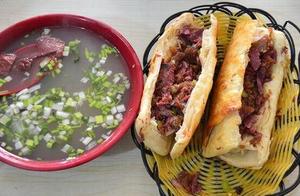
Legend has it that during the Three Kingdoms period, Zhuge Liang, the Minister of Cheng of Shu, encountered rushing rivers when suppressing Southern barbarian rebellions. In order to pass the river smoothly, Zhuge Liang led the people to worship the river god. In ancient sacrifices to the river god, people often sacrificed living people. To avoid sacrificing innocent people, Zhuge Liang ordered people to knead dough into the shape of a head and fill it with beef and mutton to replace the sacrifice of human heads. This is the origin of mantou.
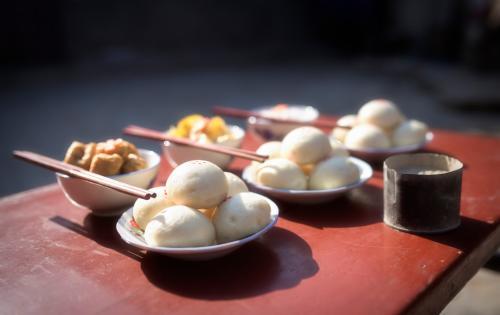
Therefore, ancient people's mantou contained meat fillings. Why do modern people's mantou, which have no meat fillings, now? This has to do with the Song Dynasty.

The change of mantou comes from the era when the Song Dynasty witnessed a culinary explosion.
As the Song Dynasty was a period of unprecedented economic prosperity in ancient China, a time when people's living conditions quickly developed, especially in terms of food, it was like a hundred flowers blooming, and countless delicacies were born that modern people envied. Therefore, whenever you talk about traditional Chinese food, most people will think of the Song Dynasty, whether they were born in the Song Dynasty or underwent two major changes in the Song Dynasty, mantou belongs to the latter.
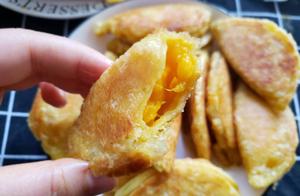
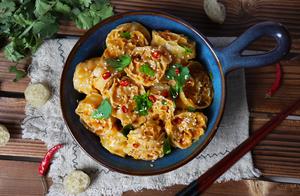
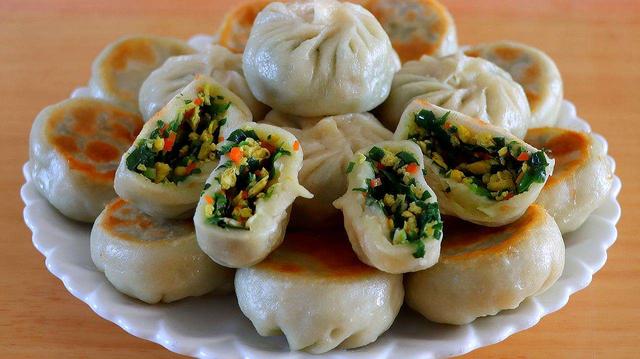
Before the Song Dynasty, the filling of mantou was mainly beef and mutton, but this single flavor could not satisfy the pursuit of the people of the Song Dynasty. So, in the Song Dynasty, there appeared new fillings such as fresh stuffing mantou, colorful fried flower mantou, bamboo shoots and pork mantou, pork buns, crab yellow mantou, stuffed with gel and sugar meat mantou (extracted from 'Dream Liang Lu').
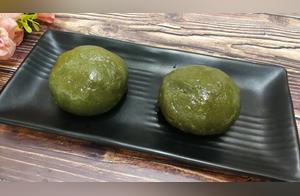
As the fillings became more diverse, food names also became more varied. This is just like how merchants today use creative names to attract customers. In the 'Clear Records' describing life in the Northern Song Dynasty, there are records about 'green lotus buns' at the outside Bianjing.
From the name, 'green lotus buns' were probably filled with a refreshing and cooling ingredient like lotus leaves. During this period, the filling of mantou was more focused on meat, while the filling of buns was more focused on vegetables. There was no strict distinction between the two, and they sometimes overlapped or were used together. However, one thing can be sure: people in the Northern Song Dynasty called mantou with fillings.
How did the meat filling disappear? The tragic story behind it

After the Jingkang Incident (1126-1127), the newly established Southern Song Dynasty lost a large amount of land in the north, especially grazing pastures, and the years of war also made it difficult for the Southern Song Dynasty to trade with nomadic peoples. This led to a sharp reduction in the supply of beef and mutton, which were the main meats at the time. Secondly was beef, and pork was the third.
However, in the early years of the Southern Song Dynasty, pig farming was still small, and it was not possible to increase the output to replace mutton in a short time. So the whole country was short of meat, and even restaurants couldn't make much meat filling. Mantou, as one of the main foods for the people, couldn't be made without meat, so shopkeepers had to put less and less meat filling, or even no filling at all.
During this period, Song people who fled to the south, including those mentioned in 'Dream Liang Lu' and 'Tokyo Dreamhua Lu', which were created during this period, poured their hopes for the prosperity of the former dynasty into writing. Ordinary people, like those who kept less meat filling and even no-filling food, still called it mantou, expressing their nostalgia for the former dynasty and their grief for the dead in the Jingkang Incident.
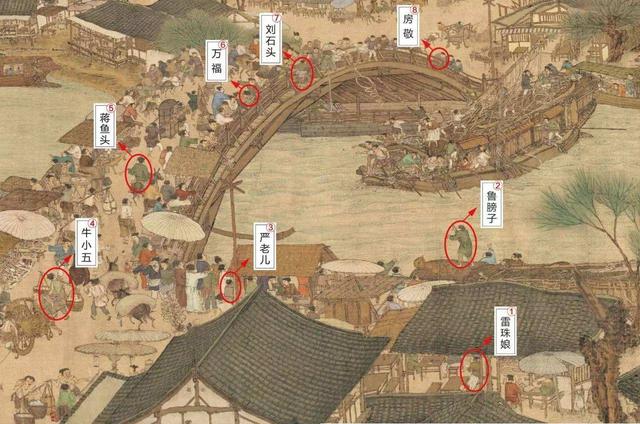
Although there was no filling, there was a lot of heartache and mixed feelings.
Meanwhile, vegetarian buns began to spread, and the two gradually evolved. Nowadays, some people in the south still call mantou with fillings mantou, which may also be another reason for the loss of mantou filling.
After the fall of the Song Dynasty, Mongolian people established the Yuan Dynasty, and they did not fully accept Chinese culture, and they still preserved many nomadic customs and lifestyles, including their diet. Therefore, the ruling Mongolians and nobles easily confused mantou and buns, and it was difficult to distinguish which had filling and what kind of filling.
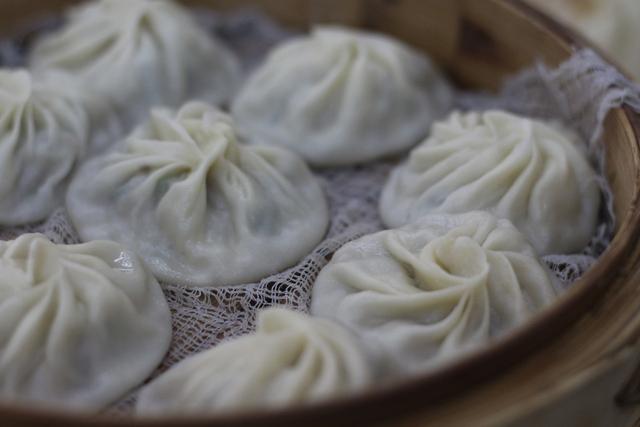
So, to facilitate things, people may have simply called no-filling mantou and filling-filled buns. This assumption can also explain why some people in the south today still eat no-filling buns, and it may be another reason for the loss of mantou filling.
There were mostly vegetarian buns, and this gradually evolved. Now, some people in the south still call mantou with fillings mantou.
References:
Dream Liang Lu (Song) Wu Zimu
Clear Records (Song) Tao Yuanshu