Xia County Ke-Ke Noodles
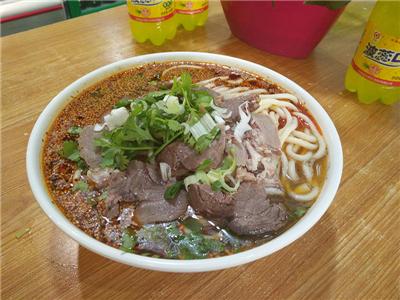
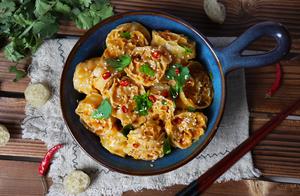
Hello everyone, there's a relatively unknown small county in Henan that's suddenly going viral online. You might not know the name of the county, or perhaps haven't heard of it, but if you hear about its food specialty, you probably have – it's *Ke-Ke* noodles. Indeed, it's now appearing in many short videos. So, let's take a look at *Ke-Ke* noodles, and the customs of this small county.
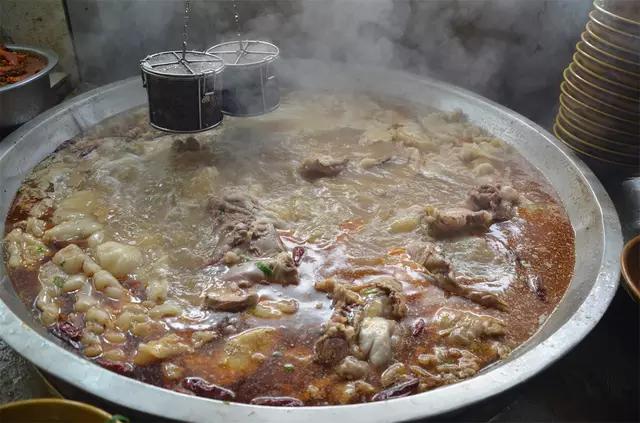
*Ke-Ke* noodles, formerly known as 'He-Lou', also known as 'Hu-Luo'. It is a popular noodle dish in Northern and Northwestern China, with a long history, dating back to over 400 years ago. People used to make them by drilling holes into ox horns, six to seven small holes, about the size of a thick thread. They put the dough into the horn and boiled it in a boiling pot to make noodles.
Legend has it that during the Qing Dynasty, Kangxi Emperor commissioned a special person to compile a report on the diverse local snacks of China. 'He-Lou' was included in the report. One day, the Kangxi Emperor was trying local delicacies and saw 'He-Lou' because of its peculiar name, so he ordered someone to make it for him. After tasting it, he praised its unique flavor and was full of praise.
But because the name 'He-Lou' had a homophonous and inappropriate meaning regarding the management of rivers, causing dissatisfaction, he wrote a decree to change it to 'Ke-Ke'.
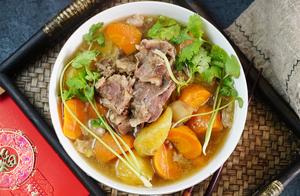
According to records in the Jia County Gazetteer, according to legend, Jia County's *Ke-Ke* noodles were introduced from Shaanxi Province in the early Ming Dynasty. Initially, buckwheat noodles were the main ingredient, combined with mutton soup made with braised mutton, scallions, and other ingredients. At the time, residents used a tool called 'Ke-Ke' bed, 'making and eating by themselves'. During the late Qing Dynasty, wheat noodles replaced buckwheat noodles, offering a better taste and nutrition.
Another theory is that Jia County already had gold-steel *Ke-Ke* noodles as early as the Tang Dynasty. This is linked to Han Yu, one of the Eight Great Writers of the Tang and Song Dynasties. In Zhang Juzheng's 'Compendium of Writings from the Master of Changli' (compiled in the Ming Dynasty), a section by Han Yu: 'During the Yuanhe years, after the butcher Cai slaughtered his way back from Cai, he ate *He-Lou* in Jia County.' This refers to the events of the '' () – the event in 818 AD when Tang Dynasty General Tang's army left Cai after the battle, and the army stopped at Jia County and ate gold-steel *Ke-Ke* noodles. This indicates that gold-steel *Ke-Ke* noodles have a history of at least 1200 years.
There's also a legend that in the early Republic of China, during the warlord era and widespread poverty, a man from Shaanxi province fled to Jia County, Henan, and started selling 'Ke-Ke' noodles. Due to the meticulous workmanship and delicious taste at a reasonable price, it was loved by the people and gained popularity.
This is the origin of Jia County's *Ke-Ke* noodles. Of course, this is just one of the many stories surrounding it.
In Jia County, there's also a custom: every fifteenth day of the first month, there's a ceremony at the County's large bronze vessels. These bronze vessels are said to date back to the Three Kingdoms period, when Emperor Cao Cao won a decisive victory in the siege of (Xiangyang) and commissioned palace musicians and craftsmen to manufacture bronze vessels and create a set of musical scores named after the battles. Such as '' (De Sheng Gu – Victory Drum), '' (Hu Lei Pao – Thunder Cannon), etc.
Jia County has many delicious foods and local customs that will keep you eating different meals every day, and flavors you won't forget. Welcome to our big Jia County! Come here, I'll treat you!